Text size
Line height
Text spacing
Carolyn Ievers-Landis, Ph.D., DBSM, and Kimberly Burkhart, Ph.D.
Children’s sleep is often affected by disasters and other large-scale events, including pandemics. However, too few providers have expertise in empirically validated treatments grounded in sleep science.
Effectively treating insomnia requires more than relaxation strategies and basic sleep hygiene. There is no one-size-fits-all approach.
Research examining the components of sleep hygiene demonstrates that the effects of particular behaviors vary among children. Recommendations should therefore be tailored to the child’s individual sleep patterns and needs.
Recommendations for regular bedtimes may lead providers to suggest that parents put children to bed earlier. Parents may then feel guilty when their child does not fall asleep until much later.
An early bedtime can contribute to insomnia when the child is not yet sleepy.
Spending time awake in bed while worried or anxious can cause the child to associate the bed with wakefulness and distress rather than sleep. Sleeping substantially later on weekends may also contribute to insomnia by creating social jet lag.
Social jet lag resembles the effects of traveling across time zones. A disrupted sleep schedule can leave a child feeling tired, groggy, and less attentive.
Cognitive Behavioral Therapy for Insomnia (CBT-I) is an empirically validated treatment based on sleep science. It has been adapted for children, adolescents, and adults. CBT-I extends beyond bedtime relaxation and standard sleep-hygiene advice.
More providers trained in CBT-I are needed to help caregivers address sleep disturbances associated with children’s traumatic experiences.
First-line behavioral strategies include stimulus control, developmentally appropriate sleep scheduling or restriction, and evidence-informed sleep hygiene.
Stimulus control involves creating an environment in which the bed and bedroom are consistently associated with relaxation and sleep rather than wakefulness, worry, or stimulating activities.
Sleep scheduling helps ensure that the opportunity for sleep does not greatly exceed the child’s sleep needs. Bedtime fading can gradually align bedtime with the time when the child is naturally sleepy, working toward a typical sleep-onset latency of approximately 20–30 minutes.
Sleep-hygiene recommendations used as part of CBT-I should reflect current research rather than relying solely on broad rules about what is good or bad for children’s sleep.
General strategies may include:
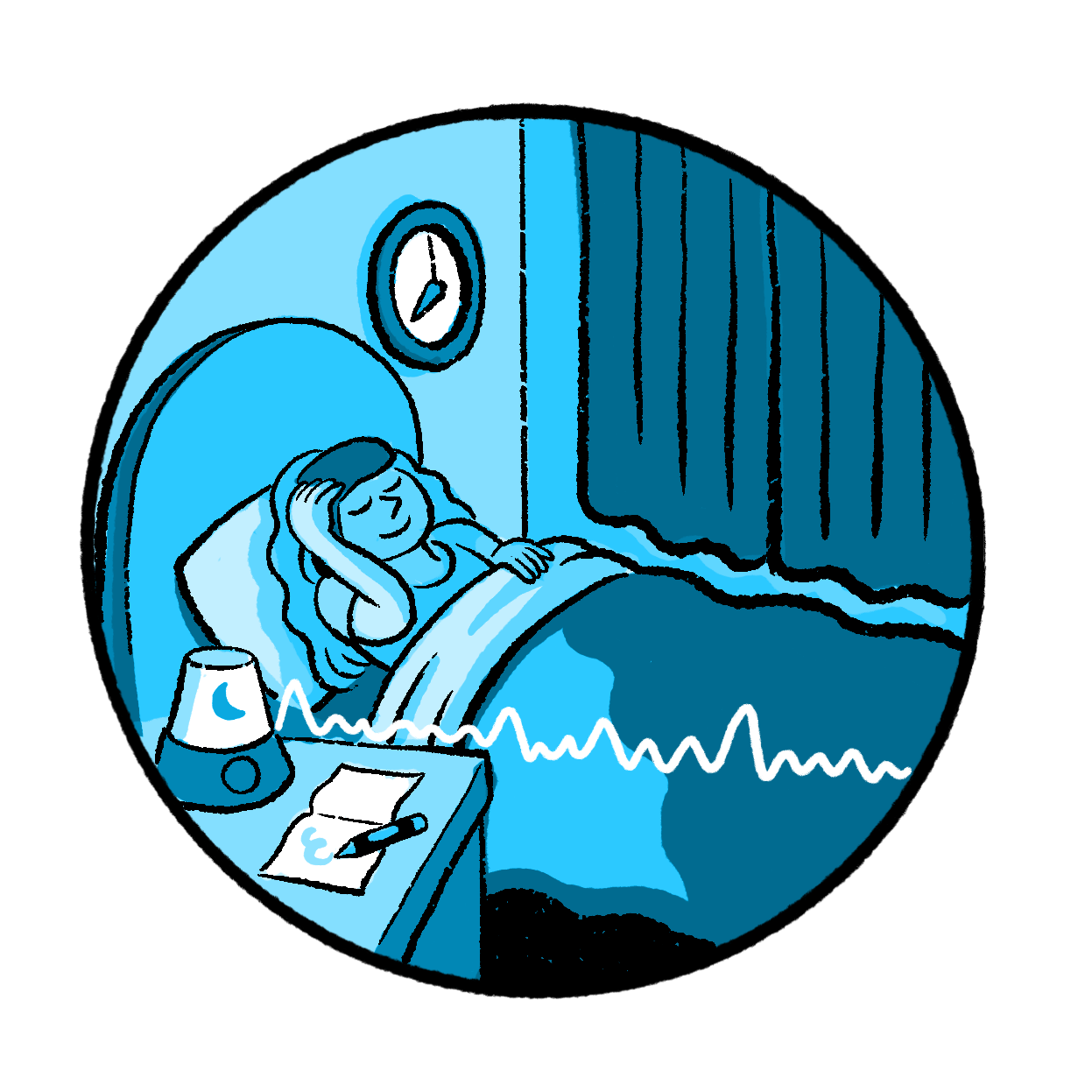
A 10-year-old girl, “Cindy,” is having difficulty falling and staying asleep. Cindy reports that she cannot calm her body enough to fall asleep. Her parents report that she is tired during the day and takes naps after school.
The family has lived in an apartment for the past month while their home is remodeled because of water damage associated with a flood.
