Text size
Line height
Text spacing
Kimberly Burkhart, Ph.D.
Skills for Psychological Recovery (SPR), created by the National Child Traumatic Stress Network and the National Center for PTSD, is intended for use with people of all ages. It can be implemented in settings such as emergency or crisis counseling centers, community mental health centers, primary care practices, and schools.
SPR is intended for delivery in the weeks and months following a disaster or when survivors need more intensive support than Psychological First Aid (PFA) can provide. SPR helps survivors develop strategies for managing distress and improving coping.
SPR recognizes that disaster survivors may experience reactions affecting their physical, psychological, behavioral, and spiritual functioning. This empirically supported, modular approach does not presume that survivors have psychopathology.
SPR focuses on helping survivors regain a sense of control and competence.
SPR can be delivered in a single session, although experts generally recommend three to five sessions. It is designed for delivery by a mental health clinician or another appropriately trained medical provider.
Before delivering SPR, the provider should assess what is currently happening in the survivor’s life and how much time the survivor can devote to learning new coping skills.
The intervention will differ depending on whether it consists of one encounter four weeks after a disaster or several sessions delivered one year later. For example, an early and time-limited intervention may focus on problem-solving. An intervention delivered later and across several encounters may place greater emphasis on helpful thinking.
The provider-survivor relationship should emphasize perseverance, motivation, existing strengths, and the development of practical coping skills. The provider and survivor work collaboratively to establish goals and select areas of focus.
SPR has four primary goals:
These goals are addressed through four core skills:
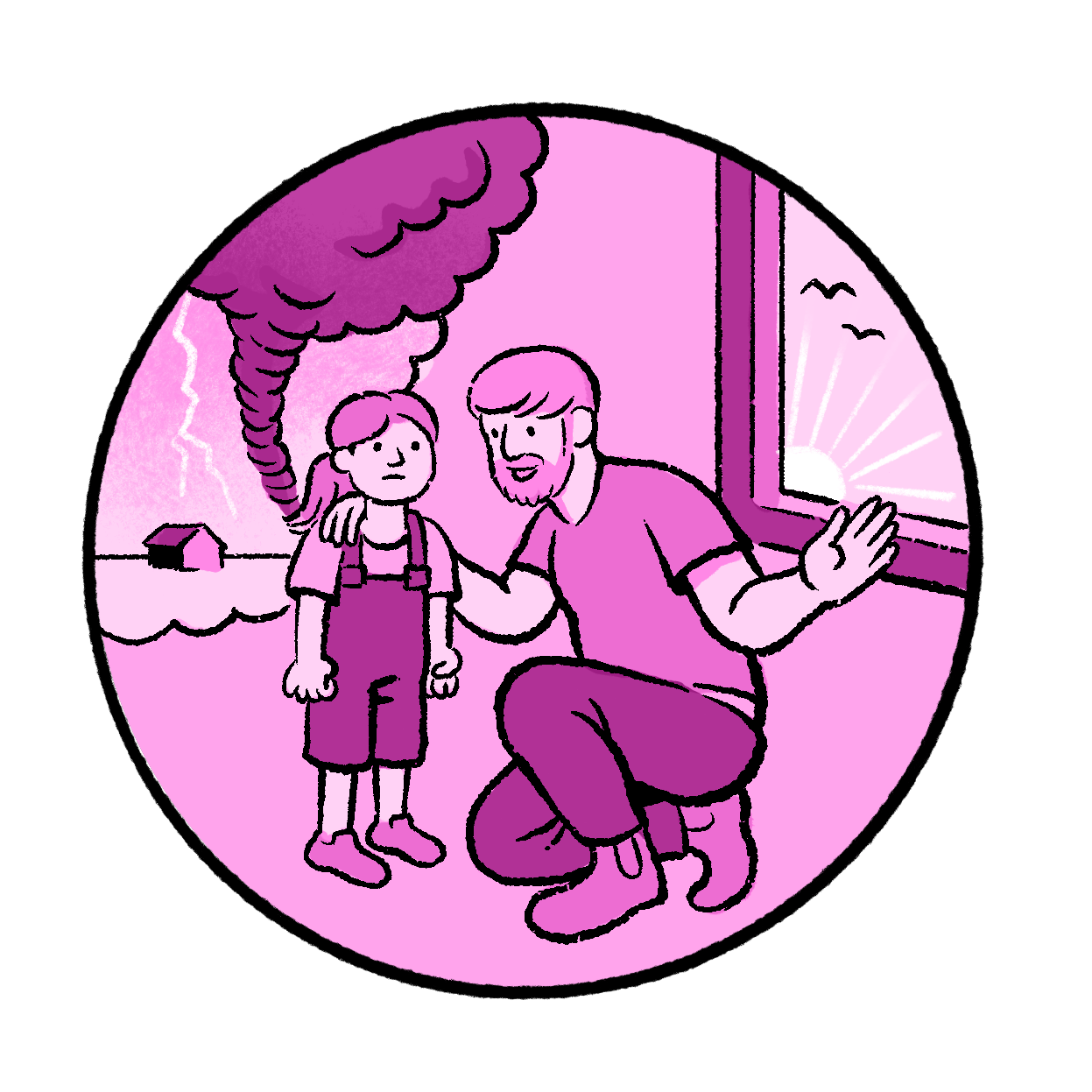
An 8-year-old girl, “Kara,” presents to a primary care clinic because of difficulty falling and staying asleep, stomachaches, and headaches. A thorough medical evaluation has been completed.
A review of Kara’s electronic medical record shows that a tornado passed through her neighborhood six weeks earlier. You have been asked to respond to Kara.
Consult the Skills for Psychological Recovery Field Operations Guide. Assess how the tornado affected Kara’s living situation, school attendance, and current functioning in four areas:
The tornado destroyed part of Kara’s home, and the family will not be able to return for some time. Kara and her immediate family are currently living in an extended-stay hotel.
At bedtime, Kara worries that another tornado will occur during the night. She has difficulty separating from her family, develops stomachaches before school, and experiences headaches while at school. Kara and her mother agree to participate in four weekly SPR sessions.
Building Problem-Solving Skills: Kara defines the problem as “not feeling well.” She reports staying awake to watch for tornadoes and using her phone late into the night.
The clinician works with Kara and her mother to identify options for falling asleep more easily. The resulting plan includes:
Promoting Positive Activities: Kara enjoys reading, swimming, and playing volleyball. The clinician provides a calendar and helps the family schedule enjoyable activities to re-establish a routine.
Kara’s mother agrees to take her to the library every other Wednesday after school. Kara will also remain after school on Mondays and Tuesdays to practice for volleyball tryouts. Increasing positive activities is intended to improve Kara’s mood.
Managing Reactions: Kara has difficulty managing her reactions when separating from her parents to attend school. She learns diaphragmatic breathing and progressive muscle relaxation.
Promoting Helpful Thinking: Kara frequently thinks, “Something bad is going to happen to my family. My parents could die.” She learns how these thoughts increase anxiety.
The clinician helps Kara identify and practice more helpful thoughts, such as: “Although my house was damaged, everyone in my family is okay. There is no evidence that my parents are going to die.”
After four sessions, Kara can identify physical signs of anxiety. She has a weekly schedule that includes positive activities, which has improved her mood. She puts away her phone and uses progressive muscle relaxation at bedtime, decreasing the time needed to fall asleep. Kara also uses helpful thoughts, such as “My family is okay,” to manage anxiety.
