Text size
Line height
Text spacing
Kimberly Burkhart, Ph.D.
Psychological First Aid (PFA), created by the National Child Traumatic Stress Network in partnership with the National Center for PTSD, is intended for use with children, adolescents, caregivers, families, and adults. It can be implemented in a variety of settings, including field hospitals, shelters, emergency departments, family assistance centers, and schools.
PFA is based on the assumption that most people will not develop posttraumatic stress symptoms in response to a traumatic event. By meeting people’s immediate needs through human connection, providers can help create a buffer against ongoing distress.
Posttraumatic stress symptoms include trauma-related symptoms such as anxiety, negative thoughts, and flashbacks that meet the criteria for a specific trauma- or stressor-related disorder. PFA is a supportive intervention that can be delivered by first responders, mental health professionals, and other disaster response workers in the immediate aftermath of a disaster, defined as up to four weeks after exposure.
Providers should observe the situation before approaching an individual. Respectful questions should be used to determine what the individual or family needs and what approach should be taken. Providers should remain calm, patient, and responsive and communicate in developmentally and culturally appropriate ways.
When working with children, it is particularly important to:
Survivors may present as disoriented, panicked, withdrawn, irritable, angry, or extremely worried. The provider should focus on problem-solving and offering coping strategies in response to the immediate situation.
PFA consists of eight core actions: Contact and Engagement, Safety and Comfort, Stabilization, Information Gathering, Practical Assistance, Connection with Social Supports, Information on Coping, and Linkage with Collaborative Services.
Not every action will be needed in every situation. The provider uses active listening to determine which core actions are appropriate. Each core action and an example of an associated intervention are described below.
Reinforce basic coping skills such as obtaining adequate nutrition and sleep, taking breaks, scheduling pleasant activities, using calming self-talk, and focusing on something practical that can be done in the moment. Providers can also share strategies for returning to a routine and using simple relaxation techniques.
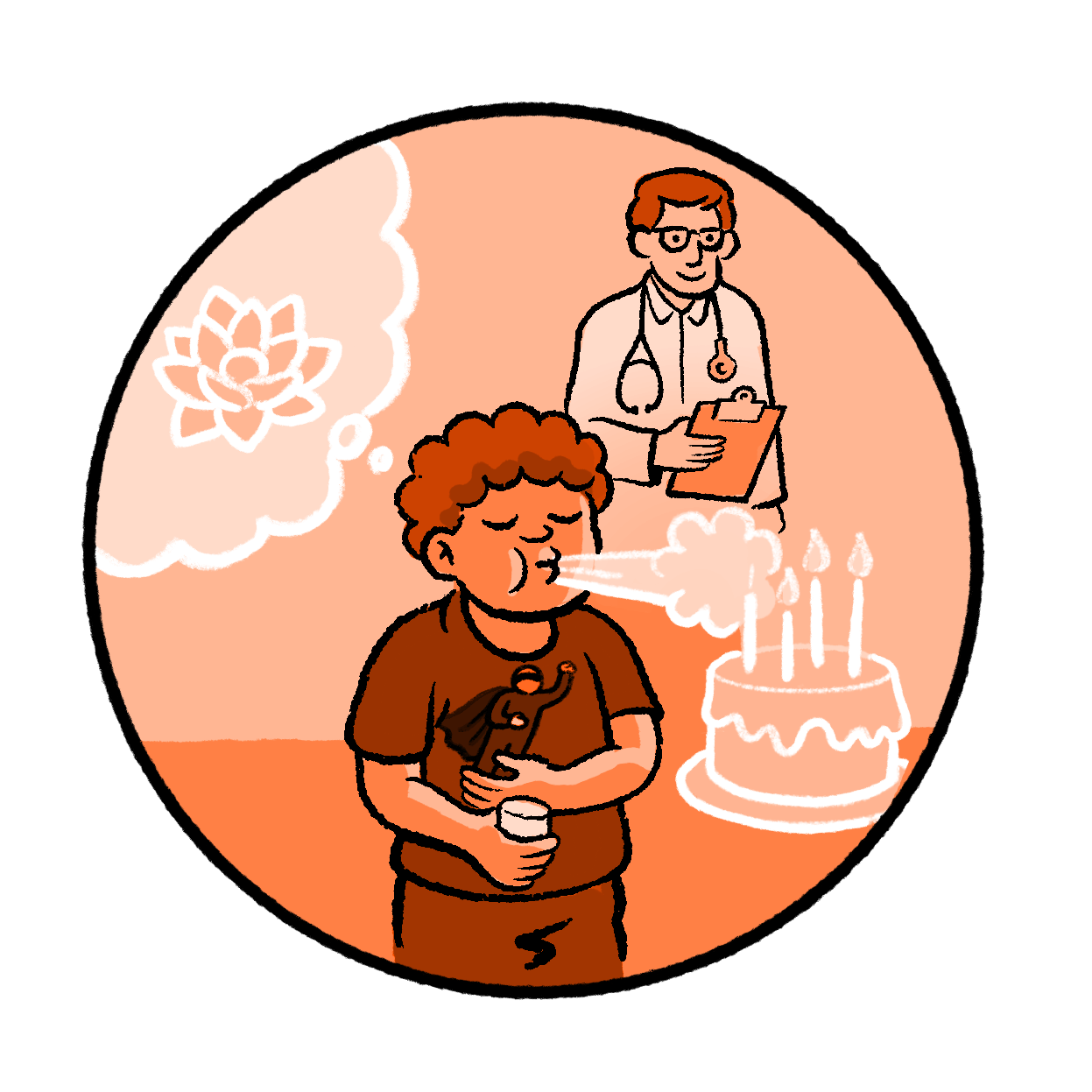
A 6-year-old boy, “Mikey,” presents to the emergency department following a wildfire. Mikey and his mother were separated at the hospital. His mother is receiving medical treatment for burns, while Mikey has minor cuts on his arms. Mikey is crying and repeatedly asking about his mother. You have been asked to respond to him.
Consult your PFA Field Operations Guide, available through the National Child Traumatic Stress Network and linked in the resources below. Assess Mikey’s current needs in four areas:
Mikey has received medical treatment for his cuts. He is experiencing anxiety related to separation from his mother and being in an unfamiliar medical setting. He is tearful and has difficulty remembering and describing what happened.
Contact and Engagement: Ask about immediate needs and consider what could make Mikey more comfortable. You determine where his mother is and assure him that hospital staff are taking good care of her. You also bring Mikey a cup of water.
Information Gathering: Find out what Mikey knows about the wildfire. Mikey does not know his phone number or address and is not a patient within your hospital system. Once calm, he remembers that contact information is written on the tongue of his shoe. Mikey reports that his father was not home and has been away for some time.
Connection with Social Supports: Call the two phone numbers listed in Mikey’s shoe. His father answers and explains that he is away on a business trip. He provides the necessary contact information and arranges for Mikey’s grandmother to come to the hospital. You call his grandmother and develop a plan for her to connect with Mikey.
Information on Coping: Explain the action plan to Mikey using developmentally appropriate language. Check that he understands that doctors are caring for his mother, his father is on his way home, and his grandmother is coming to pick him up. Explain that you will continue to check on him until she arrives.
You notice that Mikey is wearing a superhero T-shirt. You begin a conversation about the superhero and tell Mikey that he has been very brave. You coach him through deep breathing by asking him to breathe in through his nose as though he were smelling a flower and breathe out through his mouth as though he were blowing out a birthday candle.
Mikey is now calm, and you are able to attend to other patients presenting to the emergency department.
