Text size
Line height
Text spacing
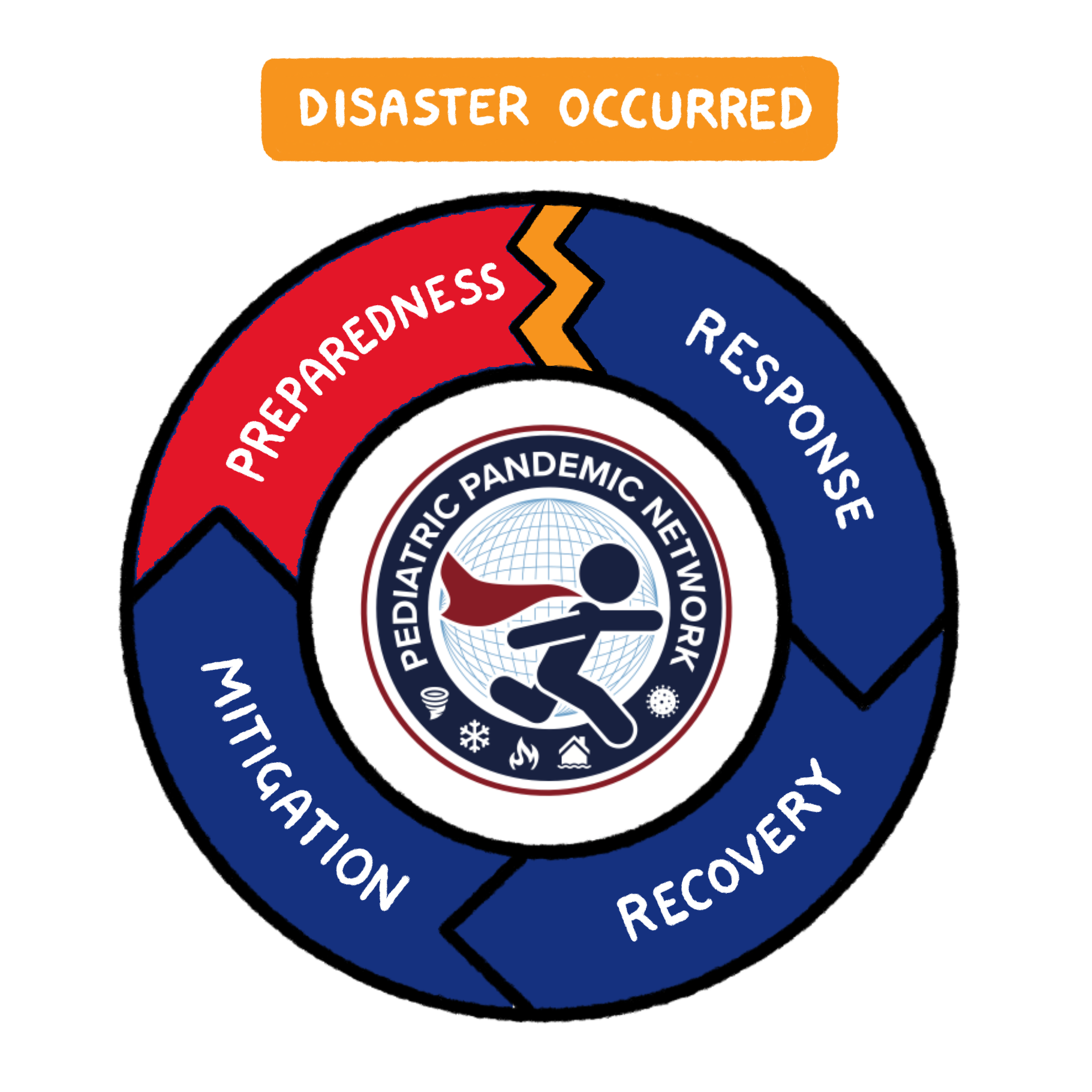
In the preparedness phase, clinicians should take inventory of their capacity and capability to respond to the social-emotional needs of children and their families in both the immediate aftermath of a disaster and the coming months. Both clinicians and caregivers need to be able to identify the signs and symptoms of trauma, strategies that can be used to build on individual, family, and community strengths, and considerations for the additional needs of special populations. These populations include children with special health care needs, children with neurodevelopmental disorders, and children from historically marginalized and minoritized groups.
This curriculum is intended to assist with identifying individual gaps in knowledge of care across the disaster management cycle and to provide guidance for training other medical professionals to become disaster-ready as it pertains to caring for children’s mental and behavioral health care needs.
To be a trauma-informed system of care, the engagement of families is key. Behavioral health clinicians can assist families with making a plan, preparing a disaster supplies kit, and becoming familiar with a family readiness toolkit. These resources reinforce that all families need to be prepared for natural, biological, and human-caused disasters.
Medical or behavioral health professionals can assist families with developing an emergency plan that identifies how the family will communicate and addresses the specific needs of the household, including where to shelter, safe meeting places, special medical needs, and critical contact information.
The majority of behavioral health care that affected youth receive occurs in the outpatient setting. To be disaster-ready, it is recommended that all behavioral health clinicians receive training in Psychological First Aid (PFA). A plan should also be identified for obtaining additional training to treat trauma in those experiencing posttraumatic stress symptoms in response to a catastrophic event.
