Text size
Line height
Text spacing
Disaster behavioral health (DBH) is defined as how organizations prepare for and manage mental and behavioral health impacts related to large-scale emergencies and disasters, across all systems of care and response. Using individual and community-level approaches, DBH coordinates and plans for the necessary resources to effectively respond and recover at-scale from a disaster.
Disaster behavioral health (DBH) is defined as how organizations prepare for and manage mental and behavioral health impacts related to large-scale emergencies and disasters, across all systems of care and response. Using individual and community-level approaches, DBH coordinates and plans for the necessary resources to effectively respond and recover at-scale from a disaster.
These features, in addition to key concepts outlined later in this toolkit (see Key Principles & Assumptions), demand a different approach to provision of disaster behavioral health services than that of day-to-day behavioral health services and systems.
This framework primarily focuses on children’s hospitals and the role they serve in meeting pediatric disaster behavioral health needs during and after disasters, but children’s hospitals do not respond alone. Children’s hospitals may provide specialized pediatric services, expertise, and leadership, but adequately meeting these significant needs requires collaboration and coordination with numerous organizations and partners, including schools, outpatient treatment clinics, emergency managers and planners, first responders, Hospital/Incident Management Teams, governmental children’s behavioral health program directors, children’s cabinets, public health agencies, shelters, community and adult-focused hospitals, and clinicians providing physical and behavioral health care.
Note: This toolkit does not address suicide prevention, day-to-day pediatric behavioral health care in emergency departments, or broad pediatric disaster readiness. Instead, readers looking for those resources are recommended to review materials such as the Critical Crossroads – Pediatric Behavioral Health Care in the Emergency Department Toolkit by HRSA, the Zero Suicide resource center, in addition to the ED STOP Suicide Quality Improvement Collaborative and the Checklist of Essential Pediatric Considerations for Every Hospital’s Disaster Policies by EMSC.
Within emergency management, a framework outlines key principles, goals, roles and responsibilities, core processes, and an organizing structure for preparedness, response, and recovery. This framework organizes these components into an operational model with four essential functions for pediatric disaster behavioral health (PDBH): Situational Awareness, Care, Education & Technical Assistance, and Coordination. These functions may be structured within an organization (such as a children’s hospital) and/or at community levels (such as interagency groups).
The Behavioral Health Effects of an Acute Disaster Can Present Long After the Event
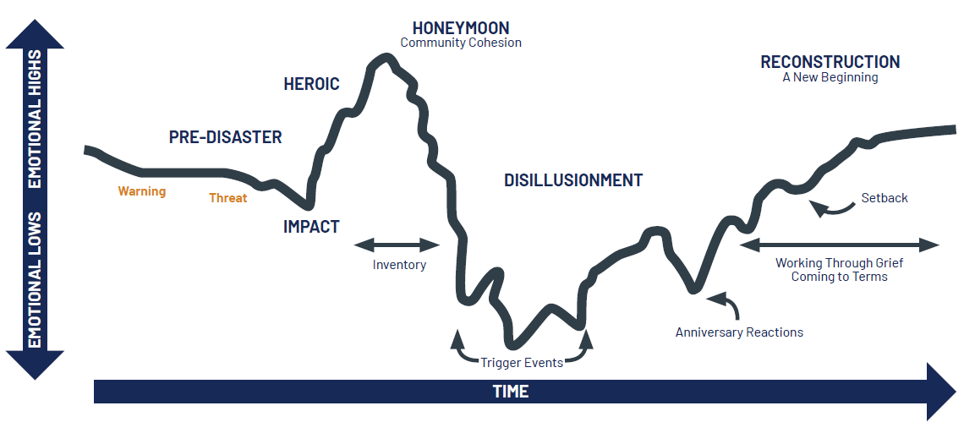
Children’s distress may cause a ripple effect, impacting parents and caregivers, providers, and first responders. This ripple effect can also impact health care facilities, schools, and other systems causing a surge in demands and other significant disruptions (e.g., prolonged emergency department boarding, increased absenteeism in schools).

