Pediatric Disaster Behavioral Health (PDBH) Toolkit
| Site: | Pediatric Pandemic Network Learn |
| Course: | Pediatric Disaster Behavioral Health (PDBH) Toolkit |
| Book: | Pediatric Disaster Behavioral Health (PDBH) Toolkit |
| Printed by: | Guest user |
| Date: | Saturday, October 10, 2026, 7:46 PM |
Table of contents
- 1. Letter of Acknowledgement
- 2. How to Use this Toolkit
- 3. The Pediatric Disaster Behavioral Health Framework
- 4. Preparedness
- 4.1. Strategic Administrative Preparedness for Pediatric Disaster Behavioral Health
- 4.2. Internal Coordination: Program Integration & Emergency Management
- 4.3. Behavioral Health in Disasters
- 4.4. Emergency Department
- 4.5. Social Work
- 4.6. Telehealth
- 4.7. Medical Home
- 4.8. Chaplaincy
- 4.9. Communications
- 4.10. Emergency Management
- 4.11. Partnerships - Whole Community & Emergency Management
- 5. Response & Recovery (Just-in-Time Implementation)
- 6. The Toolbox - Implementation & Tactical Resources
- 7. References
1. Letter of Acknowledgement
To the readers, contributors, and communities served by this toolkit, The Pediatric Pandemic Network (PPN) is honored to share this Pediatric Disaster Behavioral Health Toolkit. It is the product of more than a year of collaborative work, drawing on the expertise of a broad-spectrum subject matter experts from across the pediatric disaster care ecosystem. We are grateful to every reviewer and contributor who lent time, judgment, and lived experience to its development.
We are equally grateful to the institutions and agencies that supported this effort. This work was funded by the Health Resources and Services Administration (HRSA), with foundational support from the Pediatric Pandemic Network’s member children’s hospitals and contributions from federal and state agencies, professional societies, academic institutions, and community-based organizations across the country. The toolkit reflects the strength of these partnerships and the willingness of leaders across the field to meet a difficult subject with rigor and care.
This toolkit does not stand alone. It is intended to complement, not replace, the substantial body of guidance already produced by the American Academy of Pediatrics, the National Child Traumatic Stress Network, the Substance Abuse and Mental Health Services Administration, the Centers for Disease Control and Prevention, the Federal Emergency Management Agency, the Emergency Medical Services for Children Innovation and Improvement Center, and many others. Where existing resources speak well to a question, we point to them. Where we believe a gap exists in pediatric- and disaster-specific implementation guidance, we have tried to fill it. We are indebted to the authors of every framework we have drawn from.
Most importantly, we acknowledge the children, adolescents, and families whose experiences make this work necessary. Behind every recommendation in these pages is a child who lived through a hurricane, a school shooting, a pandemic, a wildfire, a flood, or a displacement; a parent or caregiver who carried that child through it; and a clinician, teacher, or first responder who was present in the hardest moments. The PPN exists to serve them, and to ensure that when the next disaster comes, the children and families in its path are met by a health system that is ready, that is disaster-informed, and that recognizes pediatric mental and behavioral health as central to disaster response, not peripheral to it.
We invite you to engage with this toolkit, to challenge and improve it, and to bring it to life in your institutions and communities.
With gratitude,
On behalf of the Pediatric Pandemic Network and the Mental & Behavioral Health Domain
Trevor Covington, MS, CEM - Lead Author and Mental & Behavioral Health Domain Manager
Christopher Gable, DO - Senior Author and Mental & Behavioral Health Domain Lead
2. How to Use this Toolkit

This toolkit is designed to support children’s hospitals in meeting pediatric disaster behavioral health needs in their community. This toolkit does not address day-to-day pediatric behavioral health care or youth suicide prevention. Readers are encouraged to review other resources for those topics such as the Critical Crossroads Toolkit, Zero Suicide, or ED STOP.
Key things to know: This toolkit is designed to be a modular reference guide and should not be read front-to-back. Not all sections of the toolkit will be useful and relevant for all audiences or intents.
The first section of this toolkit introduces the Pediatric Disaster Behavioral Health (PDBH) Framework and key considerations. Guidance and resources provided in the preparedness portion of this toolkit focus on engagement of day-to-day services and the emergency management program to prepare for disasters, while the response and recovery sections of the toolkit focus on rapid deployment of concepts and tools using systems such as Hospital Incident Command System (HICS). The final portion of the toolkit, the Toolbox, provides in-depth information, references, tools, and resources to support implementation.
Quick Guide – Just-in-Time Deployment (Immediate Use)
- Review the Pediatric Disaster Behavioral Health Framework section of the toolkit to understand the overall model, goals, strategies, and key assumptions.
- Then, review the Just-in-Time Implementation section and follow the response deployment recommendations and operational planning process, reviewing additional tools provided in the Toolbox.
Quick Guide - Preparedness
- Review the Pediatric Disaster Behavioral Health Framework section of the toolkit to understand the overall model, goals, strategies, and key assumptions.
- Then, review the Preparedness Section for guidance and resources on how to start pediatric disaster behavioral health preparedness effort.
- Start with Administrative Preparedness, then review Internal Coordination to identify how to connect existing programs to this framework, then explore partnership connections to integrate with the community.
- Review additional tools provided in the Toolbox and the Goals & Functions table for detailed information on response/recovery application.
Overview
Welcome to this multimedia open access edition of the Pediatric Disaster Behavioral Health (PDBH) Toolkit
This content is available as a digital book in two formats:
1) Website, which you are currently reading. This format offers a mobile friendly multimedia experience with sharable links to chapters. There are three ways to move through the book:
a) Use the table of contents chapter navigation to the left to navigate to different chapters in the book. Scroll through the links to select the chapter that interests you.
b) Use the yellow arrows that appear when scrolling to select previous and next chapters.

c) Use the previous chapter and next chapter buttons at the bottom of very page to navigate through the book.

2) Printable, which you can save as a PDF and open without an Internet connection.
2.1. Acronym Table
| Acronym | Meaning |
|---|---|
| AAP | American Academy of Pediatrics |
| AHRQ | Agency for Healthcare Research and Quality |
| ASD | Acute Stress Disorder |
| ASPR | Administration for Strategic Preparedness and Response |
| BH | Behavioral Health |
| CBIT | Cognitive Behavioral Intervention for Trauma |
| CBITS | Cognitive Behavioral Intervention for Trauma in Schools |
| CBRNE | Chemical, Biological, Radiological, Nuclear, and Explosives |
| CBT | Cognitive Behavioral Therapy |
| CBT for ASD | Cognitive Behavioral Therapy for Acute Stress Disorder |
| CCBHC | Certified Community Behavioral Health Clinic |
| CCP | Crisis Counseling Assistance and Training Program (SAMHSA) |
| CIL | Center for Independent Living |
| CISD | Critical Incident Stress Debriefing |
| CISM | Critical Incident Stress Management |
| CMO | Chief Medical Officer |
| CMS | Centers for Medicare and Medicaid Services |
| CNO | Chief Nursing Officer |
| COAD | Community Organizations Active in Disasters |
| CPT | Cognitive Processing Therapy |
| DBH | Disaster Behavioral Health |
| EAP | Employee Assistance Program |
| ED | Emergency Department |
| EDTP | Emergency Department Telepsychiatry |
| EEI | Essential Elements of Information |
| EMDR | Eye Movement Desensitization and Reprocessing |
| EMS | Emergency Medical Services |
| EMSC | Emergency Medical Services for Children |
| EOC | Emergency Operations Center |
| EOP | Emergency Operations Plan |
| ESF | Emergency Support Functions |
| FEMA | Federal Emergency Management Agency |
| FQHC | Federally Qualified Health Center |
| HATS | Healing After Trauma Skills |
| HCC | Health Care Coalition |
| HHS | Health & Human Services |
| HICS | Hospital Incident Command System |
| HST | Health Support Team |
| HVA | Hazard and Vulnerability Analysis |
| ICS | Incident Command System |
| JIC | Joint Information Centers |
| JIS | Joint Information Systems |
| JIT | Just in Time |
| LTRO/LTRG | Long-Term Recovery Organization/Long-Term Recovery Group |
| MH | Mental Health |
| MHFA | Mental Health First Aid |
| MOU | Memorandum of Understanding |
| MUPS | Medically Unexplained Physical Symptoms |
| OPP | Operational Planning Process |
| PCMH | Primary Care Medical Home/Patient-Centered Medical Home |
| PCP | Primary Care Provider |
| PDBH | Pediatric Disaster Behavioral Health |
| PFA | Psychological First Aid |
| PPE | Personal Protective Equipment |
| PSYPACT | Psychology Interjurisdictional Compact |
| PsySTART | Psychological Simple Triage and Rapid Treatment |
| PTSD | Post-Traumatic Stress Disorder |
| RSF | Recovery Support Functions |
| SAMHSA | Substance Abuse and Mental Health Services Administration |
| SMART | Specific, Measurable, Achievable, Relevant, Time-bound |
| SME | Subject Matter Experts / Subject Matter Expertise |
| SPR | Skills for Psychological Recovery |
| TF-CBT | Trauma-Focused Cognitive Behavioral Therapy |
| VOAD | Voluntary Organizations Active in Disasters |
3. The Pediatric Disaster Behavioral Health Framework
Introduction
What is Disaster Behavioral Health?
Disaster behavioral health (DBH) is defined as how organizations prepare for and manage mental and behavioral health impacts related to large-scale emergencies and disasters, across all systems of care and response. Using individual and community-level approaches, DBH coordinates and plans for the necessary resources to effectively respond and recover at-scale from a disaster.
Disaster behavioral health (DBH) is defined as how organizations prepare for and manage mental and behavioral health impacts related to large-scale emergencies and disasters, across all systems of care and response. Using individual and community-level approaches, DBH coordinates and plans for the necessary resources to effectively respond and recover at-scale from a disaster.
These features, in addition to key concepts outlined later in this toolkit (see Key Principles & Assumptions), demand a different approach to provision of disaster behavioral health services than that of day-to-day behavioral health services and systems.
What does this framework address and who is it for?
This framework primarily focuses on children’s hospitals and the role they serve in meeting pediatric disaster behavioral health needs during and after disasters, but children’s hospitals do not respond alone. Children’s hospitals may provide specialized pediatric services, expertise, and leadership, but adequately meeting these significant needs requires collaboration and coordination with numerous organizations and partners, including schools, outpatient treatment clinics, emergency managers and planners, first responders, Hospital/Incident Management Teams, governmental children’s behavioral health program directors, children’s cabinets, public health agencies, shelters, community and adult-focused hospitals, and clinicians providing physical and behavioral health care.
Note: This toolkit does not address suicide prevention, day-to-day pediatric behavioral health care in emergency departments, or broad pediatric disaster readiness. Instead, readers looking for those resources are recommended to review materials such as the Critical Crossroads – Pediatric Behavioral Health Care in the Emergency Department Toolkit by HRSA, the Zero Suicide resource center, in addition to the ED STOP Suicide Quality Improvement Collaborative and the Checklist of Essential Pediatric Considerations for Every Hospital’s Disaster Policies by EMSC.
Role of a Framework
Within emergency management, a framework outlines key principles, goals, roles and responsibilities, core processes, and an organizing structure for preparedness, response, and recovery. This framework organizes these components into an operational model with four essential functions for pediatric disaster behavioral health (PDBH): Situational Awareness, Care, Education & Technical Assistance, and Coordination. These functions may be structured within an organization (such as a children’s hospital) and/or at community levels (such as interagency groups).
Why Care About Pediatric DBH?
- Long and Variable Lags: Children face serious and lasting behavioral health impacts after disasters, which may be more prevalent and last longer than physical impacts.
- Children are among the highest risk for sustained post-disaster distress.
- Families with children represent a large segment of disaster affected populations. Pediatric behavioral health needs are both acute and long term, with lasting effects on sensitive periods of neurodevelopment and sometimes into adulthood 1.
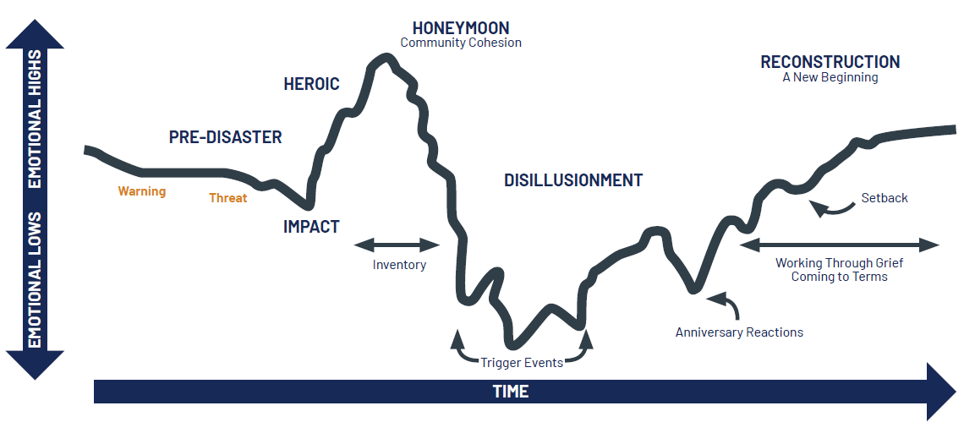
The Behavioral Health Effects of an Acute Disaster Can Present Long After the Event
- Lost In Planning: Pediatric DBH is frequently absent from disaster plans.
- Children’s needs can be overlooked unless they are physically injured or hospitalized. While responders and clinicians acknowledge the emotional and behavioral consequences of disasters on children, these are rarely adequately integrated into emergency management plans, trainings, or exercises.
- Pediatric-Driven Recovery: Pediatric behavioral health needs can drive or hinder community recovery.
-
Children’s distress may cause a ripple effect, impacting parents and caregivers, providers, and first responders. This ripple effect can also impact health care facilities, schools, and other systems causing a surge in demands and other significant disruptions (e.g., prolonged emergency department boarding, increased absenteeism in schools).
- For communities to recover fully, children’s behavioral health must be prioritized and integrated in preparedness, response, and recovery. Supporting their behavioral health is not optional; it is essential to the recovery and resilience of families and communities.
-
3.1. The Pediatric Disaster Behavioral Health (PDBH) Framework
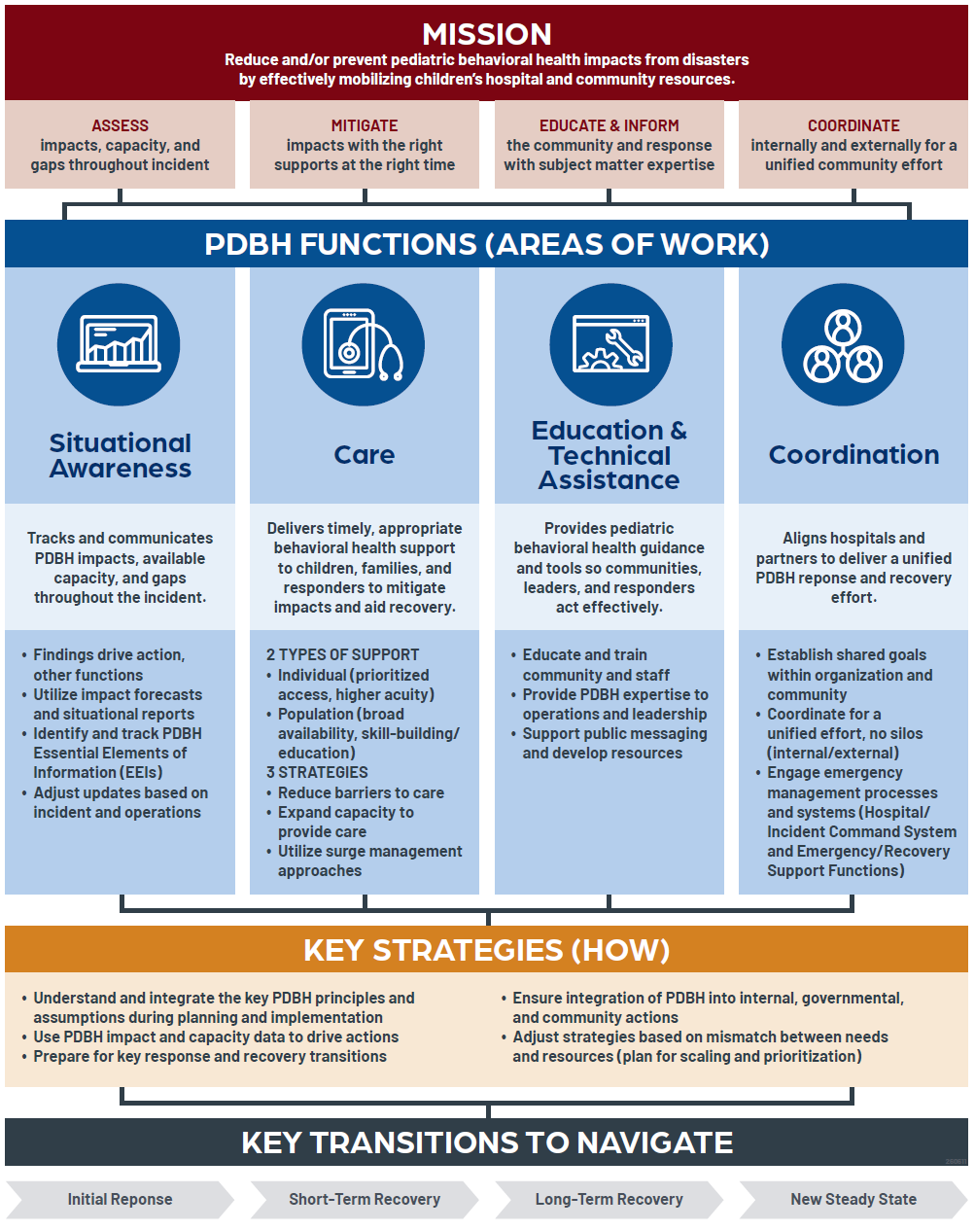
Figure 2. The Pediatric Disaster Behavioral Health Framework
How to Use It
To utilize this framework, review the information below for a broad understanding of this toolkit’s approach to pediatric disaster behavioral health (PDBH). Then, reference the Preparedness Section of this toolkit for recommendations on how to implement the framework before a disaster, or the Just-in-Time Implementation Section for rapid deployment during a disaster. Finally, for an in-depth review of each PDBH goal, function, and related key considerations, reference the PDBH Operational Table Overview Appendix.
PDBH Mission & Goals

Figure 3. PDBH Mission & Goals
The PDBH Mission describes the purpose and scope of this framework. It provides the “north star” and identifies the desired end-state for all related preparedness, response, and recovery activities. How this mission is contextualized within an organization, or interagency group, will differ depending on their existing roles and capabilities.
The PDBH Goals describe what tasks must be achieved to fulfill the mission. During a disaster response and recovery, these goals are often converted into specific objectives to guide action – such as “assess the number of children injured or exposed by the end of the week” or “deploy behavioral health strike team to provide services at the shelter by Monday.”
Organizations should determine which parts of this broad mission they are able and willing to lead during disasters, and coordinate with other organizations to fill any gaps. Partnerships are covered further in this section and guidance on how to integrate this framework into existing children’s hospital operations is described in this section.
PDBH Functions & Key Strategies
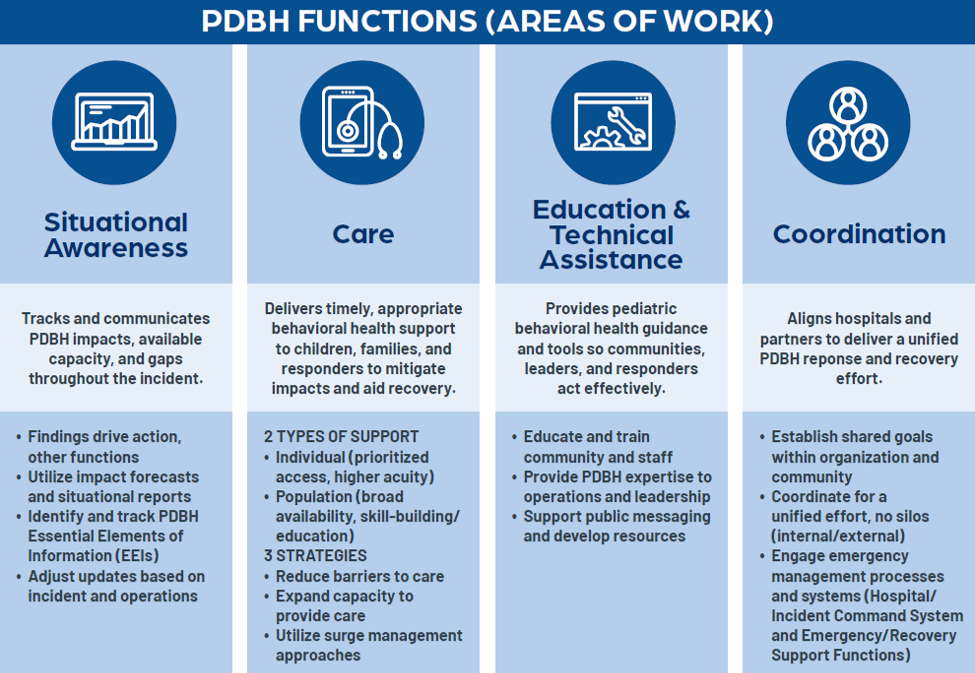
Figure 4. PDBH Functions
Each goal has a function associated with it that includes all the activities, processes, and resources to achieve that goal. Typically, during response and recovery, teams are organized in alignment with these functions to conduct related work (example of this structure). Each function supports its associated goal, the overall PDBH Mission, and other functions. For example, information gathered by the PDBH Situational Awareness function helps inform how care is provided, what education and outreach may be needed, and critical details to provide to partners.

Figure 5. PDBH Key Strategies
PDBH Key Strategies apply across all functions and are critical to achieve the goals and mission of the framework. They provide the overarching “how to” necessary for successfully implementing this framework during disaster response and recovery and are based on best practices and lessons learned from disaster behavioral health response and recovery practices.
While this overview provides broad information on each goal, function, and strategy, it is highly recommended to review the PDBH Operational Overview Table for in-depth information and recommendations prior to implementation. Meanwhile, the Just-in-Time section of this toolkit provides an operational planning process and proposed structures for deployment during disaster response. Lastly, the Toolbox includes a set of resources and tools to support the implementation of this framework.
Key Transitions

Figure 6. PDBH Key Transitions
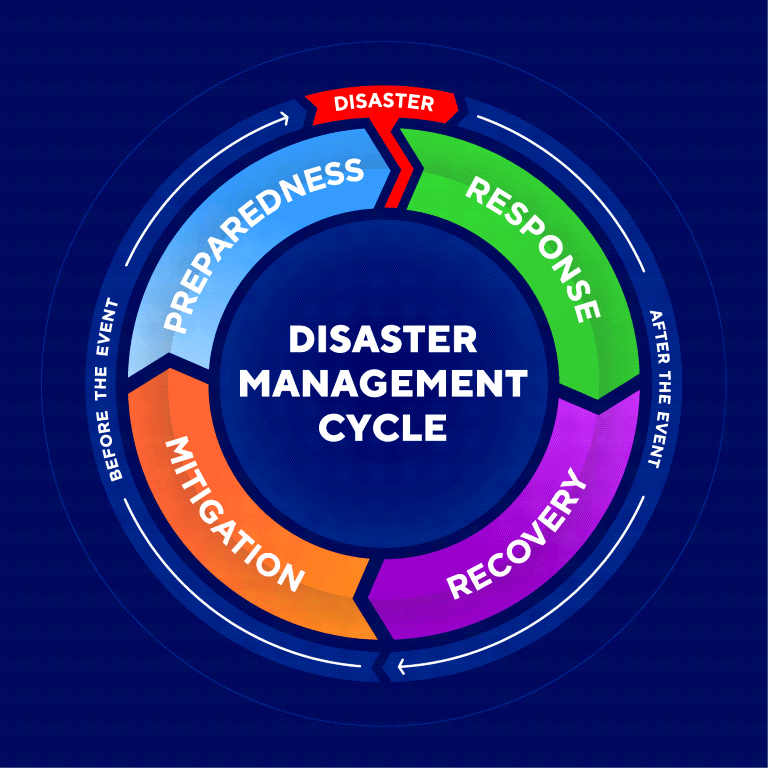
Often, after a disaster, key transition points are seen during the response and recovery efforts. While significant overlap may be present between disaster response and recovery phases, each involves distinct needs. challenges, and opportunities. For example, aside from initial on-scene support (when appropriate) and triage, the bulk of the activity during the Initial Response phase is evaluating the potential need and preparing to provide services during short-term recovery. Additionally, the importance, appropriateness, and effectiveness of interventions may vary over the course of a disaster. Effective PDBH response and recovery operations anticipate and prepare for these transitions.
For more information on these disaster phases, how they influence pediatric behavioral health, and the key considerations and strategies, review the Phase-based Recommendations section.
3.2. Key Pediatric Disaster Behavioral Health (PDBH) Principles & Assumptions
This quick-reference guide is designed to highlight core considerations for pediatric disaster behavioral health preparedness, response, and recovery efforts. It presents planning assumptions and guiding principles to support planning and decision-making, informed by emerging research and lessons learned from deployed disaster behavioral health teams.
For an expanded reference including additional details and references, please see the Key Principles & Assumptions – Expanded Reference.
| PDBH Planning Assumption | Recommended Approach |
|---|---|
| Disasters create a continuum of behavioral health needs, including short- and long-term. One size does not fit all. | Conduct early behavioral health impact assessments to match anticipated needs with available resources. |
| Reactions vary by prior experiences, direct exposure, and secondary impacts (social, economic, etc.). | Prepare a "menu" of supports across acuity levels and pediatric care systems. |
| Staff and clinicians are also affected by disaster exposure and proximity in addition to burnout, moral injury, and secondary traumatic stress. | Implement three-tiered support: individual plans, leadership training, and system-wide strategies. |
| Behavioral health needs evolve over time. | Monitor, evaluate, and adjust interventions continuously to meet changing needs. |
| Behavioral health services are chronically under-resourced and gaps widen post-disaster. | Prioritize care for highest-risk populations to maximize impact with limited resources. |
| Timely prioritization and/or triage influences long-term outcomes. | Use structured processes and/or triage tools to identify and prioritize high-risk individuals early. |
| Communities are unique and will have distinct needs, preferences, and resources. | Tailor interventions to community context, existing strengths, and varying acuity levels. |
| Behavioral health and physical health are interdependent. | Integrate behavioral health into all aspects of disaster response for coordinated, whole-person care. |
| Behavioral health needs will present across community touchpoints, likewise resources will be distributed across communities. | Collaborate and coordinate with other health care systems, providers, community organizations, and governmental structures. |
| Behavioral health impacts are often, but not always, delayed after a disaster. | Resources may need to be developed to prepare for a potential behavioral health surge in the months following the incident. |
3.3. Partnerships & Roles
Introduction

Pediatric disaster behavioral health needs emerge across time, settings, and systems, often after traditional disaster response has demobilized. Effective response and recovery requires a whole community effort. While children’s hospitals do not lead all pediatric disaster behavioral health efforts, they should expect pediatric disaster behavioral health needs to present in a wide variety of community touchpoints, such as schools, adult-focused medical sites, and emergency shelters. The resources to meet these needs are likely to be widely distributed across the community as well. Connecting and coordinating with community partners is essential to implementing the toolkit framework. Defining each organization’s role is essential to effectively operationalize the framework.
PDBH – Overview of Children’s Hospital & Community Partner Potential Roles
The table below outlines the dynamic relationship between children’s hospitals and the broader community in supporting pediatric disaster behavioral health. It recognizes each community will bring different needs, partnerships, resources, and capabilities to a response and recovery effort. This partnership framework defines how functions could be distributed across systems and how children’s hospitals can enable those functions to operate cohesively. These potential roles are not prescriptive and should be validated and established within the context of the local community.
For a detailed list of potential partner roles and capabilities in PDBH, please see the PDBH Partnership Table. For expanded information on how to engage these organizations including initial steps, please see the Emergency Management section of this toolkit focused on implementation with partners.
| Situational Awareness | |
|---|---|
| Children’s Hospitals Potential Roles |
|
| Other Healthcare Settings Potential Roles |
|
| Broader Community Potential Roles |
|
| Care | |
|---|---|
| Children’s Hospitals Potential Roles |
|
| Other Healthcare Settings Potential Roles |
|
| Broader Community Potential Roles |
|
| Education & Technical Assistance | |
|---|---|
| Children’s Hospitals Potential Roles |
|
| Other Healthcare Settings Potential Roles |
|
| Broader Community Potential Roles |
|
| Coordination | |
|---|---|
| Children’s Hospitals Potential Roles |
|
| Other Healthcare Settings Potential Roles |
|
| Broader Community Potential Roles |
|
Questions to consider when identifying roles and responsibilities among organizations:
Every community has different needs, resources, relationships, and response structures. Children’s hospitals should use the questions below to clarify where they are best positioned to lead, where they should support or advise, and where community partners may be better positioned to serve as the primary lead. These questions are intended to support local adaptation of the Pediatric Disaster Behavioral Health framework rather than prescribe a single model.
Understanding the Local PDBH Landscape
-
- Where are pediatric disaster behavioral health needs most likely to present in our community? Consider emergency departments, inpatient units, outpatient clinics, schools, shelters, family assistance centers, primary care, community behavioral health providers, child-serving agencies, and virtual settings.
- Which children and families are most likely to be missed if our hospital only focuses on patients who present to our facility?
- Which systems or partners already have trusted relationships with children, families, caregivers, schools, or specific communities?
- Where are there known gaps in pediatric behavioral health access, referral pathways, language access, culturally responsive care, transportation, or caregiver support that could worsen after a disaster?
Clarifying the Children’s Hospital Role
-
- For each Pediatric Disaster Behavioral Health function, is our hospital best positioned to lead, support, advise, coordinate, or refer? Consider this separately for situational awareness, care, education and technical assistance, and coordination.
- What pediatric-specific expertise, services, data, infrastructure, or convening power can our hospital contribute that other partners may not have?
- Which activities are essential for our hospital to perform directly because of our pediatric expertise or role in the health care system?
- Which activities could be performed more effectively by partners with stronger community reach, longer-term presence, or trusted local relationships?
- Where might our hospital unintentionally duplicate work already being done by schools, community behavioral health providers, public health, emergency management, or child-serving organizations?
- What role should our hospital play when pediatric behavioral health needs exceed our own clinical capacity?
- What decisions can our hospital make independently, and what decisions require coordination with community partners, public health, emergency management, or governmental authorities?
PDBH Situational Awareness
-
- What information would our hospital need to understand pediatric behavioral health needs across the community, not just inside the hospital?
- What indicators could help us recognize changes in pediatric behavioral health demand, acuity, access barriers, or service capacity over time?
- Which partners can contribute information from schools, shelters, outpatient care, community organizations, first responders, family-facing services, or other access points?
- How will we share pediatric behavioral health trends and gaps with partners in a way that supports action while protecting privacy and avoiding unnecessary burden?
PDBH Care
-
- What level of pediatric behavioral health care can our hospital realistically provide during a disaster or surge event?
- Which children, youth, caregivers, or staff would require direct hospital-based services, and which could be better served through community-based supports, brief interventions, referral, or consultation?
- What triage, referral, and handoff processes are needed so children and families can move between hospital-based, outpatient, school-based, shelter-based, and community supports?
- What partners can help reduce practical barriers to care, such as transportation, childcare, language access, technology access, cost, or trust?
- What contingency plans are needed if pediatric specialty behavioral health resources are unavailable, overwhelmed, or geographically inaccessible?
PDBH Education and Technical Assistance
-
- Who in our community may need pediatric disaster behavioral health guidance before, during, or after a disaster?
- What education or technical assistance is our hospital uniquely qualified to provide to health care partners, schools, emergency managers, responders, shelters, caregivers, or the public?
- What messages, tools, or training should be developed centrally by the hospital, and what should be adapted or delivered by trusted community partners?
- How will we ensure guidance is practical, developmentally appropriate, culturally and linguistically responsive, and usable by non-specialists?
PDBH Coordination
-
- Which existing emergency management, health care coalition, public health, school, or child-serving structures can be used to coordinate pediatric disaster behavioral health planning and response?
- If no clear coordination structure exists, what role should our hospital play in convening partners or helping establish one?
- Who will track unresolved needs, service gaps, duplication of effort, and emerging risks over time?
- How will coordination continue after the initial response phase, when pediatric behavioral health needs may persist or increase but response structures may begin to demobilize?
- Which existing emergency management, health care coalition, public health, school, or child-serving structures can be used to coordinate pediatric disaster behavioral health planning and response?
Testing Local Fit
-
- If a major disaster occurred today, what pediatric disaster behavioral health activities would our hospital be expected to perform, and are those expectations realistic?
- Where do our current plans rely on informal relationships, assumptions, or individual champions rather than defined roles and processes?
- What would partners expect from our hospital, and have those expectations been discussed directly?
- What would our hospital expect from partners, and have those partners agreed that they can fill those roles?
- What tabletop exercises, drills, or planning discussions could help test whether the proposed roles are feasible, coordinated, and sustainable?
3.4. Disclaimers & Acknowledgements
This toolkit was developed by the Pediatric Pandemic Network’s (PPN) Mental & Behavioral Health Domain. Final version was completed August 2026. The toolkit is developed for educational purposes only.
The Pediatric Pandemic Network is supported in part by the Health Resources and Services Administration (HRSA) of the U.S. Department of Health and Human Services (HHS) as part of cooperative agreements U1IMC43532 and U1IMC45814 with 0 percent financed with nongovernmental sources. The content presented here is that of the authors and does not necessarily represent the official views of, nor an endorsement by HRSA, HHS, or the U.S. Government. For more information, visit HRSA.gov.
This toolkit includes recommended actions that agencies and jurisdictions may want to consider during incidents with pediatric disaster behavioral health impacts. These strategies are not prescriptive and thus should be considered and organized within the context of the incident, the organizations responding, and the existing emergency management structure and plans. Furthermore, these strategies are not a mandate, nor do they reflect a comprehensive list of all potential considerations related to pediatric disaster behavioral health. Finally, the information included in this toolkit is focused on disaster related impacts and is not designed to address everyday mental health emergencies.
With Support from the Pediatric Pandemic Network

The Pediatric Pandemic Network is supported in part by the Health Resources and Services Administration (HRSA) of the U.S. Department of Health and Human Services (HHS) as part of cooperative agreements U1IMC43532 and U1IMC45814 with 0 percent financed with nongovernmental sources. The content presented here is that of the authors and does not necessarily represent the official views of, nor an endorsement by HRSA, HHS, or the U.S. Government. For more information, visit HRSA.gov.
Attribution-NonCommercial-NoDerivatives CC BY-NC-ND
You are free to download and share this work for noncommercial purposes, as long as you credit the Center for Global Health and the Pediatric Pandemic Network for the original creation.
3.5. Toolkit Development
This toolkit was developed through a structured, iterative process that synthesized expertise from behavioral health, disaster mental health, health administration and operations, emergency medicine, pediatrics, public health, emergency management, social work, telehealth, emergency medical services, disaster research, and family advocacy. An initial drafting team of researchers, mental health professionals, social workers, and emergency managers identified key actions needed to support pediatric behavioral health during disasters, drawing on both research and field-tested experience. These inputs were synthesized into potential organizing frameworks and refined through multiple rounds of feedback. Once the framework was established, the broader toolkit scope and content were drafted and revised over several iterative cycles.
An initial draft was reviewed by disaster mental health professionals, emergency managers, disaster responders, and clinicians to guide refinement of the toolkit. The revised draft was then circulated to a broader group of external reviewers, including disaster response organizations, children’s hospitals, community hospitals, health care coalitions, associations, mental health professionals, emergency medical services providers, researchers, educators, family advocates, and emergency managers. In addition to this broad feedback, final revisions were informed by findings from the Pediatric Pandemic Network’s Disaster Mental Health Delphi study (manuscript in progress). As such, this toolkit reflects the synthesis of a broad spectrum of expertise, experience, research, and perspectives dedicated to improving the ability of children’s hospitals and their communities to meet pediatric behavioral health needs after disasters
Editors:
Trevor Covington, M.S., C.E.M.
Owner & Senior Consultant, Protean Preparedness LLC
Mental Health and Washington State Coordinator, Western Regional Alliance for Pediatric Emergency Management
Mental and Behavioral Health Domain Manager, Pediatric Pandemic Network
Olympia, Washington
Christopher Gable, DO, FAAP
Assistant Professor of Pediatrics
Department of Emergency Medicine and Trauma Services
Children’s National Hospital
Mental and Behavioral Health Domain Lead, Pediatric Pandemic Network
Washington, DC
Project Coordinator:
Danielle Cory, MENG
Project Manager Research
Division of Emergency Medicine, Department of Pediatrics
Ann & Robert H. Lurie Children’s Hospital of Chicago
Mental and Behavioral Domain Coordinator, Pediatric Pandemic Network
Chicago, IL
Authors:
Kimberly Burkhart, Ph.D., ABPP
Board-Certified Clinical Child and Adolescent Psychologist
Rainbow Babies and Children’s Hospital
Associate Professor of Pediatrics
Case Western Reserve University School of Medicine
Cleveland, Ohio
Patty Davis, LSCSW, LCSW, IMH-E®
Children’s Mercy Kansas City
Kansas City, Missouri
Ashley A. Foster, M.D.
Assistant Professor of Emergency Medicine and Pediatrics
Department of Emergency Medicine
University of California, San Francisco
San Francisco, California
Ian Kodish, M.D., Ph.D.
University of Washington, Department of Psychiatry and Behavioral Sciences
Seattle, Washington
Kira Mauseth, Ph.D.
Astrum Health LLC
Behavioral Health Research Group, Department of Psychology, Seattle University
Seattle, Washington
Tona L. McGuire, Ph.D.
Clinical Associate Professor, Department of Psychiatry and Behavioral Sciences
University of Washington School of Medicine
Seattle, Washington
PPN Education & Communications Teams
Special thanks to PPN’s Communications and Education teams who contributed significantly to the graphics, accessibility, digital integration, and design of this toolkit.
Reviewers
Heather Austin, Ph.D.
University of Alabama at Birmingham
Birmingham, Alabama
Abby Bailey, MPH, NRP
Norton Children’s Hospital
Louisville, Kentucky
Susan Barrett, MA
Co-Director, Technical Assistance, School Behavioral Health Team
Center on PBIS
Santa Rosa, California
Heidi Baskfield
Vice President, Mental and Population Health
Children’s Hospital Association
Washington, District of Columbia, and Lenexa, Kansas
Lee Beers, M.D., FAAP
Washington, District of Columbia
Colleen Cicchetti, Ph.D.
Ann & Robert H. Lurie Children’s Hospital of Chicago
Chicago, Illinois
Emily Dorosz, MSN, RN
DC Emergency Medical Services for Children
Washington, District of Columbia
Carrie Epstein, LCSW-R
Yale Center for Traumatic Stress and Recovery
New Haven, Connecticut
Jennifer Freeman, Ph.D.
Professor of Special Education
Neag School of Education, University of Connecticut
Storrs, Connecticut
Steve Goodman, Ph.D.
University of Connecticut
Storrs, Connecticut
Hilary Hahn, Ed.M., MPH
Yale School of Medicine, Child Study Center
New Haven, Connecticut
Chris McCarthy
Emergency Preparedness Solutions LLC
Pediatric Pandemic Network
David C. McCarthy, B.A., NREMT (Ret.)
Emergency Preparedness Solutions LLC
Pediatric Pandemic Network
Annette Newman, MS, RN, CCRN
Pediatric Pandemic Network
Salt Lake City, Utah
Ronald Ruffing, M.D., M.P.H., M.P.S.
Pediatric Pandemic Network
Bloomfield Hills, Michigan
Mohsen Saidinejad, M.D., M.S., M.B.A., FAAP, FACEP
The Lundquist Institute for Biomedical Innovation at Harbor-UCLA
Torrance, California
Merritt D. Schreiber, Ph.D.
The Lundquist Institute for Biomedical Innovation at Harbor-UCLA
Los Angeles, California
Theresa Ryan Schultz, Ph.D., MSN, MBA, RN, NEA-BC
Jenkintown, Pennsylvania
Lauren Young Work, LCSW
Palm Beach County Fire Rescue
Palm Beach County, Florida
4. Preparedness
Section Overview
This section provides guidance on integrating the toolkit framework into a children's hospital organizational structure and programs during the preparedness phase. It covers internal coordination, including day-to-day programs and emergency management, administrative preparedness, and partnerships.
While this section takes a preparedness approach to implementation, just-in-time deployment of the framework and tools is covered in another section of the toolkit.
Overarching principles for implementing this framework
- Integration into existing programs, both emergency management and day-to-day services, is essential for both readiness and effective response and recovery.
- Administrative preparedness and support, including finances and policy, is a key component in reducing the time required to deploy disaster behavioral health services and supports.
- No disaster occurs in a vacuum. Collaboration and partnership with the broader community are imperative to ensure the community is ready to respond.
- All disasters start and end locally. Guidance, recommendations, and tools provided by this toolkit should be considered and adapted based on local needs, challenges, existing plans and partnerships, and community priorities.
At minimum, planning for assisting children should include
- A clear framework for action, such as the Pediatric Disaster Behavioral Health Framework presented in this toolkit.
- Early identification and prioritization of children at higher risk for new or worsening behavioral health disorders.
- Preparedness to deliver effective trauma-informed care, including:
- Trauma-informed training and procedures to reduce additional harm.
- Family-centered approaches to leverage family resilience.
- Consideration of children with neurodevelopmental differences and complex health care needs.
- Early-stage supports to help families understand and manage event-related stress, including Psychological First Aid for broad application and structured brief interventions such as Trauma-Focused Cognitive Behavioral Therapy (TF-CBT) and the Child and Family Traumatic Stress Intervention (CFTSI) for high-risk pediatric trauma exposure.
- Strong capacity for behavioral health communication, both inside and outside the hospital.
- Strong partnerships with key external partners such as other health care facilities, schools, and governmental partners.
Ideally, facilities and communities will be ready to implement all goals, functions, and components outlined in the framework.
How to Get Started
Action: Review the framework and key assumptions and principles in this toolkit.
- Confirm the team understands the framework as the foundation of the preparedness and response effort.
Why: This is the overarching organizing model for the recommendations that follow.
Action: Obtain leadership support for ongoing preparedness efforts.
- Use the Administrative Preparedness section to build sustained capability.
Why: Ongoing preparedness, response, and recovery require sustained support.
Action: Identify clear responsibilities among departments and individuals.
- Common models include co-leadership by the emergency management director and behavioral health director, a dedicated PDBH coordinator role where resourced, or distributed ownership across an interdepartmental working group with a designated chair.
Why: PDBH preparedness benefits from clearly assigned ownership.
Action: Embed pediatric disaster behavioral health into key areas of the organization.
- Refer to the Internal Coordination section for considerations and recommendations related to:
- Emergency departments
- Behavioral health programs
- Social work
- Telehealth
- Medical home
- Emergency management
- Communications
- Chaplaincy
Why: Pediatric disaster behavioral health needs will impact multiple departments and programs.
Action: Engage partners as outlined in the model section of this toolkit.
- Reference:
- The partnership introduction section and the expanded partnership table appendix for details on potential roles for specific organizations.
- The partnership engagement section for guidance on initiating and engaging these partnerships.
Why: Pediatric disaster behavioral health needs and resources will be distributed across the community.
4.1. Strategic Administrative Preparedness for Pediatric Disaster Behavioral Health

Children’s hospitals are central to their communities’ disaster resilience, yet without administrative preparedness, including clear policies, legal frameworks, financial systems, and partnerships, DBH programs cannot scale when crises occur. Strengthening these systems protects children and families while reducing operational and financial strain on hospitals by minimizing delays, mitigating liability, and preventing costly long-term impacts.
Administrative preparedness is the difference between a foreseeable surge the institution metabolizes and one that erodes capacity for 12 to 24 months afterward. Funded as a baseline cost of doing pediatric business, it is among the highest-leverage risk-mitigation investments available given the current trajectory of climate, infectious disease, and mass-violence events. If deferred, it converts every future disaster into a balance-sheet event, a regulatory event, and a workforce event.
This section outlines key administrative actions to support DBH response and recovery, offers strategic talking points for hospital executives, policymakers, and philanthropic partners, and identifies sustainable funding pathways to ensure long-term readiness.
STRATIFIED ADMINISTRATIVE ACTIONS BY HOSPITAL PROFILE
Children’s hospitals vary widely in their size, resources, and disaster exposure. For the purposes of this toolkit:
- “Low resource” refers to hospitals with limited pediatric behavioral health staffing or funding relative to their community’s potential needs.
- Even a standalone children’s hospital can be “low resource” in relation to its catchment area.
- “High resource” refers to hospitals with infrastructures that can manage brief surges in volume without delays in care, have diversified funding, and maintain greater existing integration into regional or state systems.
While actions are stratified below, all hospitals should consider progressive adoption across profiles. These strategies should be informed by Hazard Vulnerability Analyses (HVAs) and After-Action Reports (AARs). These profiles are based on your local judgment. Ideally, hospitals can incorporate some preparedness actions from every profile.
| All Facilities | |
|---|---|
| Strategic Priorities | Support ongoing preparedness efforts; align DMH with hospital-wide risk and cost-reduction strategies. |
| Minimum Preparedness Actions |
|
| Low Resource, Low Disaster Frequency | |
|---|---|
| Profile | Low Resource, Low Disaster Frequency (e.g., small hospital, low incidence of past disasters) |
| Strategic Priorities | Policy integration, partnerships, reliance on regional supports. |
| Minimum Preparedness Actions |
|
| Low Resource, High Disaster Frequency | |
|---|---|
| Profile | Low Resource, High Disaster Frequency (e.g., rural/suburban areas prone to disasters) |
| Strategic Priorities | Legal and financial flexibility; cross-sector coordination. |
| Minimum Preparedness Actions |
|
| High Resource, Low Disaster Frequency | |
|---|---|
| Profile | High Resource, Low Disaster Frequency (e.g., large systems in areas with infrequent disasters) |
| Strategic Priorities | Lead in innovation; export best practices. |
| Minimum Preparedness Actions |
|
| High Resource, High Disaster Frequency | |
|---|---|
| Profile | High Resource, High Disaster Frequency (e.g., large urban trauma centers, areas with routine disasters) |
| Strategic Priorities | Anchor the region; ensure universal access and protect vulnerable populations. |
| Minimum Preparedness Actions |
|
Funding & Sustainability
Integrate DBH Into Standard Reimbursement Models
- Ensure coding/capture for trauma-informed care, group therapy, family-based interventions, and tele-psychiatry services. Train clinicians and revenue cycle teams to maximize reimbursement for disaster-related MH services. See the CPT/HCPCS Coding Reference for Pediatric Disaster Behavioral Health appendix.
- Value-Based Care Contracts: Include disaster MH outcomes (e.g., reduced ED boarding hours, decreased psychiatric readmissions) as quality metrics eligible for incentive payments.
- Bundled Payments: Embed DBH services into episode-based or bundled payments for pediatric trauma, mass casualty, or post-disaster recovery care.
Create a Behavioral Health Disaster Preparedness Cost Center
- Track avoided costs (ED throughput, staff turnover, extended LOS) to demonstrate return on investment to leadership.
Engage with Philanthropy and Social Impact Investing
- Explore endowed funds or community benefit investments earmarked for pediatric DMH surge and recovery.
- Partner with large local employers, insurers, and health foundations who have a vested interest in workforce stability and family resilience.
Structure Cost-Sharing with Adult Hospitals
- Regional Pooled Funds: Leverage hospital associations to structure a regional disaster MH fund that can be activated by multiple hospitals during an event, specifically for sustained community support.
Consider Revenue-Generating Programs
- Offer continuing education, workforce training (such as the TEEX Pediatric Disaster Response and Emergency Preparedness training), consultancy, and simulation exercises in pediatric disaster MH for other hospitals, schools, and agencies (fee-for-service model).
- Consider regional cost-sharing models for digital platforms and telehealth surge capacity, structured to ensure equitable access across resource-stratified facilities.
TALKING POINTS: WHY ADMINISTRATIVE PREPAREDNESS MATTERS
Communicate the value of disaster behavioral health administrative preparedness to different stakeholders:
Hospital Executives
Elevator pitch: “Behavioral health surge drives cost across the enterprise. Preparedness reduces ED boarding, improves throughput, lowers staff burnout, and protects reputation. Families value hospitals that recognize behavioral health as part of whole care. Investment now reduces avoidable long-term financial strain.”
Deeper dive: Behavioral health impacts the whole system of care. A prepared hospital avoids throughput delays, legal liability, mounting disruptions, and reputational risks while ensuring continuity of high-quality care. The operational cost of disaster behavioral health unpreparedness is most clearly understood through surges. CDC syndromic surveillance documented that the proportion of mental health–related ED visits rose approximately 24% among children aged 5 to11 and 31% among adolescents aged 12 to 17 during the COVID-19 pandemic compared with 2019. Hospitals that had pre-positioned pediatric behavioral health surge protocols, defined activation triggers, regional transfer agreements, and ED-embedded telepsychiatry navigated this surge with measurably better operational continuity. Hospitals without these preparations absorbed the same surge as unbudgeted overtime, locum coverage, lost elective margin, adverse events, and reputational exposure in pediatric markets where families exercise choice. Patients and their families respond positively to systems that prioritize their concerns, particularly during times of crisis, and assist their capacity to restore healthy functioning in the community. This will translate to stable patient growth and reliable care provision in the post-disaster business environment.
Public Policymakers
Elevator pitch: “Children’s hospitals are critical disaster infrastructure. With the right financial and regulatory tools, they prevent downstream costs in education, juvenile justice, and chronic illness, delivering a return on investment beyond the health care system.”
Deeper Dive: Because children’s hospitals are uniquely positioned to navigate the inherent complexity of an acute disaster, they are a key infrastructure in disaster response. When they have the appropriate regulatory and financial tools and policy, including Medicaid 1135 waivers, parity enforcement, state-level insurance, and scope of practice flexibility, they can promote behavioral health resiliency through access to effective care, while preventing downstream costs in education, juvenile justice, and chronic illness.
Philanthropic Partners
Elevator pitch: “Preparedness is a force multiplier. Administrative investments ensure donor dollars create real-world, scalable impact, strengthening equity and resilience. Supporting pediatric mental health after disasters is not only lifesaving; it positions donors as champions of community healing.”
Deeper dive: Strategic administrative investment ensures your dollars translate to real-world impact, to enhance equity and promote resilience. Communities reflect positively on major donors that prioritize their concerns, especially when the challenge is as urgent as pediatric behavioral health after an acute disaster. Actively funding care solutions that allow families to overcome traumatic events and emerge stronger post-disaster is a laudable achievement.
For additional resources and references, see the Crisis Services compiled by the National Association of State Mental Health Program Directors (NASMHPD) 4, this workshop summary from the Forum on Medical and Public Health Preparedness for Catastrophic Events5, this publication on Supporting Children’s Mental Health Needs in Disasters6, and this list of healthcare pediatric preparedness resources from the National Pediatric Disaster Coalition.
4.2. Internal Coordination: Program Integration & Emergency Management
Below are recommendations to integrate pediatric disaster behavioral health into your existing programs. These are not comprehensive and should be considered a starting point.
Specific topic areas include:
4.3. Behavioral Health in Disasters
This section outlines how PDBH service delivery differs from routine care and how disasters change the way pediatric behavioral health care is organized, delivered, and scaled.
Common Pitfalls to Avoid
- Assuming conventional care models will scale: Routine clinic workflows rarely meet surge demand, leading to delays and inequities in access.
- Over-reliance on a single intervention or support: One-size behavioral health approaches fail to meet the full continuum of behavioral health needs, and risk both over pathologizing normative distress or relying on resilience which often leads to missing some children who need support.
- Unclear triage and referral pathways: Without defined determinants and destinations for follow-up care or assessment, high-risk children are missed or waitlisted.
- Lack of identification of resources at baseline: No measurement or accounting of community behavioral health resources prior to the event. Planning ahead will create communication channels between systems of care, so all resources can be included in planning, training, and drills.
- Weak linkage to community/crisis systems: Limited integration with crisis call centers including 988, crisis counseling programs, and community services, reducing reach and sustainability.
Thinking Differently: How Care Delivery Differs in Disasters
- Plan for systemic strain and proactive mental health triage.
- Establish surge management to balance needs and available resources; align with the Pediatric Disaster Behavioral Health (PDBH) Care function in the framework overview.
- Define triage workflows for pediatric behavioral health in disasters, engaging as many pediatric systems of care as possible (schools, outpatient clinics, hospitals), and including thresholds for brief interventions, such as psychological first aid vs. referral for further behavioral health evaluation and treatment.
- Assess risk and exposure explicitly. (Do not rely on symptom expression alone in early response).
- Prepare to screen or triage for direct exposures (injury, witnessing death, loss of caregivers, delayed evacuation) and compounding adversities (poverty, substance use, interpersonal violence).
- Highest risk is associated with direct exposures such as being injured, witnessing injuries or death, separation from caregivers, delayed evacuation, or death of loved ones.
- Prioritize high-risk children for early behavioral health follow-up and stepped-care escalation as needed.
- Prepare to screen or triage for direct exposures (injury, witnessing death, loss of caregivers, delayed evacuation) and compounding adversities (poverty, substance use, interpersonal violence).
- Use a layered continuum of care to effectively utilize limited resources.
- Establish a tiered model from universal supports to intensive treatments, such as Stepped Care Model (TSCM) – Mental/Behavioral Health and Psychosocial Support (MHPSS)7 – Triage to Stepped TF-CBT8 - or Multi-Tiered Systems of Support (MTSS)9 ; match service intensity to need and phase. Additionally, consider which supports may be appropriate in initial response (such as at family reunification centers) and those more useful during recovery.
- Prepare to deploy Psychological First Aid (PFA) or similar early psychosocial supports while recognizing it is not sufficient for higher-risk trauma exposures.
- Embed chaplaincy and spiritual care resources into tiered support, to act as extensions and enhancement for psychosocial care.
- The PDBH Care Guidelines outline the considerations and broad approach to advance from initial impact evaluation, to identify potential care needs, and develop a service delivery approach.
- Select interventions by risk and phase using tools such as SAMHSA’s Disaster Behavioral Health Interventions Inventory.
Preparing for Triage and Risk Stratification
- Adopt a pediatric triage tool or similar system to identify needs and prioritize care.
- Implement a rapid pediatric behavioral health triage tool for post-disaster; train, test, and integrate it with intake and referral pathways.
- A variety of tools are available and may be helpful for clinical evaluation. Please reference the Triage vs Screening vs Assessment in Disasters or Mass Casualty Incidents (MCIs) appendix item for a review of these tools.
- For example, the PsySTART system facilitates rapid pediatric behavioral health triage post-disaster and can support both individual case disposition as well as community-level situational awareness of impacts, via use of de-identified and aggregated data.
- Operationalize pathways before the disaster.
- Map “triage → brief behavioral health support→ targeted further evaluation and treatment → specialty care” with time targets and responsible roles.
- Embed escalation criteria (suicidality, complicated grief, severe functional decline) and hard stops for immediate safety evaluation.
- Define handoff protocols from response to recovery phases, including re-screening intervals and criteria to step down or step up care.
Build the Continuum and Partnerships
- Inventory capacity and establish referral pathways.
- Identify evidence-based pediatric behavioral health and trauma providers in advance; maintain a directory with languages, modalities (in-person/tele), insurances accepted, and age ranges served.
- Collate Evidence-Based Practices (EBP), crisis lines (including 988), crisis counseling programs, school-based programs, and community agencies, with contacts and referral criteria; assign an owner for updates.
- Formalize partnerships with crisis call centers (e.g., 988 and the Disaster Distress Helpline), and the state crisis counseling program (e.g., Show Me Hope), and community providers, for surge routing, warm handoffs, and after-hours support.
- Expand surge options by partnering with the community.
- Develop MOUs with community agencies to add brief interventions, school-based supports, and group formats during surge.
- Support training pre-event in behavioral health triage, and modifications in care associated with patient surge.
- Standardize brief interventions for rapid deployment.
- Promote short-term trauma-focused interventions, utilizing psychological triage to identify risk level due to trauma exposure, and symptom scales to guide need for behavioral health treatment.
Planning, Training, and Exercising
- Train the workforce to increase capability and confidence.
- Explore trainings such as the PPN Pediatric Behavioral Health in Disasters Curriculum10 , the PPN Preparedness and Response to Catastrophic Events ECHO Recordings11 , and those outlined in the Curriculum Recommendations for Disaster Health Professionals – Disaster Behavioral Health12 .
- Encourage staff to complete the Texas A&M Engineering Extension Service (TEEX) Pediatric Disaster Response and Emergency Preparedness course (16.00 Hours).
- Prioritize PFA training for hospital and clinic staff; use the National Child Traumatic Stress Network (NCTSN) learning center five-hour course on the eight core actions.
- Use the Checklist of Essential Pediatric Considerations for Every Hospital’s Disaster Policies by EMSC to ensure pediatric considerations (including PFA) are embedded in hospital preparedness.
- Integrate into plans and drills to avoid siloing.
- Embed pediatric behavioral health roles and triggers into emergency operations plans and incident action plans.
- See the Disaster Planning Handbook for Behavioral Health Service Programs from SAMHSA13 for in-depth guidance on planning considerations.
- Exercise referral pathways and triage workflows during drills; include documentation and data capture for after-action review.
- Embed pediatric behavioral health roles and triggers into emergency operations plans and incident action plans.
Preparing Caregiver Support and Public Guidance
- Prepare evergreen caregiver materials.
- Create ready-to-deploy guidance that covers common child reactions, mitigating strategies (e.g., maintaining routines, limiting media exposure), warning signs, and local supports.
- Include accessible formats (plain language, multiple languages, print and digital).
- Prepare to support public communication and dissemination.
- Prepare to align messaging with communications teams to ensure consistent guidance across hospital, schools, and community partners. See the Communications section for further information.
- See the Toolbox for potential resources.
Death Notification and Bereavement Support
Traumatic loss due to a sudden, violent, or unexpected death, such as in the context of a disaster or other large scale crisis event often leads to complicated bereavement and significant mental and emotional impacts on the survivors. Death notification should be perceived as a continuum of care, with informing the loved ones of the deceased as one part of the continuum. It begins with organizational decisions around a) who to inform, b) in what setting will the notification occur, c) actual notification about the death, and d) finally planning for ongoing communication, support, and resources for the family.
Key Things to Know
- Notification for children requires additional attention and skill related to developmental and age-appropriate communication.
- Children benefit from honest answers to their questions, and inclusion in events such as wakes and funerals/viewing of the body (within their cultural and familial context and practices).
- Within that context, it is helpful for children to have an accompanying adult to provide support, calming, and information when there are other adults around who may be having strong emotional responses.
- Children also benefit by staff providing support to the important adults in their lives. This creates a stable environment during an unstable time to allow for open communication about the death and the deceased, which enhances recovery.
Pre-planning for Death Notification in a Hospital or ED should include:
- Identification of staff trained and able to provide this support, and a system of identifying and deploying as needed. A team of two staff members is recommended to allow for additional family support, as well as peer support.
- Space allowing for removal from the busy treatment areas or morgue into a place offering quiet and privacy.
- Choosing and exercising training in best practices in death notification.
- Planning for viewing of the body of the deceased (if possible, cleaned and dressed). It is important to prepare the family by providing information and preparation for visuals such as paleness, wounds, and disfigurement. Decisions to view or not view the body can be culturally informed and are an individual decision. Any decision regarding viewing should be supported.
- Ready access to information on the process that will be followed after the death (e.g., movement of the body to another site).
- Written information for families on frequently asked questions such as when, how, and where the deceased will be released for burial as they may not remember verbal information.
- Written information for families about the mental health impact of sudden traumatic death that includes local resources such as MH providers, grief and loss counselors, and support groups.
- Engagement with chaplain/spiritual care services in planning for mass casualty incidents.
- Engagement with hospital mental health services in planning support for providers engaged in death notification.
4.4. Emergency Department

The pediatric emergency department (ED) is the most disaster-exposed clinical environment in the children’s hospital. It is the de-facto front door for both physically injured and psychologically affected children, the principal site of pediatric care when capacity is exhausted, and the operational interface between bedside care and incident command. Because of this, ED readiness for pediatric disaster behavioral health is a core determinant of hospital-wide response capacity.
Many strategies in the Behavioral Health in Disasters section apply within the ED, including trauma-informed communication, Psychological First Aid, crisis de-escalation, and rapid behavioral health workflows. These should be implemented within the ED with the additional considerations below. For ED telepsychiatry implementation, see the Telehealth section and the Primer on Initiating a Hospital-Based Telepsychiatry Program.
Day-to-Day Readiness
The ED is often the first, and sometimes only, point of contact for youth in behavioral health crisis. Foundational day-to-day capabilities, trained staff, established workflows, validated screeners, and community partnerships are the platform on which disaster readiness is built. Hospitals without these in place have struggled to scale rapidly during an event.
Common Pitfalls to Avoid
- Treating behavioral health surge as a downstream problem: In non-trauma disasters [Chemical, Biological, Radiological, Nuclear, and Explosive (CBRNE), infectious, mass violence, school-based incidents], behavioral health surges can lead physical surge [e.g., medically unexplained physical symptoms (MUPS)]. EDs that wait for a surge signal to activate surge protocols can be behind.
- Underestimating boarding load: Pediatric BH boarders consume disproportionate ED resources, including 1:1 sitters, prolonged length of stay, and complex disposition. Even a small absolute number of boarders can collapse throughput.
- Overreliance on social work/allied staff: Social work is essential but cannot substitute for embedded surge protocols, strong workflows, and physician-level decision support during surge.
- No surge trigger criteria: Without pre-defined activation thresholds, ED leadership ends up making ad hoc decisions under stress, often too late.
- Unclear interface with HICS: If ED leadership cannot quickly answer “who in incident command needs to know about boarding right now,” the response can suffer.
Disaster Readiness and Activation
During disaster events, EDs become the front line for both physical and psychological trauma. EDs should consider plans to:
- Embed pediatric behavioral health surge protocols into emergency operations plans with pre-defined activation criteria. These should reference both census measures (e.g., number of mental/behavioral health boarders, MBH-related patients per shift relative to baseline) and qualitative triggers (e.g., mass violence event involving children, school-based incidents).
- Integrate behavioral health considerations into HICS roles and ED-specific Job Action Sheets. See the Disaster Mental Health Primer for the HICS Mental/Behavioral Health Lead and HICS Behavioral Health Unit Leader Job Action Sheet for specific considerations.
- Establish family and caregiver support workflows, coping resources, and warm handoffs to reduce ED recidivism.
- Pre-designate physical space for behavioral health surge: dedicated low-stimulation rooms, a defined family-support area, and a plan for converting shareable space (e.g., conference rooms) for caregiver psychological first aid when ED rooms cannot be released.
- Define an information flow from the ED to incident command for BH-relevant indicators (boarder census, restraint events, BH-related ED visits, agitation events).
- See the AAP Management of Children and Youth with Pediatric Behavioral Health Emergencies20 for clinical guidance.
- Pediatric agitation and restraint use predictably increases under surge conditions and is a care quality and safety concern. Ensure pediatric-specific agitation pathways align with Joint Commission guidelines, covering verbal de-escalation, environmental modification, pharmacologic options in order sets with pre-set dosing recommendations, and debriefing after significant agitation or restraint events.
Pediatric Behavioral Health Boarding
Pediatric MBH boarding is both an operational challenge, consuming bed capacity, sitter staffing, and clinician attention, and a clinical challenge, as extended boarding correlates with worsened symptoms, increased restraint use, and reduced therapeutic engagement. EDs should consider:
- Alternative dispositions, including telepsychiatry-supported home discharge with urgent outpatient bridging, regional BH transfer agreements, mobile crisis response, and crisis stabilization unit referrals.
- Surge boarding protocols that pre-authorize converted space, define minimum staffing and safety standards, and address the therapeutic setting (e.g., lighting, noise, access to caregivers, age-appropriate activity, meals).
- Communication guidance for families when boarding is prolonged, including expected timelines, available supports, and how to escalate concerns.
Caregiver Behavioral Health in the ED

Parents and caregivers of acutely affected children are often acutely affected themselves, which influences both the child’s recovery and the family’s capacity to engage with discharge planning. ED workflows rarely accommodate caregiver needs explicitly. Considerations:
- Provide caregiver-facing materials at discharge addressing common reactions, when to seek help, and local resources, in plain language and multiple languages.
- Identify a clear pathway for caregivers requiring more than supportive intervention, including warm handoff to community supports or, when indicated, evaluation in the adult ED.
- Recognize that caregivers may also be patients themselves (injured or exposed) and plan for parallel care that maintains the caregiver-child relationship where possible.
Scalable Planning Based on Facility Size
Volume thresholds below refer to annual pediatric ED visits. They apply to both pediatric EDs and general EDs that see substantial pediatric volume.
- Small EDs (approximate volume <10,000 pediatric visits/year): Focus on foundational training, internal coordination protocols, and referral clarity. Establish transfer agreements with regional pediatric centers in advance. Consider Emergency Department Telepsychiatry (EDTP) partnerships to extend specialty access.
- Medium EDs (approximate volume 10,000–50,000 pediatric visits/year): Build BH surge triggers into ED planning, establish staff cross-training for flexibility, and maintain key partnerships with outpatient MH providers and regional pediatric resources. Develop pediatric-specific agitation pathways and surge boarding protocols.
- Large EDs (approximate volume >50,000 pediatric visits/year): Create dedicated pediatric BH boarding and surge protocols including warm handoff to outpatient providers; serve as a regional resource for smaller facilities; integrate ED telepsychiatry to extend reach; embed BH in HICS planning at the section-chief level.
ED Telepsychiatry
ED telepsychiatry extends specialty BH access during disasters and is particularly valuable for facilities without on-site pediatric psychiatry. Disaster considerations include credentialing reciprocity, bandwidth and connectivity resilience, and integration with surge protocols.
Metrics During Response
Disaster response is when measurement matters most and is hardest to sustain. Pre-define a minimum viable measurement set so the data is available for after-action review and quality improvement:
- Mental and behavioral health boarder census and length of stay, by day
- Restraint and seclusion events, with disposition and disparities analysis
- MBH-related ED revisit rates within 72 hours and 30 days
- Time from triage to MBH consult and time to disposition for MBH presentations
Additional resources and references:
- Checklist of Essential Pediatric Domains and Considerations for Every Hospital’s Disaster Policies – EMSC Innovation & Improvement Center
- This checklist outlines recommended activities for hospitals to prepare to meet pediatric needs during disasters.
- The Management of Children and Youth with Pediatric Behavioral Health Emergencies20
4.5. Social Work
Social Work departments are vital partners in pediatric disaster behavioral health. They support psychosocial assessment, reunification plans, resource referrals, trauma-informed mental health support, providing guidance to parents and caregivers, and connection to long-term care.
- Core Responsibilities
- Support reunification plans during or following emergency events, in alignment with facility and/or jurisdictional plans.
- Conduct psychosocial assessments for impacted children and families.
- Provide targeted resource referrals to meet family needs, including wrap-around services, in addition to referrals to long-term care.
- Disaster-Specific Readiness
- Prepare to utilize Psychological First Aid to support children and families.
- Become familiar with disaster-related risk factors known for increasing risk of developing post-traumatic behavioral health concerns. A variety of tools are available, such as PsySTART21 , or the Acute Stress Checklist (ASC-Kids)22 which may be helpful for clinical evaluation. Please reference the Triage vs Screening vs Assessment in Disasters or Mass Casualty Incidents (MCIs) appendix for a review of these tools.
- Maintain updated lists of local providers trained in evidence-based trauma interventions for children. See the SAMHSA's Disaster Behavioral Health Interventions Inventory for a potential list of interventions to consider.
- Proactively build partnerships with community and faith-based organizations that provide services in the event of disasters. These groups are often organized into Community/Voluntary Organizations Active in Disasters (COADs/VOADs).
- Keep quick-access caregiver handouts focused on pediatric disaster behavioral health guidance and supports.
- Become familiar with potential and expected response and recovery roles. Consult your emergency management team and identify social work roles in protocols and plans related to family reunification, casework, and recovery.
4.6. Telehealth
Considerations and Recommendations for Implementing Telepsychiatry in Pediatric Disaster Settings

Telepsychiatry plays a vital role in sustaining and expanding access to mental and behavioral health care during disasters. It enables continued service delivery despite disrupted infrastructure, escalates capacity to meet heightened needs, and reaches populations with limited access, especially in rural or underserved regions.23,24,25,26
The below information provides considerations and recommendations for implementing telepsychiatry in pediatric disaster settings. For further information on initiating a hospital-based telepsychiatry consultation program, please see Appendix - Primer on Initiating a Hospital-Based Telepsychiatry Program.
Implementation Considerations
- Build on existing resources.
- Leverage existing federal and agency-developed tools (e.g., ASPR, SAMHSA) to avoid duplicating effort and align with national guidance.
- Reference rapid deployment and adaptation strategies, such as those used during COVID-19, for transitioning services to virtual care.
- Expand telehealth privileges to broaden clinical access.
- Deploy hybrid models based on acuity, complexity, and patient preference.
- Utilize existing electronic health records systems to incorporate and disseminate elements of psychoeducation, legal consents, and standardized clinical assessments.
- Foster privacy and security by establishing a therapeutic virtual environment and encourage use of headphones and secure chat if patients are unable to access private space.
- Utilize evolving remote therapeutic monitoring systems.
- Address access gaps.
- Identify barriers for at-risk demographic groups, rural populations, youth with pre-existing or developmental conditions, and those with limited financial or communication resources.
- Plan for variable technology access, including solutions for encrypted mobile platforms in low-resource or field settings that enable privacy and security.
- Plan for operational readiness.
- Ensure credentialing, payment mechanisms, data privacy, and reliable connectivity are addressed prior to activation.
- Maintain updated directories of local behavioral health services to support handoffs and continuity of care.
- Offer provider training, equipment guidance, and troubleshooting resources in advance of emergencies.
Evidence-Based Recommendations
- Embed telepsychiatry into pediatric emergency care.
- Implement telepsychiatry to improve therapeutic decision-making, diagnostic accuracy, and access to specialty care.
- Improve provider safety and satisfaction through virtual consultation options.
- Utilize virtual programming to expand care options.
- Evidence-based mental health treatments can be implemented virtually even during the acute phase of trauma response to reduce symptoms in children and adolescents as well as their caregivers through Child and Family Traumatic Stress Intervention (CFTSI) and Trauma-Focused Cognitive Behavioral Therapy (TF-CBT).
- Offer virtual group therapy, education, peer support, and parent training to expand reach when in-person settings are unavailable.
- Provide structured virtual skill-building groups as part of early and ongoing disaster response programming.
- Ensure technology and staffing preparedness.
- Invest in secure, durable technology (e.g., encrypted tablets and platforms), supported by reliable internet infrastructure.
- Account for the potential burden telepsychiatry places on ED nursing staff and mitigate through streamlined workflows, cross-training, and easy access to technical support.
4.7. Medical Home

Patient-Centered Medical Homes (PCMHs) are a primary access point for pediatric mental and behavioral health, especially during disasters when specialty access is limited. Primary care clinicians (PCCs) screen, initiate brief interventions, manage medications as appropriate, and coordinate referrals29 .
Evidence shows the PCMH model improves outcomes, reduces hospitalizations, and is associated with higher patient/provider satisfaction. Approximately 1 in 5 U.S. youth ages 3 to17 meet criteria for a mental, emotional, developmental, or behavioral disorder30,31,32,33 .
Context and Role of the Medical Home
- Increased accessibility: Many children receive behavioral health care in PCMHs due to workforce shortages and access barriers (geography, perceptual, structural).
- PCC scope: Screen and manage low to moderate-acuity behavioral health concerns, provide brief psychosocial interventions and medication management as indicated, and coordinate with behavioral health partners29.
- Value of the model: PCMHs support continuity, navigation, and family-centered care across preparedness, response, and recovery34 .
Preparedness: What PCMHs and PCCs Should Put in Place
- Engage families in readiness and resilience building.
- Share and review family-facing toolkits: Disasters and Your Family: Be Prepared, Family Readiness Toolkit, and Emergency Information Form.
- Compile and maintain a behavioral health referral list.
- Include local providers across ages, languages, modalities (in-person/tele), and insurance coverage for use in all disaster phases.
- Standardize screening and monitoring.
- Adopt core screeners and workflows for initial screening and ongoing symptom tracking. These screeners should be normed for use in pediatrics or interpreted with significant caution:
- PHQ-9A (Patient Health Questionnaire modified for Adolescents, for 12+), C-SSRS (Columbia-Suicide Severity Rating Scale), GAD-7 (General Anxiety Disorder, not for use in children under 11), ASQ (Ask Suicide-Screening Questions), Primary Care PTSD Screen for DSM-5 (normed for adult population) or the CPSS-5 (Child Symptom PTSD Scale). For more information, please reference the Triage vs Screening vs Assessment in Disasters or Mass Casualty Incidents (MCIs) appendix for a review of these tools.
- Adopt core screeners and workflows for initial screening and ongoing symptom tracking. These screeners should be normed for use in pediatrics or interpreted with significant caution:
- Use American Academy of Pediatrics (AAP) disaster readiness resources.
- Reference AAP: Disasters and Children33 for practice-level recommendations, checklists, and family guidance.
Response and Recovery: How PCMHs Support Children and Families
- Promote stabilization and routine.
- Coach families on establishing daily routines, regular physical activity, nutritious meals, sleep hygiene, positive activity engagement, and relaxation strategies.
- Provide timely triage and follow-up.
- Triage behavioral health needs, initiate brief supports, and schedule monitoring visits; escalate when safety risks are identified.
- Consult and collaborate with schools/childcare and community partners.
- Serve as a consultative resource on Psychological First Aid (PFA) –related practices and pediatric considerations. Gather information and awareness about current needs and trends among student populations.
- Advocate for children’s needs.
- Elevate pediatric considerations at local, state, and federal levels as issues emerge during recovery.
- Address suicide risk with established resources.
4.8. Chaplaincy
Chaplains/spiritual care providers can be effective and helpful “force multipliers” for psychosocial support. Most hospitals have chaplaincy/spiritual care personnel who can support staff during times of overwhelm in natural disasters, for Mass Casualty Incidents (MCIs) and community violence, such as school shootings. During these larger events, organizations may also need to increase access to spiritual care resources and staff.
Integrating Chaplains/Spiritual Care Providers into Preparedness
- Spiritual care providers should be included in planning, trainings, and exercises to prepare them for the expectations and role changes that happen during a large event.
- Embed spiritual care into planning for reunification processes and family assistance centers.
- Identify and develop partnerships with chaplain/spiritual care organizations and providers to activate during disasters.
- These should be certified or otherwise aligned with the consensus statement of the National Voluntary Organizations Active in Disaster (VOAD) to ensure proper training and oversight.
Additional resources & references:
- National VOAD – Disaster Spiritual Care Guidelines,: Quick guide, Full guidelines33
- National VOAD –A Guide for Spiritual Care in Times of Disaster 34
4.9. Communications
This section will briefly outline key audiences, messaging tips, and specific guidance for dissemination by disaster phase.
Overall helpful strategies for effective communication:
- Toolkits with message templates for internal stakeholders:
- Staff briefings and updates
- Leadership specific messages
- Toolkits with message templates for external partners or groups:
- Social media
- Press releases
- Family handouts
- A pediatric behavioral health subject matter expert trained to speak to media, governmental partners, families, and press
- Integrate into existing Joint Information Systems (JIS) and Joint Information Centers (JIC)
- Plan for ongoing monitoring and measurement of communication reach and impact
Why Pediatric Behavioral Health Matters: A Communication Strategy
Key messages and talking points:
| Key Message | Talking Points |
|
Developmental stage, dependency on adults, and trauma exposure all heighten risk. There is often an inaccurate assumption that kids will just “bounce back” or they aren’t as aware of what has happened in a crisis or disaster. |
|
While most children will experience some short-term stress and recover, some will develop disorders without early intervention. Triage and effective early support is much more efficient and helpful than waiting to manage big symptoms later. |
|
Unmet MH needs in children can cause parents to miss work, which impacts wages and time; health systems can lack capacity for both inpatient and outpatient services, stressing emergency services. |
|
Appropriate care and community support can reduce family financial strain, school dropout, and suicide risk. |
|
Families cannot recover if children are hurting. Communities that fail to support children in crisis can realize real economic impacts, including lost wages, missed mortgage payments, and increased demand on public social safety net services. |
Alignment of toolkit principles and communication strategy:
| Toolkit Principle | How Communication Aligns |
| Readiness | Pre-disaster MH message templates integrated in preparedness exercises build public trust before the crisis hits. |
|
Timely Support |
Real-time, developmentally appropriate, simple, and data-driven messaging for families; focus on resilience and transparency; updates to staff and partners on capacity and demand |
| Informed Response | Culturally and linguistically adapted messages; engage most-impacted communities in ethical and appropriate ways, curate co-creators of communications from within impacted sub-groups when possible |
| Sustainability | Build long-term trust; reinforce MH as essential to whole-community recovery; support staff resilience concretely; back up messaging with action to reinforce credibility |
| Misinformation | Combat misinformation by coordinating a unified, "one voice" message across all levels of response to ensure accuracy, consistency, and speed in releasing information, including real-time social media monitoring, preparing pre-vetted messaging, partnering with trusted local voices, and launching targeted campaigns to debunk harmful rumors |
Recommendations for Preparedness, Response, and Recovery:

1. Internal Communications (Within the Hospital)
Audiences: Hospital leadership, clinical and non-clinical staff, incident command, behavioral health providers
Pre-disaster (Preparedness)
-
- Engage your hospital press/comms team, hospital leadership, government relations, and legal department to proactively build a communication plan
- Describe in clear and non-technical jargon what the pediatric disaster behavioral health impacts include: ED psychiatric boarding, outpatient referral backlogs, rates of suicide and self-injurious behaviors, decreased school attendance, and overall quality of life.
- Share case examples of delayed pediatric distress and strain on departments beyond psych (e.g., ED, primary care, social work).
- Integrate DBH into relevant emergency communication plans.
- Prepare just-in-time content (e.g., scripts, FAQs) for leaders and communication teams.
-
Define behavioral health communication tasks and responsibilities in incident command communication streams.
During disaster (Response)
-
- Coordinate messaging across roles/departments.
- Activate PDBH messaging.
- General: Staff wellness updates, MH surge alerts, internal/external referral pathways
- Clinical services: patient mental risk triage and support workflows
- Communicate “key things to know” about behavioral health impacts and demands (bed capacity, boarding, inpatient capacity, staff capacity, etc.) to internal teams based on regularly updated data.
Post-disaster (Recovery)
-
- Provide department-specific updates focused on impacts on staff and pediatric populations based on internal and external data.
- Share updated guidance as needs evolve. Disseminate key messages with frontline and administrative staff.
- Prepare for recurring and surge related needs and related messaging, such as during anniversary dates.
2. External Communications – Government & Emergency Management Partners
Audience: public health departments, children’s disaster behavioral health coordinating groups, emergency management, primary care providers (PCPs), community/frontline behavioral health professionals
Pre-disaster
- Pre-coordinate messaging templates with emergency management partners.
- Use state hospital association guidance templates to ensure consistency in communication across hospitals.
- Engage with planning, training, and exercising related to Joint Information Systems (JIS) and Centers (JIC).
- Create a framework35 with state and local agencies to understand and communicate PDBH trends in real time (e.g., regional crisis (ED) visits, boarding numbers, calls to 988, poison control, inpatient admissions, and outpatient visit numbers via Medicare and private insurance data).
- Collaborate with adult-focused community hospitals and support each other.
- Share communication plans and template messages.
- Adult hospitals may require specialty consultations and referrals for care that are traditionally out of their scope of expertise.
- Children’s hospitals lead wellness messaging with coordinating points of contact in local school district leadership to ensure communication coordination.
During disaster
- Share data summaries of behavioral health demand and capacity with partners, including schools.
- Provide pediatric-specific MH updates to include in situation reports.
- Emphasis on at-risk sub-groups and special populations
- Coordinate behavioral health public messaging through established communication teams and protocols, including external groups such as Joint Information Systems (JIS) and Centers (JIC).
Post-disaster
- Disseminate recovery-phase behavioral health messaging.
- Collaborate on long-term support messaging campaigns, considering the phases of disasters
- Delayed MH impact timelines
- Reconnection points for primary care and behavioral health follow-up
- Faith-based, rural, and culturally tailored partners as amplifiers
- Additional support as needed for marginalized groups
3. External Communications – Community & Families
Audience: Parents, caregivers, educators/schools, faith-based organizations
Pre-disaster
-
- Share anticipatory guidance such as expected disaster reactions. Disseminate materials in multiple languages and formats (video, print, social media).
- Disseminate pre-developed resources, such as those outlined in the toolbox section of the toolkit, via:
- Schools
- Pediatricians’ offices
- Faith and cultural organizations
- Youth ambassadors, social media influencers
- Youth sports leagues
- Community family centers
- Build trust by engaging community partners in MH messaging development.
- Develop and distribute adolescent-targeted messaging through age-appropriate platforms (channels and influencers vary by age cohort).
- Consider peer-led content development. Recognize that adolescents are independent consumers of disaster information and misinformation through phones and social media and not only recipients of caregiver-mediated messaging.
During disaster
-
- Provide clear, trauma-informed messaging via social media, websites, and community partners.
- Co-brand with trusted organizations (e.g., fire department, schools, local faith groups).
- Focus on accessibility: visual-friendly materials, culturally adapted messages.
- Route through trusted local channels: public schools, churches, farm bureaus, tribal councils
- Ensure materials are accurately translated.
Post-disaster
-
- Normalize delayed distress, promote coping, and reduce stigma.
- Publicize access points to mental health services and supports outside of stressed zones.
- Share stories of recovery and resilience.
- Continue to advocate resource access for marginalized groups or those who have been impacted more strongly by the disaster.
Hospital-as-Victim Scenarios
- Conduct communications planning that accounts for events in which the hospital itself is affected, including cyberattack, infrastructure damage, mass casualty inside or near the facility, or a workforce event affecting many staff.
- These scenarios present distinct communications challenges: loss of normal channels (email, intranet, phone), employees as victims, regulatory disclosure obligations, and public concern about institutional capacity.
- Pre-planning should address alternative communication channels, employee-facing messaging when staff are themselves affected, and the timing of public disclosures in coordination with legal, regulatory, and law enforcement partners.
4.10. Emergency Management
Emergency Management
Successful implementation of this model relies on partnership and integration with emergency management programs within a hospital. These programs are responsible for disaster mitigation preparation, response, and recovery.
By integrating behavioral health into emergency management, hospitals can avoid the following common pitfalls:
-
- Siloing, which leads to unmet needs and duplicated efforts
- Failure to incorporate pediatric behavioral health considerations, which leads to poor behavioral health and general response/recovery outcomes
This section will outline considerations and intersections with a facility’s emergency management program. The Pediatric Disaster Behavioral Health Framework, and supporting tools, can be adapted and implemented within these programs to meet the local needs of the community.
Program-Wide Considerations
- Define the organization’s mission and target capabilities for pediatric disaster behavioral health.
- Reference the Pediatric Disaster Behavioral Health Framework’s goals and functions as a primer of potential capabilities and mission scope.
- Clarify whether the agency’s role is limited to internal operations or includes serving as a community leader or facilitator.
- Identify how the framework will be adapted and/or implemented by the facility or jurisdiction in preparedness, response, and recovery activities.
- Determine what support the emergency management team can provide for integration and development of pediatric disaster behavioral health functions.
- The Just-in-Time Implementation section of this playbook outlines potential response/recovery structures and processes for consideration.
- Identify strategies for connecting pediatric disaster behavioral health efforts to the broader community through emergency management.
- The Operational Overview Table goes into depth on specific models, tactics, resources, and tools for each function of the framework.
- The PDBH Potential Partnerships Table outlines partner types and the role they may be able to play in preparedness, response, and recovery.
- Evaluate how disaster behavioral health considerations are integrated into communication strategies, messages, and partnerships.
- See the Communications section for expanded guidance.
Preparedness
Hazard and Vulnerability Analysis
- Identify where pediatric behavioral health considerations are integrated into the hazard and vulnerability analysis process and define the community’s “risk profile” from a behavioral health perspective.
- Tools such as CDC’s Social Vulnerability Index, which provides information about levels of social vulnerability in a community, FEMA’s National Risk Index, which provides an index for natural hazard risk geographically, and the US Census QuickFacts database can support these analyses. Tools such as the Child Opportunity Index can also be used to identify community strengths and assets.
- Assess internal vulnerabilities due to behavioral health impacts and evaluate how these may affect both day-to-day and disaster response operations (e.g., staff wellness, strain, absenteeism).
Planning, Training, and Exercising
- Evaluate where pediatric behavioral health is or should be represented in the agency’s emergency/disaster response plans.
- SAMHSA’s Disaster Planning Handbook for Behavioral Health Service Programs can serve as a reference to assist with developing behavioral health response and recovery plans, in addition to the information provided by this toolkit.
- Review these plans to determine the last time they were updated and exercised and when the most recent training occurred.
- Explore opportunities to incorporate pediatric behavioral health considerations into existing emergency management trainings and exercises.
- Provide adequate training to prepare staff to conduct identified pediatric disaster behavioral health functions.
- This will depend on the intended mission of the agency but may include things such as training on disaster behavioral health competencies, trauma-informed care, de-escalation training, and so forth. See the Resource Catalogue for training resources.
- Consider the Texas A&M Engineering Extension Service (TEEX) Pediatric Disaster Response and Emergency Preparedness course (16.00 Hours).
-
Assess whether the organization participates in Emergency Support Functions (ESFs) #6 and #8 and is integrated into relevant local jurisdiction and state plans.
Organizing and Equipping
-
- Verify whether teams are assembled and resources are prepared to implement the strategies described in the plans.
- For example, does the organization have a staffing model to support a family assistance center and the associated materials?
- Confirm whether staffing levels or contracted support are adequate to achieve the strategies outlined in the plans. Consider emergency contracts to supplement staffing.
- Verify whether teams are assembled and resources are prepared to implement the strategies described in the plans.
Response
- Describe how the agency activates for responses and determine if pediatric disaster behavioral health resources and supports are part of that activation, including how they are triggered.
- Specifically, identify how the goals and functions of the Pediatric Disaster Behavioral Health Framework are integrated into the response process and structure.
- Identify how pediatric disaster behavioral health can support other agency functions (e.g., isolation & quarantine, decontamination, family reunification, staff support, public communications support).
- Refer to the ICS & HICS integration section for recommendations on response implementation and guidance for integrating into the Hospital Incident Command System.
Recovery
- Outline the agency’s approach to recovery for both organizational and community roles and specify where pediatric disaster behavioral health fits into that approach.
- Specifically, identify how the goals and functions of the Pediatric Disaster Behavioral Health Framework are integrated into the response process and structure.
- See the Phase-based Recommendations section for guidance on recovery implementation.
Mitigation
- Use risk analysis findings and previous agency responses to identify key ways to increase staff wellness, resilience, and capacity to respond.
- Strategies and resources can be found in the PDBH Resource Catalogue.
- Define the institution’s role in promoting pediatric behavioral health resilience in the community and identify potential partnerships with existing programs and agencies to support this.
Additional resources and references:
- Disaster Planning Handbook for Behavioral Health Service Programs (SAMHSA, 2021)
- This handbook can support planning efforts within behavioral health service programs. It can also assist with specific considerations for collaboration with community behavioral health services.
- Disaster Behavioral Health Planners Resource Portal (SAMHSA)
- This webpage includes a broad variety of disaster behavioral health planning resources including videos, tools, and information about the Crisis Counseling Assistance and Training Program.
- Behavioral Health Staff Planning and Response – Strategies for Scarce Resource Situations (Northwest Healthcare Response Network, 2019)
- This resource card outlines strategies to assist with disaster mental health needs across conventional, contingency, and crisis capacity. Information, strategies, and resources outlined can help inform potential preparedness and response strategies.
4.11. Partnerships - Whole Community & Emergency Management

Why do partnerships matter for pediatric disaster behavioral health?
Pediatric disaster behavioral health (PDBH) efforts cannot succeed in isolation. Children’s needs will occur across the community, from schools to clinics, and the resources are likewise widely distributed. Without integration into broader response and recovery structures, disaster behavioral health efforts will be isolated, uninformed, and removed from broader response efforts. As such, this toolkit recommends a “whole community” approach and engagement with a wide variety of community partners in preparedness, response, and recovery efforts.
This section provides broad recommendations, specific start points, and critical connections for pediatric disaster behavioral health collaboration efforts. Please reference the PDBH Potential Partnerships Table for further details on the partners listed below and beyond.
Core Recommendations:
- Leverage existing relationships: Work through your facility’s emergency management program to connect with external coalitions and planning systems.
- Build partnerships before disasters: Integrate pediatric disaster behavioral health into risk analysis, planning, training, and referrals/interventions.
- These established partnerships will support ongoing planning, build trust between services, and increase competence in their actions during a disaster. Behavioral health services and staff change frequently so ongoing collaboration is essential.
- Organizations should prepare for a sustained effort focused on progressive gains rather than “one and done” solutions.
- Preparing adequately to meet the pediatric disaster behavioral health needs post disaster is an immense undertaking.
Critical connections: Where to get started?
- Connect with the local (city/county) emergency management planning structures and coalitions via your emergency management program. Specific potential connection points are outlined further in this list.
- Health Care Coalitions (HCCs) – Define the HCC’s role in pediatric disaster behavioral health. Identify what your organization can engage in to support these efforts.
- Depending on the local HCC’s mission and capabilities, they may be the central point for planning and coordination of disaster behavioral health services, including pediatric care. Connecting with these groups to integrate into preparedness, response, and recovery activities may be critical. Each HCC has a different mission, scope, and capabilities.
- Emergency Support Function (ESF) #6 Mass Care, #8 Public Health & Medical Services – Determine where pediatric disaster behavioral health is reflected in these plans at a local level. List who is engaged in these efforts and what their identified roles are. Assess to what degree these plans have been trained on and tested via exercise. Verify whether they have been tested in a real incident. Identify how your agency can engage with and support pediatric disaster behavioral health in these plans and response structures.
- These local planning and coordination structures bring together a wide variety of partners from the community, including governmental, nongovernmental, faith-based, and private sector partners.
- ESF#6 focuses on “mass care” which includes sheltering, feeding, and short-term casework. These organizations can be a key community partner when coordinating situational awareness and care for those receiving services. They will include partners from a wide variety of sectors.
- ESF#8 focuses on the public health and medical aspects of disaster response, including behavioral health. Pediatric disaster behavioral health elements should be integrated into ESF#8 risk analysis, planning, training, and exercise programs.
- Note: Not all emergency operations plans use the ESF structure. If a different planning structure is used (such as agency or department focused), identify where disaster behavioral health is represented in that plan structure instead.
- Voluntary/Community Organizations Active in Disasters (VOAD, COAD) – Identify what resources and supports these organizations can provide related to pediatric disaster behavioral health. Define how your agency can partner with these organizations to conduct outreach and community engagement around pediatric disaster behavioral health.
- By connecting to ESF#6 efforts, you will be able to reach most of these organizations. The local VOAD/COAD may be a key place to engage the community in meaningful preparedness and partnership opportunities – particularly with faith-based or non-governmental organizations.
- Other Community Connections – Assess which community organizations are planning for disaster response. Who has disaster behavioral health plans? What child-focused organizations are involved?
- For example, schools are often a critical partner for children’s hospitals to establish partnerships with and are tasked with maintaining a crisis response plan.
- Review and consider the list of potential partners provided by this toolkit.
How to begin working together?
- Develop your organization’s planned mission and role in pediatric disaster behavioral health and explore how this role can support and be supported by interagency efforts.
- Specifically, review and consider how the Pediatric Disaster Behavioral Health Framework will be implemented for your organization.
- Investigate whether there are already existing groups focused on this issue. Assess existing plans where they may exist (e.g., ESF#6, ESF#8, recovery plans).
- Create collaborative pediatric disaster behavioral health preparedness goals for your community. Clarify specific outcomes, including relationship building and specific response/recovery capabilities.
- Make connections with interagency groups and key partners in the community and create a plan for ongoing planning/collaboration to determine resources and roles.
- Determine the key audiences or communities that need to be reached and how to connect with those groups.
- Consider collaborative efforts to satisfy the needs based on the disaster cycle6 (non-exhaustive examples):
- Preparedness: Create educational materials for families on coping skills, ensure organizational staff competence in disaster behavioral health interventions, coordinate on information sharing and public communication strategies;
- Response: Behavioral health triage and referral to evidence-based treatment, share situational awareness regarding needs and capacity, coordinate on messaging;
- Recovery: monitor on-going behavioral health symptoms and refer as needed, transition messaging to recovery-based needs;
- Mitigation: address social-related health care needs, connect pediatric behavioral health experts with the legislative and emergency management policy efforts.
5. Response & Recovery (Just-in-Time Implementation)
Section Overview
This section focuses on just-in-time implementation of this toolkit in either an active response or recovery effort. If you’re implementing the toolkit to support preparedness efforts, please reference this section.
This portion of the toolkit will focus on two components to just-in-time implementation of this toolkit:
- Response Deployment - An operational planning process to learn how to jumpstart rapid toolkit implementation, integrate this framework into ICS/HICS processes and structures, and connect the framework to emergency management coordination structures.
- Phase-Based Recommendations - Broad strategic recommendations to guide response/recovery actions based on the community phases of disaster behavioral health impacts
Key principles for successful just-in-time implementation of this toolkit:
- All disasters are ultimately local.
- Local capabilities, readiness, emergency response and recovery structures, community features (culture, economy, etc.), and engaged organizations will look different from community to community.
- Guidance and recommendations should be adapted to address local challenges and meet local needs.
- Behavioral health can feasibly be integrated into broader response/recovery efforts – such as incident command systems, emergency support functions, and recovery support functions.
- Recommendations will focus on connecting to these systems and leveraging them to support pediatric disaster behavioral health response and recovery.
- Approaches and strategies that fail to account for common trends in pediatric disaster behavioral health impacts will fail to meet the full needs of the community.
5.1. Response Deployment
Overview
This section will provide guidance and recommendations for just-in-time implementation of the Pediatric Disaster Behavioral Health Framework and supporting tools/resources. It will focus on integration of this framework within existing emergency management processes and structures. For broad response and recovery recommendations, please see this section.
Rapid Deployment Recommendations:
- Review and become familiar with the overall Pediatric Disaster Behavioral health Framework including goals, functions, and key principles/assumptions. This serves as the model and functional approach for this toolkit and supporting resources.
- Review and implement the Pediatric Disaster Behavioral Health Operational Planning Process. This process will guide the development of a mission, creation of response/recovery objectives, and implementation of strategies.
- Reference the following sections, as needed during implementation, for additional context and recommendations:
- Structures & Systems Overview for a list of key emergency management connection points for response and recovery efforts.
- ICS/HICS Integration for recommendations and considerations on ICS/HICS integration.
- Phase-based Recommendations to consider the current context of the incident and potential pediatric disaster behavioral health needs over time.
5.2. Pediatric Disaster Behavioral Health Operational Planning Process
Why use an operational planning process?
Effective disaster response and recovery operations utilize operational planning processes to manage the significant demands of a disaster and mobilize resources towards specific goals. These processes are repeated throughout incident response and recovery to address changes in the hazard, the impacts, the available resources, and the needs of the community.
The Pediatric Disaster Behavioral Health Operational Planning Process can be used by organizations, coalitions, and jurisdictions to guide the development of a comprehensive pediatric behavioral health response/recovery mission, develop specific objectives, implement effective strategies, and adjust to the needs of the community over time. This process aligns with ICS/HICS planning processes (e.g., “The Planning P”) and can integrate into teams using those processes.
How to use this process?
- Review the process and engage appropriate staff including behavioral health professionals, leadership, and response/recovery personnel. This will vary depending on your organization and/or jurisdiction.
- Implement the outlined process steps, consider the associated prompts, and reference additional resources as needed (these are hyperlinked within the process).
- Continually revisit the process and repeat steps based on rate of change of the incident or community needs.
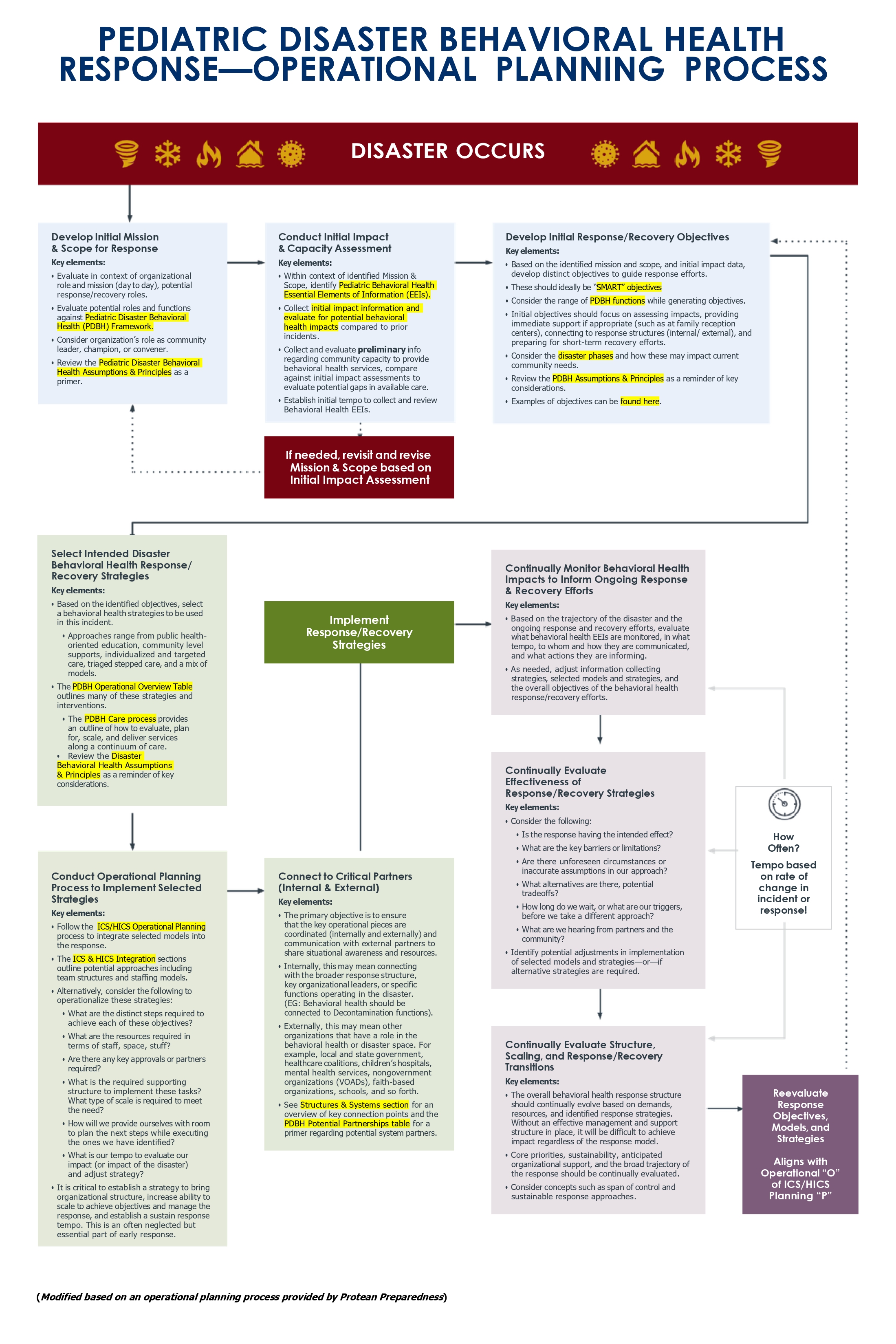
5.3. Structures & Systems

Why do these structures and systems matter in pediatric disaster behavioral health response and recovery?
Disaster response and recovery rely heavily on established structures and systems to navigate and address the immense challenges created by hazards and their impacts. Understanding and connecting to these structures is a critical component of just-in-time implementation of this framework.
Key actions to take when connecting to these systems and structures:

Incident Command System/Hospital Incident Command System (ICS/HICS)
What to know:
Incident Command System is a standardized approach to incident management used by many responding agencies across the United States.36 Meanwhile, Hospital Incident Command System is “…based on principles of the Incident Command System (ICS), which assists hospitals and health care organizations in improving their emergency management planning, response, and recovery capabilities for unplanned and planned event.”37 The teams that use this system to respond to incidents are called Hospital/Incident Management Teams (HIMT/IMT).
Key features to be aware of include an operational planning process, standardized but flexible organizational structures, and clear lines of responsibility/authority.
Critical Action(s) :
- This should be done in collaboration with the facility’s emergency management or the established ICS/HICS leadership team.
- Recommendations on how to integrate into the operational planning process are outlined in the ICS/HICS integration section.
Agency/Department/Emergency Operations Centers
What to know:
Emergency Operations Centers (EOCs) are the “location from which leaders of a jurisdiction or organization coordinate information and resources to support incident management activities.”38 These centers serve as a central hub for information and coordination of response and recovery activities. Within a facility, these may be called Department Operations Centers (if one department engaged) or Agency Operations Centers (if the whole agency engaged). At a jurisdictional level, there are often county or city EOCs activated to support incident response. These titles may vary from organization to organization, but the purpose of these centers remains similar. Frequently, both Emergency Support Functions and Recovery Support Functions are coordinated through EOCs at a jurisdictional level.
In addition to integration into ICS/HICS structures and their processes, EOCs represent another critical connection point for pediatric disaster behavioral health response.
Critical Action:
- EG: If a casework function is established broadly for this disaster, behavioral health efforts should be connected with casework teams.
- Within a facility, joining a HICS structure likely achieves this integration. Meanwhile, the health care facility likely has a liaison to the City/County/State/Tribal EOC – or the local Emergency Support Function #8 Lead Agency within that EOC.
- In this case, integration with broader community efforts can likely be achieved by working through the facility’s HICS structure to engage the broader community (likely through the Liaison Officer role).
Emergency Support Functions (ESFs) & Recovery Support Functions (RSFs)
What to know:
Emergency Support & Recovery Support Functions describe the structure for grouping response functions and the agencies that deliver them. While ESFs describe immediate and short-term response objectives and coordination approaches, RSFs describe the recovery objectives and structures.
Specifically, Emergency Support Function #6 (Mass Care, Emergency Assistance, Temporary Housing, and Human Services) and Emergency Support Function #8 (Public Health/Medical/Behavioral health) are critical connection points for a pediatric disaster behavioral health response. Meanwhile, the Health, Education, and Human Services RSF houses behavioral health recovery efforts. It is important to note that not all communities use the RSF and ESF structure nor is it mandated to do so. Although how these functions may be organized varies from community to community, a schema for organizing response/recovery activities into broad categories will exist locally. For example, some states have elected to separate education and health services functions in recovery planning efforts.
Critical Action:
Health Care Coalitions (HCCs)
What to know:
Health Care Coalitions (HCCs) are often comprised of health care organizations/systems, local emergency management, and public health departments, and first response agencies. These coalitions “…serve as the multiagency coordination groups that support and integrate with ESF-8 activities…”39 such as the delivery of medical services, often to include behavioral health. Health care organizations and systems are often engaged members of these coalitions.
it is important to keep in mind that not all HCCs follow the same structure nor do all HCCs have a “response mission.” Some are only focused on preparedness activities while others are actively engaged in response and recovery. Regardless, HCCs should be engaged in local ESF#8 structures (more on those below).
Critical Action:
Community/Voluntary Organizations Active in Disasters (COADs/VOADs)
What to know:
Voluntary Organizations Active in Disasters (VOADs) are coalitions of community-based, nonprofit, non-governmental, and faith-based organizations that coordinate to respond and recover from disasters. Most states have a state VOAD while some have local coalitions called Community Organizations Active in Disasters (COADs).
These coalitions represent an important partner for community engagement, service delivery, messaging, and wrap-around support services during a disaster.
Critical Action:
- They can often be identified and reached through engagement with the local EOC.
- For example, many of these organizations are active in providing sheltering or long-term recovery support.
Long-term Recovery Organizations/Groups (LTRO/LTRGs)
What to know:
Long-term Recovery Organizations/Groups (LTRO/LTRGs) are coalitions of community organizations and members that coordinate elements of long-term recovery after a disaster. Often, these organizations do not exist prior to a disaster and are formed after the incident by existing partners. They are frequently supported and/or chaired by COADs/VOADs.
These coalitions represent an essential connection point for ongoing coordination of disaster behavioral health needs and supports within an impacted community.
Critical Action:
- They can often be identified and reached through engagement with the local EOC or COAD/VOAD
5.4. ICS & HICS Integration
This section includes both an overview and checklist for key integration points for Incident Command Systems (ICS) and Hospital Incident Command Systems (HICS) along with a proposed team structure and roles for a HICS PDBH Operations Group.
Why ensure integration of pediatric disaster behavioral health efforts into ICS/HICS?
It is critical for effective coordination of agency activities, improved situational awareness, and effective engagement with the impacted community. Furthermore, adequate staffing and integration into other key functions (such as family reunification) often requires ICS/HICS integration.
Where should integration happen, and how?
This section will briefly describe key integration points within ICS/HICS systems and Hospital/Incident Management Team (HIMT/IMT) structures, in addition to providing an example organizational approach for a Pediatric Disaster Behavioral Health (PDBH) operational team. Beyond the operational team structure outlined later in this section, a HIMT/IMT may be supported with subject matter expertise by activating a Medical-Technical Specialist position focused on pediatric behavioral health. This role may be assigned to a variety of IMT sections.
It is the assumption and recommendation of this toolkit that pediatric disaster behavioral health activities are integrated into the ICS/HICS planning process and structure. If not already integrated, it is imperative to connect and coordinate with emergency management or the established ICS/HICS leadership. Each integration point identified should be addressed while initiating a PDBH response/recovery effort. The sooner this occurs in the incident the better.
Key integration points within the HICS structure and processes:
| Integration Point | Key Actions & Considerations |
| Mission Development |
Determine if pediatric behavioral health is considered a priority component of the agency’s mission. Describe how it is being considered and identify specific objectives for this response/recovery effort.
Clarify whether the agency’s role is solely limited to their own operations or if they serve as a community leader or facilitator. Identify how this may change response/recovery objectives.
|
| Operations Section |
Pediatric Disaster Behavioral Health Operations – Define the strategies and teams needed to achieve pediatric disaster behavioral health objectives. Describe how they are integrated into the Operations Section and identify their resource and support needs (potential shared role with Technical Specialists).
Support Activities & Expertise – Identify which response functions could benefit from pediatric disaster behavioral health expertise and describe how these functions can best be supported (e.g., family reunification, isolation and quarantine support, decontamination, staff wellbeing).
|
| Planning Section |
Situational Awareness – List the key indicators required to maintain situational awareness of behavioral health impacts. Indicate whether these indicators change over time and how they are communicated, including frequency.
|
| Logistics Section |
Staff Support – Identify well-being, resilience, and support activities to be conducted in support of response staff.
Staff Clinical Support – Determine how to support the confidence and competence of health care staff meeting patients/families post-disaster. Identify what they need (e.g., talking points, calming strategies).
|
| Safety Officer |
Expertise – Provide recommendations to support staff health, such as work-rest ratios.
|
| Liaison Officer |
Community Connections – Identify who should be connected with or supported as part of the pediatric behavioral health mission. List existing partnerships and pediatric areas of service (e.g., local pediatric primary care, pediatric specialties, schools, behavioral health organizations).
|
| Public Information Officer |
Expertise – Incorporate disaster behavioral health recommendations and concepts into public messaging. Identify what should be included or avoided.
|
| Technical Specialists |
Expertise – If not integrated into Operations, behavioral health subject matter experts may be assigned as a Technical Specialist to serve as an on call technical support to HICS teams.
Resources – List the key pediatric disaster behavioral health resources needed for this incident (materials, information, staff, etc.). Identify how to access these resources to support the mission.
NOTE: If there are disaster behavioral health teams in the Operations Section, this should be conducted in support of those team’s operational planning processes.
|
PDBH Operational Group - Example Organizational Approach within HICS
This section provides an overview of a potential structure for a Pediatric Disaster Behavioral Health (PDBH) Operational Group. This is only an example, and teams may be structured in many different ways using ICS/HICS principles. A list of additional resources and potential team structures can be found at the end of this section.
In general, members of this team should reference the PDBH Operational Overview Table for in-depth recommendations and resources.
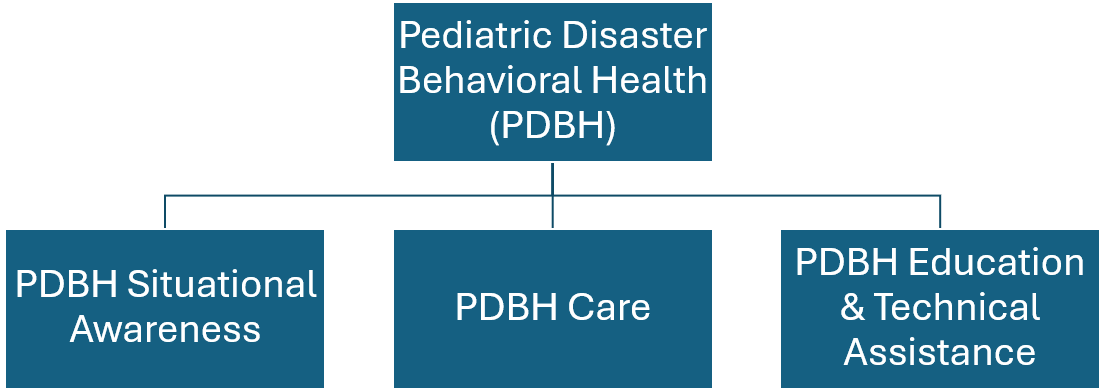
Figure 7. PDBH Operational Group Structure
Pediatric Disaster Behavioral Health (PDBH) Operational Group:
- Purpose: This team is responsible for implementation of the goals and functions outlined in the Pediatric Disaster Behavioral Health Framework. Specifically, the leader of this team is responsible for response/recovery coordination, both internally and externally.
- Structure & Reporting: Within HICS, the team would typically be positioned under the Medical Care Branch, reporting to the Branch Director. If a Behavioral Health Unit is activated, the team would operate within that unit and report to the Behavioral Health Unit Leader. The team will coordinate closely with Operations, Planning, and external partners to support patient, family, and staff behavioral health needs. Within other ICS structures, this operational team may be organized as a Branch, Division, Group, or Task Force depending on incident complexity and scope.
- Consistent with ICS/HICS principles, the structure is scalable and may expand or contract based on operational needs. Any functions not formally delegated remain the responsibility of the team lead.
- Goal: Coordinate behavioral health response and recovery activities across all engaged entities (internal/external) to develop a unified response approach for the impacted community, reduce duplication of services and unmet needs, and remove institutional silos to improve survivors’ access to care and quality of supports.
- Functions:
- Development of response and recovery strategies
- Coordination of internal/external elements of pediatric disaster behavioral health care
- Secures support for team operations, reports to HICS leadership
- Staffing: Appropriate level HICS operational staff based on the size of the team and scope of the incident. Ideally, at least trained and experienced as a Group Supervisor. While disaster response is the key expertise for this role, knowledge of disaster behavioral health will be extremely beneficial.
- The Disaster Mental Health Primer for the HICS Mental/Behavioral Health Lead resource can provide an overview of initial actions and considerations for this role.
- HICS provides a Job Action Sheet for a Behavioral Health Unit Leader which can be adapted to this framework.
PDBH Situational Awareness:
- This individual/team may be placed within an Operational team, such as above, or embedded within a Planning Unit and coordinating extensively with this team. Either approach is ICS/HICS compatible.
- Purpose: This team is responsible for implementing the situational awareness goals and functions outlined in the Pediatric Disaster Behavioral Health Framework.
- Goal: Identify, characterize, and assess both the behavioral health impacts of an incident and the capacity to provide care, both initially and ongoing as the incident progresses.
- Functions:
- Develop and maintain impact, capacity, and gap analysis
- Share situational awareness with response and community
- Staffing: Those trained and able to gather and compile key pediatric behavioral health impacts and details related to the incident (Pediatric Disaster Behavioral Health Essential Elements of Information). This may be staff trained in HICS Planning functions in general, or those with specialized expertise such as a Behavioral Health Epidemiologist.
PDBH Care:
- This individual/team should be placed as an operational team (group, task force, or strike team) as appropriate under the PDBH team.
- Purpose: This team is responsible for implementing the pediatric disaster behavioral health care goals and functions outlined in the Pediatric Disaster Behavioral Health Framework.
- Goal: Mitigate behavioral health impacts by providing the right level of support, at the right time, to both youth and responding personnel, and facilitate a transition to resilience for the community during recovery.
- Functions:
- Decrease barriers to care (access, telehealth, policy, etc.)
- Prioritize and triage existing resources (surge management)
- Increase capacity to provide services (expand, new programs)
- Staffing: This team should be staffed by both operational staff with experience in coordinating programs and delivery of care, and those with the experience and qualifications to deliver pediatric behavioral health care.
PDBH Education & Technical Assistance:
- This individual/team should be placed as an operational team (group, task force, or strike team) as appropriate under the PDBH team. It may also liaison or be connected to the Public Information Officer or associated team.
- Purpose: This team is responsible for implementing the educational and technical assistance goals and functions outlined in the Pediatric Disaster Behavioral Health Framework.
- Goal: Provide education and facilitate a “behavioral health-informed response” by providing subject matter expertise and resources to the impacted community, response staff and leadership, and relevant response functions.
- Functions:
- Trainings and presentations, internal and for community
- Public communication consultations, support
- Resource development such as guidance or fact sheets
- Response consultations to ensure integration of DMH
- Staffing: Ideally, this team will be staffed with pediatric disaster behavioral health experts, educational outreach professionals, and communication staff.
Additional resources and references:
- The PDBH Operational Planning Process can serve as a guide for this team’s activities, both initially and throughout the incident. Meanwhile, the Operational Overview Table can provide more in-depth guidance on how to implement each function and potential resources to do so.
- The Disaster Behavioral Health Response Teams - Overview & Structures appendix provides an overview of various team structures, key features, and examples.
- PPN has compiled a Disaster Mental Health Guide for the HICS Mental/Behavioral Health Lead role. This resource serves as a primer for the role on potential response and recovery strategies and resources.
- The National Children’s Disaster Mental Health Concept of Operations can serve as another model for implementing PDBH planning, response, and recovery activities in alignment with ICS/HICS. This resource is supported with a Just-in-Time Checklist.
- By activating a Medical – Technical Specialist role, an individual with pediatric behavioral health expertise can provide technical assistance across an HIMT/IMT.
- The Medical – Technical Specialist (Pediatric) Job Action Sheet can be adapted to fit a similar role for pediatric behavioral health.
- Refer to the Disaster Mental Health Primer for the HICS Mental/Behavioral Health Lead for a reference of initial actions a team lead should consider.
- HICS provides a Job Action Sheet for a Behavioral Health Unit Leader which can be adapted to the PDBH framework.
- FEMA Behavioral Health Typed Positions
- FEMA has compiled a list of “typed” (formalized, standardized) behavioral health response positions which can serve as models for specific position descriptions.
Typed Positions: Social Worker, Behavioral Health Chaplaincy Specialist, Behavioral Health Community Services Team, Behavioral Health Specialist, Behavioral Health Team Leader
- FEMA has compiled a list of “typed” (formalized, standardized) behavioral health response positions which can serve as models for specific position descriptions.
5.5. Phase-based Recommendations
This section provides an overview of considerations related to the disaster phases and their impact on pediatric disaster behavioral health (PDBH). Using a phase-based model during preparedness can help children’s hospitals plan for surge, anticipate needs at each phase, and align behavioral health strategies with operational objectives.
It is strongly recommended, in addition to these phase-based considerations, to review the Key Principles & Assumptions section of this toolkit to inform broad response and recovery strategies.
What are disaster behavioral health phases and how do they apply to PDBH?
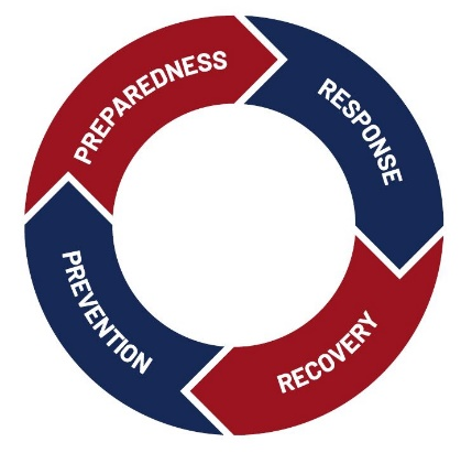
Figure 8. Phases of the Disaster Cycle
Understanding the disaster cycle (Fig 1) helps clarify how individuals, communities, and systems experience behavioral health impacts over time. While each disaster is different, this framework highlights key phases that can guide planning and support tailored, timely interventions for children and families.
These models and patterns are highly flexible and varied based on several factors that include but are not limited to the nature of the hazard, the scope and scale of the disaster including multiple disasters within a short timeframe (“cascade”), the resource variability and available supports within the impacted communities, and the preparation that has been done ahead of the emergency or disaster to mitigate the effects of the impact.
Response planners need to simultaneously appreciate that there are both a series of individual trajectories, and community impacts that are useful to think through particularly as they may relate to mental and behavioral health ‘surge’ after some time goes by (months), including pediatric considerations in all phases.
Phase models have been developed in several ways to help enlighten our understanding of how the behavioral health impacts from disasters change over time. Certainly not all individuals or communities are equally at risk or equally impacted, and not all disasters will bring the same results.
Examples include the Zunin / Meyers model40 :
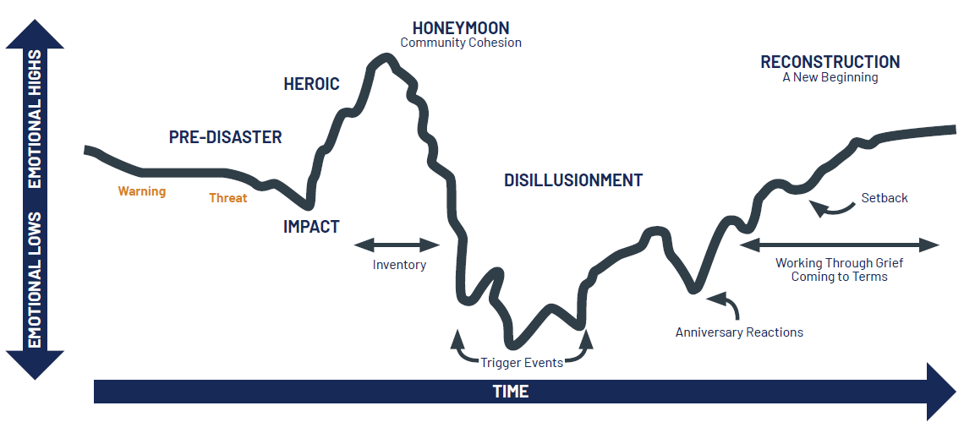
Figure 9. Disaster Behavioral Health Impacts over Time
And the Adaptive Response to Cyclical Disasters Model41 :
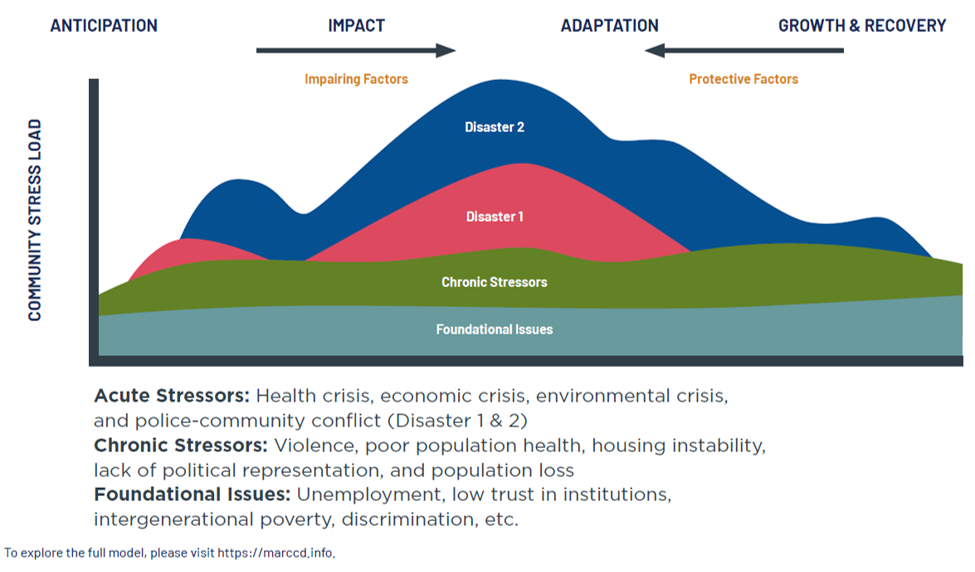
Figure 10. Adaptive Response to Cyclical Disasters Model
How does understanding phases of recovery influence planning and response?
An understanding of behavioral and behavioral health responses and reactions on a community or population level can help response planners share information about time- and longitudinal related risks and surge in hospitals, clinics, and other systems of care. Depending on the nature and complexity of the hazard itself, each phase may lend itself to an emphasis on certain resource allocation, development, or training. Broadly, the line on the graph in Figure 11 below is representative of ups and downs in general community level behavioral health and symptomology, often informed by population level data and surveillance monitoring related to health (surveys), emergency dept use, substance use data and other sources including those found in the Monitoring and Surveillance of Behavioral Health in the Context of Public Health Emergencies toolkit.
This model reflects a broad and generalized disaster behavioral health experience for communities impacted by disasters. As noted previously, this is a conceptual model, and the exact trajectory of a community, along with both individuals and groups in that community, will vary depending on the hazard and community factors. This timeline should not be interpreted to represent exact times for various phases and associated mental and behavioral health impacts and surge, but rather a simplified overview to assist with planning and response.
Summary of phase related impacts to response and recovery efforts (See also Figures 11 and 12 below):
- Do not be surprised if the demand for behavioral health supports and services is not high in the initial response period.
- Expect both behavioral health symptoms within the community and some initial demand for services, with a potential spike in demand after resources leave the community approximately 3-9 months post-disaster.
- Prepare for an increase in behavioral health symptomatology and potential increase in demand for services around certain dates, such as anniversary of the incident, or triggering events, such as additional disasters (similar other reminders) or “close calls.”
- Recognize that the behavioral health supports and services will very likely need to change over time to remain appropriate for the recovery process. While psychological first aid can be helpful in the initial incident, behavioral health needs are likely to be more severe in acuity later in these phases and may require more intensive interventions, such as TF-CBT (see Fig 4 below for examples).
General population and group level behavioral health reactions in disasters.
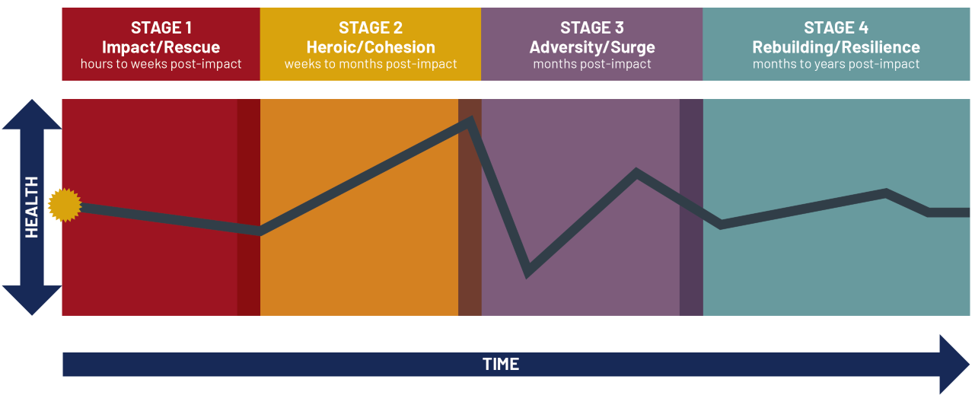
Figure 11. General population and group level behavioral health reactions in disasters
Phase related considerations for planners
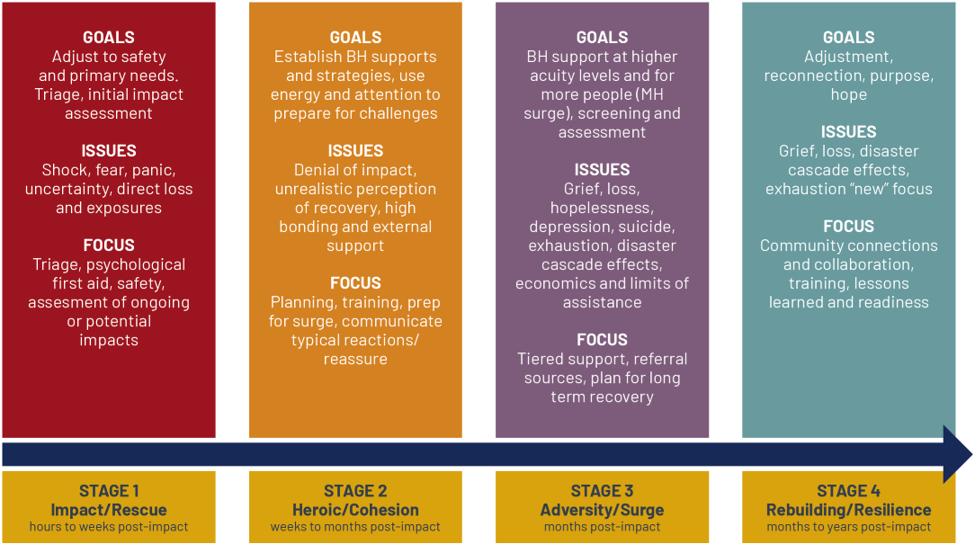
Figure 12. Phase related considerations for planners
Within each phase, pediatric medical, mental, and behavioral impacts should be embedded in planning, response, and recovery. Examples in Figure 13 below.
Examples of Phase related Recommendations for Interventions
| Stage 1 Impact / Rescue Interventions |
Stage 2 Heroic / Cohesion Interventions |
Stage 3 Adversity / Surge Interventions |
Stage 4 Rebuilding / Resilience Interventions |
| PsySTART, Acute Stress Checklist22 , or other triage and prioritization tools | Healing After Trauma Skills (HATS) | Trauma-Focused Cognitive Behavioral Therapy (TF-CBT) | Trauma-Focused Cognitive Behavioral Therapy (TF-CBT) |
| Listen, Protect, Connect | Cognitive Behavioral Therapy for Acute Stress (CBT for ASD) | Cognitive Behavioral Intervention for Trauma in Schools (CBITS) | Cognitive Processing Therapy (CPT) |
| Psychological First Aid | Child and Family Traumatic Stress Intervention (CFTSI) | Eye Movement Desensitization and Reprocessing (EMDR) | |
| Behavioral health First Aid | Health Support Team | Skills for Psychological Recovery (SPR) | |
| Skills for Psychological Recovery (SPR) |
Figure 13. Examples of Phase related Recommendations for Interventions
A more detailed description of each stage is included here – including the key considerations for pediatric disaster behavioral health response and recovery efforts.
Stage 1 (Impact / Rescue: hours to weeks post-impact):
- Clinical / Tactical GOALS & ISSUES: Adjust to safety and primary needs, triage for both medical and psychological impacts, initial impact assessment, resource allocation relative to basic needs (food, shelter, water, etc.). Issues include shock, fear, panic, uncertainty, direct loss, and trauma exposures, “Medically Unexplained Physical Symptoms” (MUPS)- headaches and stomachaches.
- Clinical / Tactical FOCUS: Medical and psychological triage, Psychological First Aid, safety, assessment of ongoing or potential threat, information and support for parents and caregivers about impacts on their children and themselves.
- Emergency Management Considerations: Initial mission and scope, initial impact assessment, understand trends and characteristics of disaster behavioral health to prepare (see Key Assumptions & Principles), get involved in into the formal response efforts NOW!
Stage 2 (Heroic / Cohesion: Weeks to months post-impact):
- Clinical / Tactical GOALS & ISSUES: Establish behavioral health supports & strategies based on assessment of community resilience factors and resources; use community energy and attention to prepare for coming challenges. Leverage professional and community supports. Issues include denial of impact, unrealistic perception of recovery, high bonding & external support, lack of resources to need matching (too much ‘help’ in the wrong places). At-risk communities or groups (such as children and youth) may be particularly vulnerable during this time.
- Clinical / Tactical FOCUS: Planning, training, preparation for behavioral health surge, communicate typical reactions, and reassure and provide education about what is “normal” in an “abnormal” event to all who might be supporting children and their parents/caregivers
- Emergency Management Considerations: Establish update tempo for data/input à revised strategies, prepare for the surge NOW despite likely low initial demand, ensure response integration (internal/external), establish strategy to engage offers for support (individual/agency) later when needed
Stage 3 (Adversity / Surge: Months post-impact):
- Clinical / Tactical GOALS & ISSUES: Behavioral health support is provided at higher acuity levels and for more people (MH surge), screening & assessment as needed, and referral sources available to provide effective evidenced-based interventions.
- Nuanced, tailored and culturally appropriate supports for at risk and special groups / populations (rural communities, children/youth, children and youth with special health care needs, etc.)
- Be mindful of assumptions -- Behavioral health supports and interventions should be based off ongoing assessments about what the community is doing well and already has in
- Primary issues include grief, Loss, Hopelessness, Depression, Suicide, Exhaustion, Disaster cascade effects (economics & limits of assistance). Reduce stigma by acknowledging that these complex emotions are common
- Clinical / Tactical FOCUS: Tiered and appropriate levels of support, garnering vetted referral sources, plan for long-term recovery
- Emergency Management Considerations: Continue cycle of updated situational awareness and new strategies, manage the surge coming now, prepare for long-term recovery
Stage 4: (Rebuilding / Resilience: months to years post-impact):
- Clinical / Tactical GOALS: Recovery to pre-disaster baseline or better behavioral health functioning. Assisting with adjustment, Reconnection to community and supports, Care provision for higher-risk groups with nuanced and culturally appropriate resources. Development of purpose, hope moving forward.
- Clinical / Tactical ISSUES: Grief, Loss, Disaster cascade effects, Exhaustion, “new” focus and apathy towards change and adaptation (disaster fatigue).
- Clinical / Tactical FOCUS: Community Connections and Collaboration between groups with varying resources (e.g., schools and hospitals). Training, ongoing educational support around disaster recovery expectations. Lessons Learned / Readiness
- Emergency Management Considerations: Manage long-term recovery efforts and connect, strengthen partnerships gained, leverage lessons learned into meaningful readiness.
5.6. Demobilization
What is demobilization?
Demobilization marks the transition from response to recovery after an incident/disaster. For hospitals, it means returning personnel and resources to their day-to-day responsibilities, getting back to “new normal” and/or baseline levels of function.
Key things to know:
Disaster responders can be at risk for post-deployment behavioral health impacts related to their exposure to traumatic and high stress events as a part of their roles. It is not uncommon during the demobilization phase for staff to experience new symptoms of anxiety, depression, and burnout. Symptoms of stress often do not appear during the active response, when staff are extremely busy and focused on their actions and activities, with limited time for reflection. It is only later, when the distraction is lessened and there is room to begin to process the event, that distress symptoms may emerge. This is sometimes referred to as “post deployment syndrome.”
Factors related to this can include:
- Traumatic experiences such as exposure to life threat, mutilating injuries, and patient suffering.
- Separation from family and social support systems. Additional reluctance to share traumatic experiences with friends and family out of concern for their emotional status can lead to isolation.
- Challenges of adapting back to “normal life” such as feeling less sense of purpose, loss of the adrenaline that often accompanies deployment, and loss of team support
What increases resilience?
Certain factors during deployment can increase post-deployment resilience, including team cohesion and support, relationship/marital satisfaction, and psychological “hardiness.”
Immediate along with later-term (a few months) check-in following deployment may be helpful in identifying responders who are experiencing more severe symptoms, although not predictive of future Post-Traumatic Stress Disorder (PTSD).
Demobilization recommendations for those involved in response work include:
- Establishment of a new daily routine
- Healthy habits such as exercise, healthy eating
- Focusing on increasing social connection, spending time with friends and family
- Finding other ways to increase sense of purpose such as volunteer activities
- Avoiding unhealthy coping strategies such as increased use of alcohol or becoming more socially isolated.
Avoiding constant media exposure and searching for information related to the event(s) or response.
Additional information is available for mental health resistance and deployment42 , as well as mental health for first responders43 – please see the Resource Catalogue. Additionally, this toolkit provides a Primer on Professional and Personal Wellness Considerations and SAMHSA has a wide variety of resources tailored to support first survivors, first responders, health care professionals, and their families.
6. The Toolbox - Implementation & Tactical Resources

Overview
This Toolbox serves as a compendium of in-depth references, expanded information, resources, and tools to support pediatric disaster behavioral health (PDBH) preparedness, response, and recovery. In addition to a compilation of resources and references from a multitude of organizations, there are several appendices that provide extended guidance on how to implement the PDBH framework.
Below is a list of each section of this Toolbox:
- PDBH Resource Catalogue
- PDBH Principles & Assumptions – Expanded Reference
- PDBH – Operational Overview Table
- PDBH – Potential Partnerships Table
- Example PDBH Response & Recovery Objectives
- Triage vs Screening vs Assessment in Disasters or Mass Casualty Incidents (MCIs)
- PDBH Care Guidelines
- Common Impacts and Reactions in Children to Disasters
- Primer on Toxic Stress and Neurodevelopmental Considerations
- Primer on Professional and Personal Wellness Considerations
- Primer on Initiating a Hospital-Based Telepsychiatry Program
- Disaster Behavioral Health Response Teams - Overview & Structures
- CPT/HCPCS Coding Reference for Pediatric Disaster Behavioral Health
7. References
- Norris F, Friedman M, Watson P. 60,000 disaster victims speak: Part II. Summary and implications of the disaster mental health research. Psychiatry. 2002;65(3):207-239. doi:10.1521/psyc.65.3.207.20173
- Brown R, Witt A, Fegert J, Keller F, Rassenhofer M, Plener P. Psychosocial interventions for children and adolescents after man-made and natural disasters: a meta-analysis and systematic review. Psychol Med. 2017;47(11):1893-1905. doi:doi:10.1017/S0033291717000496
- Newnham E, Mergelsberg E, Chen Y, et al. Long term mental health trajectories after disasters and pandemics: A multilingual systematic review of prevalence, risk and protective factors. Clin Psychol Rev. 2022;97:102203. doi:doi:10.1016/j.cpr.2022.102203
- Pinals D. Crisis Services: Meeting Needs, Saving Lives. 2020. Alexandria, VA
- Forum on Medical and Public Health Preparedness for Catastrophic Events, Board on Health Sciences Policy IoM. Preparedness, Response, and Recovery Considerations for Children and Families: Workshop Summary. Washington (DC): National Academies Press (US); 2014.
- Hoffmann JA, Pergjika A, Burkhart K, et al. Supporting Children’s Mental Health Needs in Disasters. Pediatrics. 2025;155(1):e2024068076. doi:10.1542/peds.2024-068076
- World Health Organization. Mental Health and Psychosocial Support Interventions. Accessed 10 February 2026, https://wkc.who.int/our-work/health-emergencies/knowledge-hub/mental-health-psychosocial-support-(mhpss)/mhpss-interventions
- Lee C, Fung D. A stepped care approach to mental health in Singapore: challenges and opportunities. BMC Glob Public Health. 2025/08/21 2025;3(1):73. doi:10.1186/s44263-025-00196-0
- National Center for School Mental Health. Core Feature 4: Multi-Tiered Systems of Support. Accessed 10 February 2026, https://www.schoolmentalhealth.org/media/som/microsites/ncsmh/documents/bainum/dialogue-guides/BFF_SMHGuides_CoreFeature4.pdf?utm_source=chatgpt.com
- Pediatric Pandemic Network. Pediatric Behavioral Health in Disasters Curriculum. 2025.
- Pediatric Pandemic Network. Disaster Mental Health: Preparedness and Response to Catastrophic Events ECHO Series. 2025.
- Flynn B, Vance M, Morganstein J. Curriculum Recommendations for Disaster Health Professionals - Disaster Behavioral Health Second Edition. National Center for Disaster Medicine & Public Health; 2020.
- Substance Abuse and Mental Health Services Administration. TAP 34: Disaster Planning Handbook for Behavioral Health Service Programs. SAMHSA; 2021.
- Pfefferbaum B, Noffsinger M, Wind L, Allen J. Children's Coping in the Context of Disasters and Terrorism. J Loss Trauma. 2014;9(1):78-97. doi:10.1080/15325024.2013.791797
- De Leo D, Zammarrelli J, Marinato G, Capelli M, Viecelli Giannotti A. Best Practices for Notification of Unexpected, Violent, and Traumatic Death: A Scoping Review. Int J Environ Res Public Health. 2023;20(13):6222. doi:10.3390/ijerph20136222
- Hobgood C, Mathew D, Woodyard D, Shofer F, Brice J. Death in the field: teaching paramedics to deliver effective death notifications using the educational intervention "GRIEV_ING". Prehosp Emerg Care. 2013;17(4):501-510. doi:10.3109/10903127.2013.804135
- Hobgood C, Harward D, Newton K, Davis W. The educational intervention "GRIEV_ING" improves the death notification skills of residents. Acad Emerg Med. 2005;12(4):296-301. doi:10.1197/j.aem.2004.12.008
- Dubin W, Sarnoff J. Sudden unexpected death: intervention with the survivors. Ann Emerg Med. 1986;15(1):54-57. doi:10.1016/s0196-0644(86)80488-7
- Mitchell J. A short guide to giving bad news. Int J Emerg Ment Health. 2008;10(3):197-207.
- Saidinejad M, Duffy S, Wallin D, et al. The Management of Children and Youth With Pediatric Mental and Behavioral Health Emergencies. Pediatrics. 2023;152(3):e2023063256. doi:10.1542/peds.2023-063256
- Schreiber M, Pfefferbaum B, Sayegh L. Toward the way forward: the national children's disaster mental health concept of operations. Disaster Med Public Health Prep. 2012;6(2):174-181. doi:10.1001/dmp.2012.22
- American College of Surgeons Trauma Quality Programs. Best Practices Guidelines: Screening and Intervention for Mental Health Disorders and Substance Use and Misuse in the Acute Trauma Patient. 2023. Accessed 30 June 2026. https://www.facs.org/media/nrcj31ku/mental-health-guidelines.pdf
- Brunt T, Gale-Grant O. Telepsychiatry: what clinicians need to know about digital mental healthcare. BJPsych Adv. 2023;29(4):230-238. doi:10.1192/bja.2022.42
- Kline C, Hurst L, Marcus S, Malas N. A Review of Telepsychiatry for Pediatric Patients in the Emergency Setting. Curr Psychiatry Rep. 2023;25:429-436. doi:10.1007/s11920-023-01442-8
- Natafgi N, Childers C, Pollak A, et al. Beam Me Out: Review of Emergency Department Telepsychiatry and Lessons Learned During COVID-19. Curr Psychiatry Rep. 2021;23(11):72. doi:10.1007/s11920-021-01282-4
- Sharma G, Devan K. The effectiveness of telepsychiatry: thematic review. BJPsych Bull. 2023;47(2):82-89. doi:10.1192/bjb.2021.115
- Sasangohar F, Bradshaw M, Carlson M, et al. Adapting an Outpatient Psychiatric Clinic to Telehealth During the COVID-19 Pandemic: A Practice Perspective. J Med Internet Res. 2020;22(10):e22523. doi:10.2196/22523
- Appleton R, Williams J, Vera San Juan N, et al. Implementation, Adoption, and Perceptions of Telemental Health During the COVID-19 Pandemic: Systematic Review. J Med Internet Res. 2021;23(12):e31746. doi:10.2196/31746
- American Academy of Pediatrics, Chung S, Foltin G, Schonfeld D, eds. Pediatric Disaster Preparedness and Response Topical Collection. 2022. https://www.aap.org/en/patient-care/disasters-and-children/professional-resources-for-disaster-preparedness/pediatric-disaster-preparedness-and-response-topical-collection/
- Centers for Disease Control and Prevention. Data and Statistics on Children's Mental Health. Accessed 11 February 2026, https://www.cdc.gov/children-mental-health/data-research/index.html
- Schonfeld D, Demaria T, The Disaster Preparedness Advisory Council and Committee On Psychosocial Aspects of Child and Family Health, et al. Providing Psychosocial Support to Children and Families in the Aftermath of Disasters and Crises. Pediatrics. 2015;136(4):e1120-e1130. doi:10.1542/peds.2015-2861
- Whitney D, Peterson M. US National and State-Level Prevalence of Mental Health Disorders and Disparities of Mental Health Care Use in Children. JAMA Pedoatr. 2019;173(4):389-391. doi:10.1001/jamapediatrics.2018.5399
- American Psychological Association. Behavioral Health Integration Fact Sheet. Accessed 11 February 2026, https://www.apa.org/health/behavioral-integration-fact-sheet
- Kanter R, Abramson D, Redlener I, Gracy D. The Medical Home and Care Coordination in Disaster Recovery: Hypothesis for Interventions and Research. Disaster Med Public Health Prep. 2015;9(4):337-343. doi:10.1017/dmp.2015.22
- McGuire T, Covington T, Mauseth K, Brown M. Coping with COVID-19: Standing up a comprehensive behavioral health response to the pandemic. J Emerg Manag. 2023;21(6):577-589. doi:10.5055/jem.0783
- FEMA. What is the Incident Command System? 2026. https://emilms.fema.gov/is_0029a/groups/27.html
- California Emergency Medical Services Authority. Hospital Incident Command System – Welcome! 2026. https://emsa.ca.gov/disaster-medical-services-division-hospital-incident-command-system-resources/#:~:text=The%20Hospital%20Incident%20Command%20System%20(HICS)%20Purpose,for%20unplanned%20and%20planned%20events
- FEMA. National Incident Management System: Emergency Operations Center How-to Quick Reference Guide. 2022. October 2022. https://www.fema.gov/sites/default/files/documents/fema_eoc-quick-reference-guide.pdf
- US Department of Health & Human Services, Administration for Strategic Preparedness and Response (ASPR TRACIE). General Overview of Healthcare Coalitions. 2022. Accessed 12 February 2026. https://files.asprtracie.hhs.gov/documents/aspr-tracie-general-overview-hccs.pdf
- DeWolfe D, Nordboe D, Center for Mental Health Services, DHHS. Training manual for mental health and human service workers in major disasters. 2000. Rockville, MD https://files.eric.ed.gov/fulltext/ED459383.pdf
- Vibrant Emotional Health, Group for the Advancement of Psychiatry, Decision Point Systems. Model for Adaptive Response to Complex Cyclical Disasters (MARCCD). Accessed 12 February 2026, https://marccd.info/
- Hoopsick R, Homish D, Collins R, et al. Resilience to mental health problems and the role of deployment status among U.S. Army Reserve and National Guard Soldiers. Soc Psychiatry Psychiatr Epidemiol. 2021;56(7):1299-1310. doi:10.1007/s00127-020-01899-5
- Liston C. Estimating Psychiatric Outcomes in First Responders. JAMA Netw Open. 2020;3(9):e2018678. doi:10.1001/jamanetworkopen.2020.18678
- Substance Abuse and Mental Health Services Administration. Disaster Technical Assistance Center supplemental research bulletin: behavioral health conditions in children and youth exposed to natural disasters. 2018. https://www.samhsa.gov/sites/default/files/srb-childrenyouth-8-22-18.pdf
- Scheeringa M, Myers L, Putnam F, Zeanah C. Diagnosing PTSD in early childhood: an empirical assessment of four approaches. J Trauma Stress. 2012;25(4):359-367. doi:10.1002/jts.21723
- Chen S, Bagrodia R, Pfeffer C, Meli L, Bonanno G. Anxiety and resilience in the face of natural disasters associated with climate change: A review and methodological critique. J Anxiety Disord. 2020;76:102297. doi:10.1016/j.janxdis.2020.102297
- Heanoy E, Brown N. Impact of Natural Disasters on Mental Health: Evidence and Implications. Healthcare. 2024;12(1812)doi:10.3390/healthcare12181812
- Alisic E, Zalta A, van Wesel F, et al. Rates of post-traumatic stress disorder in trauma-exposed children and adolescents: meta-analysis. Br J Psychiatry. 2014;204:335-340. doi:10.1192/bjp.bp.113.131227
- Tang B, Liu X, Liu Y, Xue C, Zhang L. A meta-analysis of risk factors for depression in adults and children after natural disasters. BMC Public Health. 2014/06/19 2014;14(1):623. doi:10.1186/1471-2458-14-623
- Rubens S, Felix E, Hambrick E. A Meta-Analysis of the Impact of Natural Disasters on Internalizing and Externalizing Problems in Youth. J Trauma Stress. 2018;31(3):332-334. doi:10.1002/jts.22292
- Brown M, Agyapong V, Greenshaw A, et al. After the Fort McMurray wildfire there are significant increases in mental health symptoms in grade 7–12 students compared to controls. BMC Psychiatry. 2019/01/10 2019;19(18)doi:10.1186/s12888-018-2007-1
- Boelen P, Smid G. Disturbed grief: prolonged grief disorder and persistent complex bereavement disorder. BMJ. 2016;357:j2016. doi:10.1136/bmj.j2016
- McLaughlin K, Colich N, Rodman A, Weissman D. Mechanisms linking childhood trauma exposure and psychopathology: a transdiagnostic model of risk and resilience. BMC Med. 2020 Apr 1 2020;18(1):96. doi:10.1186/s12916-020-01561-6
- Schonfeld D, Demaria T. Mental Health Impact of Pandemics and Other Public Health Emergencies in Children. Pediatr Clin North Am. 2024;71(3):455-468. doi:10.1016/j.pcl.2024.01.015
- Guzman Holst C, Bowes L, Waite P, et al. Examining Children and adolescent mental health trajectories during the COVID-19 pandemic: Findings from a year of the Co-SPACE study. JCPP Advances. 2023/06/01 2023;3(2):e12153. doi:https://doi.org/10.1002/jcv2.12153
- La Greca A, Burdette E, Brodar K. Climate change and extreme weather disasters: evacuation stress is associated with youths' somatic complaints. Front Psychol. 2023;14doi:10.3389/fpsyg.2023.1196419
- Lowe S, Sampson L, Gruebner O, Galea S. Psychological resilience after Hurricane Sandy: the influence of individual- and community-level factors on mental health after a large-scale natural disaster. PLoS One. 2015;10(5):e0125761. doi:10.1371/journal.pone.0125761
- Felix E, You S, Vernberg E, Canino G. Family Influences on the Long Term Post-Disaster Recovery of Puerto Rican Youth. Journal of Abnormal Child Psychology. 2013/01/01 2013;41(1):111-124. doi:10.1007/s10802-012-9654-3
- McDonald K, Vernberg E, Lochman J, et al. Trajectories of tornado-related posttraumatic stress symptoms and pre-exposure predictors in a sample of at-risk youth. J Consult Clin Psychol. 2019;87(11):1003-1018. doi:10.1037/ccp0000432
- Fendrich M, Ives M, Kurz B, et al. Impact of Mobile Crisis Services on Emergency Department Use Among Youths With Behavioral Health Service Needs. Psychiatr Serv. 2019;70(10):881-887. doi:10.1176/appi.ps.201800450
- Hoffberg A, Stearns-Yoder K, Brenner L. The Effectiveness of Crisis Line Services: A Systematic Review. Front Public Health. 2020;7(399)doi:10.3389/fpubh.2019.00399
- Matthews S, Cantor JH, Brooks Holliday S, et al. National preparedness for 988—the new mental health emergency hotline in the United States. Preventive Medicine Reports. 2023/06/01/ 2023;33:102208. doi:https://doi.org/10.1016/j.pmedr.2023.102208
- Rural Children’s Mental Health Consortium. Annual progress report for ten-year strategic plan: 2018 status update. 2018. https://dcfs.nv.gov/uploadedFiles/dcfsnvgov/content/Programs/CMH/SOC/RuralChildrensMHConsortiumTenYrStratPlan.pdf
- Ramasamy R, Thompson A, Simmons S. Responding to Acute Mental Health Crises in Black Youth: Is It Safe to Call 911? Community Ment Health J. 2023;59:1-8. doi:10.1007/s10597-022-00980-4
- Marcus N, Stergiopoulos V. Re-examining mental health crisis intervention: A rapid review comparing outcomes across police, co-responder and non-police models. Health & Social Care in the Community. 2022/09/01 2022;30(5):1665-1679. doi:https://doi.org/10.1111/hsc.13731
- Manaugh B, Ternan A, Janssen M. A community guide for development of a crisis diversion facility: a model for effective community response to behavioral health crisis. 2020.
- Robertson A, Morse D, Baird-Thomas C. Hurricane Katrina's impact on the mental health of adolescent female offenders. Anxiety Stress Coping. 2009/07/01 2009;22(4):433-448. doi:10.1080/10615800802290634
- Thurau L. If not now, when? a survey of juvenile justice training in America’s Police Academies – strategies for youth. 2017. Strategies for Youth https://strategiesforyouth.org/if-not-now-when-a-survey-of-juvenile-justice-training-in-americas-police-academies/
- Kamin D, Weisman R, Lamberti J. Promoting Mental Health and Criminal Justice Collaboration Through System-Level Partnerships. Front Psychiatry. 2022;13:805649. doi:10.3389/fpsyt.2022.805649
- National League of Cities. Responding to Individuals in Behavioral Health Crisis via Co-Responder Models: The Roles of Cities, Counties, Law Enforcement, and Providers. 2020. https://www.nlc.org/resource/responding-to-individuals-in-behavioral-health-crisis-via-co-responder-models-the-roles-of-cities-counties-law-enforcement-and-providers/
- Bunts W. Youth mobile response services: an investment to decriminalize mental health. 2021. The Center for Law and Social Policy https://www.clasp.org/publications/report/brief/youth-mobile-response-services-investment-decriminalize-mental-health/
- Saxon V, Mukherjee D, Thomas D. Behavioral health crisis stabilization centers: A new normal. Journal of Mental Health & Clinical Psychology. 2018;2(3)
- Glomb NW, Trivedi T, Grupp‐Phelan J, Schriger DL, Sporer K. Safety of a prehospital emergency medical services protocol for an alternative destination for pediatric behavioral emergencies in Alameda County. JACEP Open. 2023/04/01/ 2023;4(2):e12930. doi:https://doi.org/10.1002/emp2.12930
- Otterson S, Fristad M, McBee-Strayer S, et al. Length of stay and readmission data for adolescents psychiatrically treated on a youth crisis stabilization unit versus a traditional inpatient unit. Evidence-Based Practice in Child and Adolescent Mental Health. 2021;6(4):484-489. doi:10.1080/23794925.2021.1986868
- Jonson CL, Moon MM, Gialopsos BM. Are students scared or prepared? Psychological impacts of a multi-option active assailant protocol compared to other crisis/emergency preparedness practices. Victims & Offenders. 2020;15(5):639-662.
- Ellis W, WH D, Chen K. Community Resilience: A Dynamic Model for Public Health 3.0. J Public Health Manag Pract. 2022;28(1):S18-S26. doi:10.1097/PHH.0000000000001413
- Substance Abuse and Mental Health Services Administration. Disaster Technical Assistance Center Supplemental Research Bulletin: Stronger Together; An In-Depth Look at Selected Community-Level Approaches to Disaster Behavioral Health. 2016. https://resources.pedspandemicnetwork.org/library/3056/samhsa-disaster-technical-assistance-center-supplemental-research-bulletin-stronger-together-an-in-depth-look-at-selected-community-level-approaches-to-disaster-behavioral-health-3056/
- Masten A, Motti-Stefanidi F. Multisystem Resilience for Children and Youth in Disaster: Reflections in the Context of COVID-19. Advers Resil Sci. 2020;1(2):95-106. doi:10.1007/s42844-020-00010-w
- Pfefferbaum R, Neas B, Pfefferbaum B, Norris F, Van Horn R. The Communities Advancing Resilience Toolkit (CART): development of a survey instrument to assess community resilience. Int J Emerg Ment Health. 2013;15(1):15-29.
- Pfefferbaum R, Pfefferbaum B, Van Horn R, Klomp R, Norris F, Reissman D. The Communities Advancing Resilience Toolkit (CART): an intervention to build community resilience to disasters. J Public Health Manag Pract. 2013;19(3):250-258. doi:10.1097/PHH.0b013e318268aed8
- Salt R, Sickora C, Page T, et al. "We didn't forget" Utilizing a Community-Nurse Partnership to Promote Health in Rockport, Texas after Hurricane Harvey. Public Health Nurs. 2020;37(1):113-120. doi:10.1111/phn.12684
- Jackson J, Do-Nguyen A, Ewbank C, Anderson C, Newton C, Schreiber M. Feasibility of PTSD risk identification in pediatric trauma patients using PsySTART: A pilot study. J Pediatr Surg. 2021/12/01/ 2021;56(12):2348-2353. doi:https://doi.org/10.1016/j.jpedsurg.2021.03.009
- Foa E, Asnaani A, Zang Y, Capaldi S, Yeh R. Psychometrics of the Child PTSD Symptom Scale for DSM-5 for Trauma-Exposed Children and Adolescents. J Clin Child Adolesc Psychol. 2018;47(1):38-46. doi:doi:10.1080/15374416.2017.1350962
- Kemp E, Thakur H, Espeleta H, et al. The child and adolescent trauma screen self- and caregiver-report: Factor structure, measurement invariance, and concurrent validity in a clinical sample of children and adolescents. Psychol Trauma. 2025;doi:doi:10.1037/tra0001995
- Ramos C, Cabral E, Serrão V, Figueira P, Santos P, Baptista J. Psychometric Properties of the Parent-Report Version of the UCLA PTSD Reaction Index for DSM-5. J Child Adolesc Trauma. 2021;15(3):627-637. doi:doi:10.1007/s40653-021-00406-5
- Lai B, Lewis R, Livings M, La Greca A, Esnard A. Posttraumatic Stress Symptom Trajectories Among Children After Disaster Exposure: A Review. J Trauma Stress. 2017;30(6):571-582. doi:doi:10.1002/jts.22242
- Pfefferbaum B, North C. Child Disaster Mental Health Services: a Review of the System of Care, Assessment Approaches, and Evidence Base for Intervention. Curr Psychiatry Rep. 2016;18(1):5. doi:doi:10.1007/s11920-015-0647-0
- Ruzek J, Brymer M, Jacobs A, Layne C, Vernberg E, Watson P. Psychological First Aid. J Ment Health Couns. 2007;29(1):17-49.
- Trickey D, Siddaway A, Meiser-Stedman R, Serpell L, Field A. A meta-analysis of risk factors for post-traumatic stress disorder in children and adolescents. Clin Psychol Rev. 2012;32(2):122-138. doi:10.1016/j.cpr.2011.12.001
- La Greca A, Lai B, Llabre M, Silverman W, Vernberg E, Prinstein M. Children's Postdisaster Trajectories of PTS Symptoms: Predicting Chronic Distress. Child Youth Care Forum. 2013;42(4):351-369. doi:10.1007/s10566-013-9206-1
- Bryant R. The Current Evidence for Acute Stress Disorder. Curr Psychiatry Rep. 2018 Oct 13 2018;20(12):111. doi:https://doi.org/10.1007/s11920-018-0976-x
- Bryant R, Friedman M, Spiegel D, Ursano R, Strain J. A review of acute stress disorder in DSM-5. Depress Anxiety. 2011;28(9):802-817. doi:https://doi.org/10.1002/da.20737
- King M, Schreiber M, Formanski S, Fleming S, Bayleyegn T, Lemusu S. A brief report of surveillance of traumatic experiences and exposures after the earthquake-tsunami in American Samoa, 2009. Disaster Med Public Health Prep. 2013;7(3):327-331. doi:https://doi.org/10.1001/dmp.2012.11
- Thienkrua W, Cardozo B, Chakkraband M, et al. Symptoms of posttraumatic stress disorder and depression among children in tsunami-affected areas in southern Thailand. JAMA. 2006;296(5):549-559. doi:https://doi.org/10.1001/jama.296.5.549
- Hoffmann J, Foster A, Rojas C, et al. Overtriage and Undertriage of Children Presenting to the Emergency Department for Behavioral Health. JAMA Network Open. 2026;9(3):e263042. doi:10.1001/jamanetworkopen.2026.3042
- Schreiber M, Gurwitch R, Wong M. Listen, Protect, Connect--Model & Teach: Psychological First Aid (PFA) for Students and Teachers. US Department of Homeland Security. 2006
- Brymer M, Taylor M, Escudero P, et al. Psychological first aid for schools: Field operations guide. 2012. Los Angeles: National Child Traumatic Stress Network https://www.nctsn.org/sites/default/files/resources/pfa_schools.pdf
- Sachser C, Berliner L, Risch E, et al. The child and Adolescent Trauma Screen 2 (CATS-2) - validation of an instrument to measure DSM-5 and ICD-11 PTSD and complex PTSD in children and adolescents. Eur J Psychotraumatol. 2022;13(2):2105580. doi:10.1080/20008066.2022.2105580
- Dowdy-Hazlett T, Killian M, Woods M. Measurement of traumatic experiences of children within survey and intervention research: A Systematic Review of the Child and Adolescent Trauma Screen. Child Youth Serv Rev. 2021;131:106259. doi:https://doi.org/10.1016/j.childyouth.2021.106259
- Kassam-Adams N. The Acute Stress Checklist for Children (ASC-Kids): development of a child self-report measure. J Trauma Stress. 2006;19(1):129-139. doi:10.1002/jts.20090
- Mash E, Hunsley J. Evidence-Based Assessment of Child and Adolescent Disorders: Issues and Challenges. J Clin Child Adolesc Psychol. 2005/08/01 2005;34(3):362-379. doi:10.1207/s15374424jccp3403_1
- Schmidt E, Rothenberg W, Davidson B, et al. Psychometric Properties of the Behavior Assessment System for Children Student Observation System (BASC-3 SOS) with Young Children in Special Education. J Behav Educ. 2021;doi:10.1007/s10864-021-09458-x
- World Health Organization, United Nations High Commissioner for Refugees. mhGAP humanitarian intervention guide (mhGAP-HIG): Clinical management of mental, neurological and substance use conditions in humanitarian emergencies. World Health Organization; 2015.
- Lowe S, Tracy M, Cerdá M, Norris F, Galea S. Immediate and longer-term stressors and the mental health of Hurricane Ike survivors. J Trauma Stress. 2013;26(6):753-761. doi:https://doi.org/10.1002/jts.21872
- Meltzer G, Zacher M, Merdjanoff A, Do M, Pham N, Abramson D. The effects of cumulative natural disaster exposure on adolescent psychological distress. LID - 6 [pii]. J Appl Res Child. 2021;12(1):6.
- Bonanno G, Westphal M, Mancini A. Resilience to loss and potential trauma. Annu Rev Clin Psychol. 2011;7(1548-5951 (Electronic)):511-535. doi:https://doi.org/10.1146/annurev-clinpsy-032210-104526
- Shultz J, Espinola M, Rechkemmer A, Cohen M, Espinel Z. Prevention of Disaster Impact and Outcome Cascades. In: Israelashvili M, Romano JL, eds. The Cambridge Handbook of International Prevention Science. Cambridge University Press; 2016:492-519. Cambridge Handbooks in Psychology.
- Jaycox L, JA C, AP M, et al. Children's mental health care following Hurricane Katrina: a field trial of trauma-focused psychotherapies. J Trauma Stress. 2010;23(2):223-231. doi:10.1002/jts.20518
- AS G, Shonkoff J, Committee On Psychosocial Aspects of Child and Family Health, Committee on Early Childhood A, and Dependent Care,, Section on Developmental and Behavioral Pediatrics. Early childhood adversity, toxic stress, and the role of the pediatrician: translating developmental science into lifelong health. Pediatrics. 2012;129(1):e224-e231. doi:10.1542/peds.2011-2662
- CA N, Scott R, Bhutta Z, Harris N, Danese A, Samara M. Adversity in childhood is linked to mental and physical health throughout life. BMJ. 2020;371:m3048. doi:10.1136/bmj.m3048
- Pollock A, Campbell P, Cheyne J, et al. Interventions to support the resilience and mental health of frontline health and social care professionals during and after a disease outbreak, epidemic or pandemic: a mixed methods systematic review. Cochrane Database Syst Rev. 2020;11(11):CD013779. doi:10.1002/14651858.CD013779
- American Medical Association. CPT 2026 Professional Edition. 2025.
- Centers for Medicare & Medicaid Services. Chapter 38: Standing Policies and Procedures Applicable to Disasters and Other Public Emergencies. Medicare Claims Processing Manual. 10135 ed. CMS; 2020.
- Centers for Medicare & Medicaid Services. Change Request 6451: The Use of the CR Modifier and DR Condition Code on Disaster/Emergency-Related Claims. CMS Manual System. CMS; 2009.
- Centers for Medicare & Medicaid Services. Medicare Claims During Public Health Emergencies. CMS. Accessed 30 June 2026, https://www.cms.gov/medicare/coding-billing/claims-public-health-emergencies
- Centers for Medicare & Medicaid Services. MEDICARE TELEMEDICINE HEALTH CARE PROVIDER FACT SHEET. CMS. Accessed 30 June 2026, https://www.cms.gov/newsroom/fact-sheets/medicare-telemedicine-health-care-provider-fact-sheet
- American Medical Association. Behavioral health coding guide. Accessed 30 June 2026, https://www.ama-assn.org/practice-management/cpt/behavioral-health-coding-guide
- American Psychological Association Services Inc. Psychotherapy Codes for Psychologists. Accessed 30 June 2026, https://www.apaservices.org/practice/reimbursement/health-codes/psychotherapy
- American Psychological Association Services Inc. Crosswalk for 2020 Health Behavior Assessment and Intervention CPT® Codes. 2020. https://www.apaservices.org/practice/reimbursement/health-codes/crosswalk.pdf