Text size
Line height
Text spacing
Preparedness: “a continuous cycle of planning, organizing, training, equipping, exercising, evaluating, and taking corrective action in an effort to ensure effective coordination during incident response.”
Organizations, communities, households, and individuals should all be prepared for disasters.
"But there are so many disasters? Where to begin?" It’s true that different disasters may pose different dangers, but you can still plan for them.
An “all hazard approach” means considering all potential threats and dangers. Evaluate how likely they are to happen. Prepare accordingly.
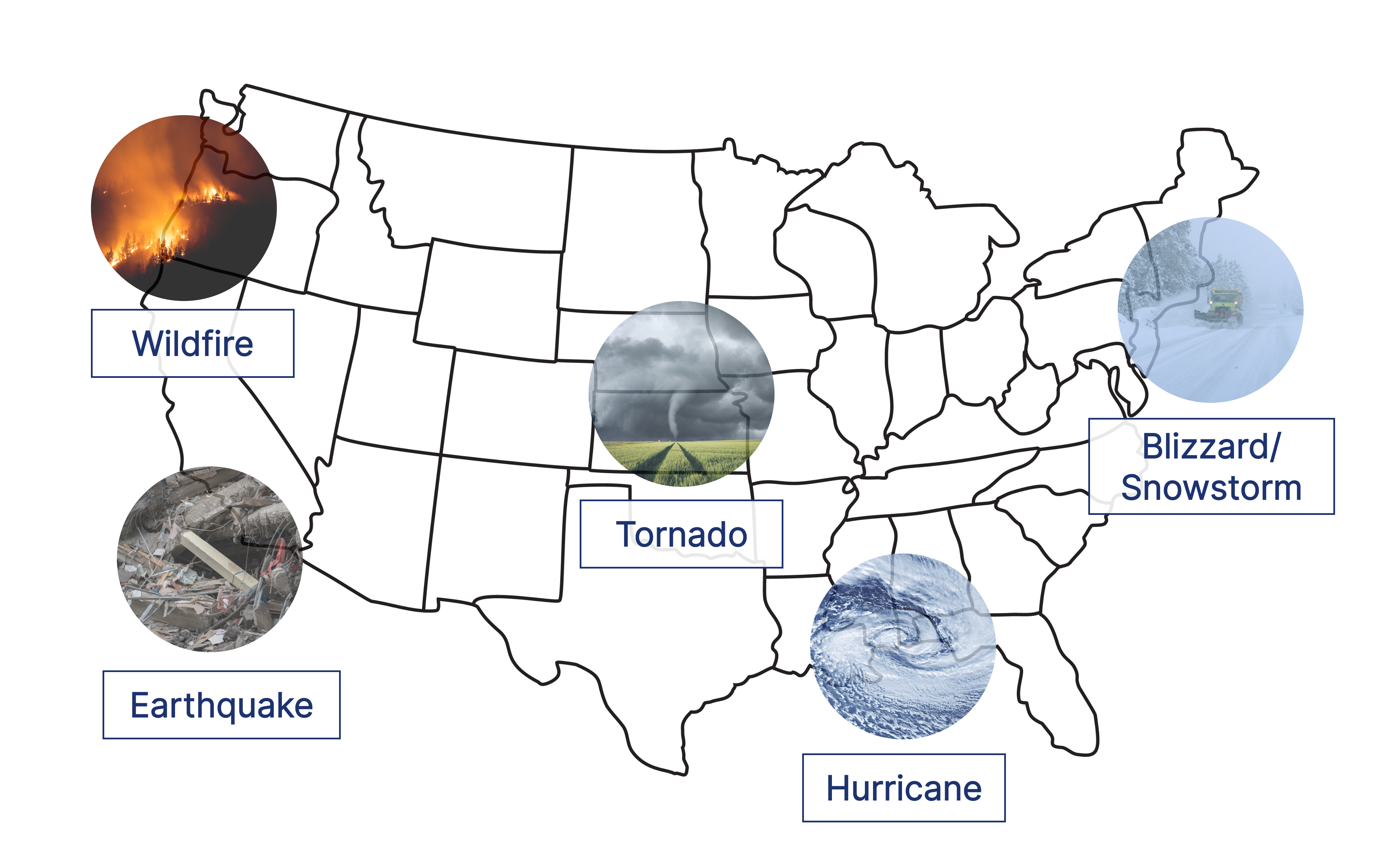
Here are some examples of disasters that may impact certain regions of the country.
No matter where you are, you should:
Written by Dennis Ren
Last updated: 5/30/2025
