Text size
Line height
Text spacing
A successful resuscitation relies on anticipation based on prenatal and intrapartum risk factors, preparation for all deliveries, and monitoring of the fetus during labor for early detection on fetal distress (fetal heart rate monitoring), recognition of the need for resuscitation, and adequately skilled intervention.
Make an obstetrical assessment for any pregnant woman who has a fever or other illness, or who is in labor or with prelabor rupture of membranes (PROM) before the onset of labor.
Include estimation of gestational age, fetal heart rate check and screening for bleeding, hypertension, and signs of infection. Monitor labor using a partogram. Basic emergency obstetric care includes the capability to administer antibiotics, uteronics, anticonvulsants (magnesium sulfate); manual removal of the placenta or retained products; assisted vaginal delivery; and basic neonatal resuscitation. Refer to a facility for comprehensive emergency obstetric and newborn care for Caesarean sections, blood transfusion, and care of sick and low birthweight newborns. Prevent mother-to-child transmission of HIV with appropriate administration of antiretroviral medications.
Every disaster situation is likely to involve pregnant women and their newborns.
In disaster settings, ensure that all deliveries occur in facilities able to provide the basic essential obstetric care services (BEmOC) described above. Also, for complicated cases, be able to refer to a designated facility that will be ensuring Comprehensive essential obstetric care (CEmOC), which will include in addition to the services mentioned above surgery, anesthesia, and blood transfusion. In regions with a high prevalence of HIV prevent mother to child transmission of HIV (PMTCT) and provide HIV treatment for all mothers who are HIV-positive.
Every disaster situation is likely to involve pregnant women and their newborns. Because up to 30% of newly born infants in disaster settings will require resuscitation, anticipatory planning will be fundamental for these interventions to be successful.
What personnel should be available?
If possible, notify personnel with skills in neonatal resuscitation. At least one person who is capable of initiating resuscitation should be present at each birth and immediately available to the newborn. Others who might function as part of a resuscitation team should be available as the need arises. It is important to prepare the area in which the delivery will occur, check the equipment and review the functions of personnel immediately prior to the delivery. Personnel should review the emergency plan for communication and transportation if either mother or infant needs an advanced level of care.
What maternal, fetal, and neonatal conditions might indicate a higher risk of neonatal depression?
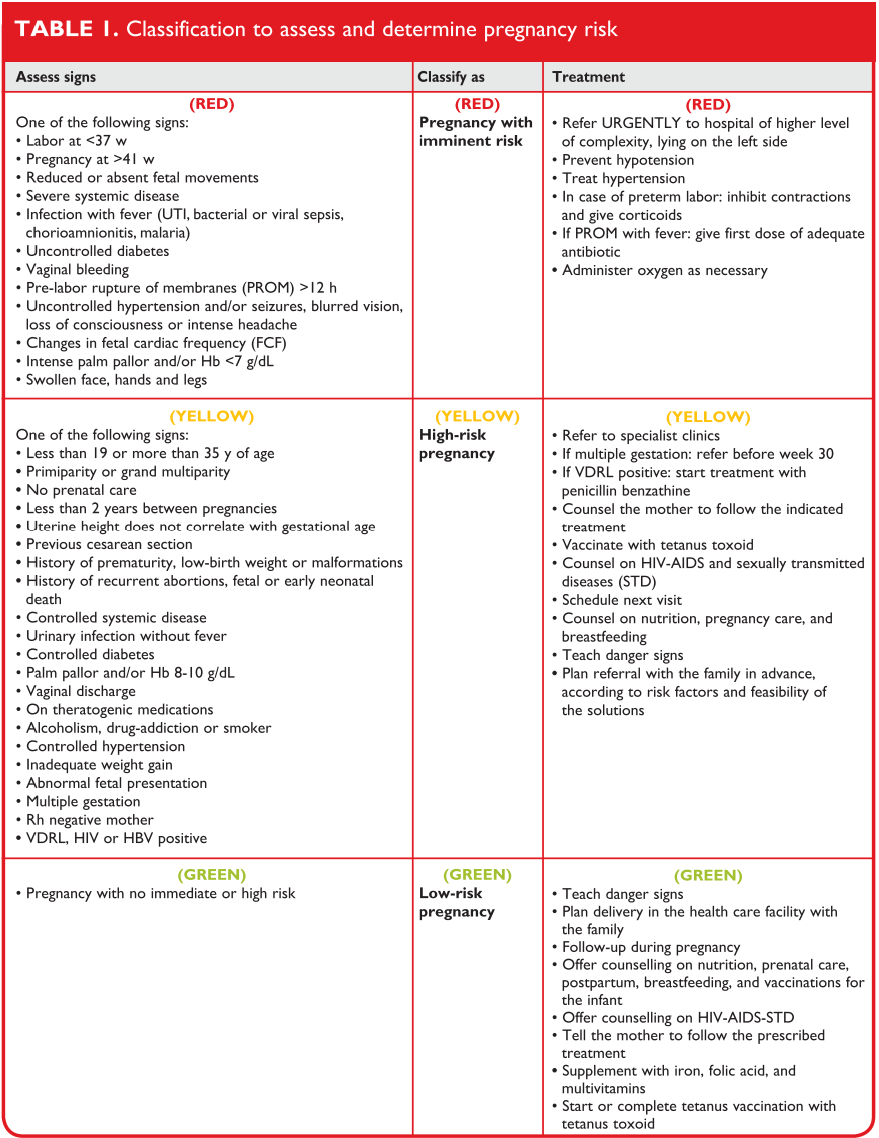
The need for resuscitation cannot always be predicted; it must be kept in mind that prompt neonatal resuscitation might be necessary after any birth. However, some perinatal conditions associated with a need for resuscitation can be recognized in advance. Some of those conditions are shown in Box 1. Thorough assessment of the risk factors allows for the identification of more than half of the deliveries that will need neonatal resuscitation. Prospective identification of perinatal high-risk factors should prompt the transfer of the pregnant woman or the mother and her newly born infant to to a CEmOC facility with enhanced care resources. Keep the mother and baby together, especially if transfer is necessary. The Integrated Management of Childhood Illness (IMCI) strategy from the Pan American Health Organization (PAHO) and the World Health Organization (WHO) includes the assessment and classification of pregnancies in order to determine the risk level and adequate treatment (Table 1). Identification of high-risk factors can also facilitate communication with the family and timely mobilization of the resuscitation and maternal health care team.
Before delivery
During delivery
What equipment should be available?
Equipment for immediate care of the newborn at birth is listed in Box 2. Prepare the uterotonic before delivery, as well as other supplies to care for the mother. The resuscitation bag and masks should be appropriately sized for newborns and the bag should not require a pressurized gas source.It is recommended that sterile delivery kits be available. An example of the contents of the MSF recommended delivery kit is provided in Box 2.
Before delivery
The MSF Standard equipment list for any delivery (all care providers):
For further details consult a more advanced source, such as the Helping Babies Breathe manual from the American Academy of Pediatrics, and 7th edition of the Textbook of Neonatal Resuscitation from the American Academy of Pediatrics (AAP) and the American Heart Association (AHA).
What are the appropriate delivery procedures?
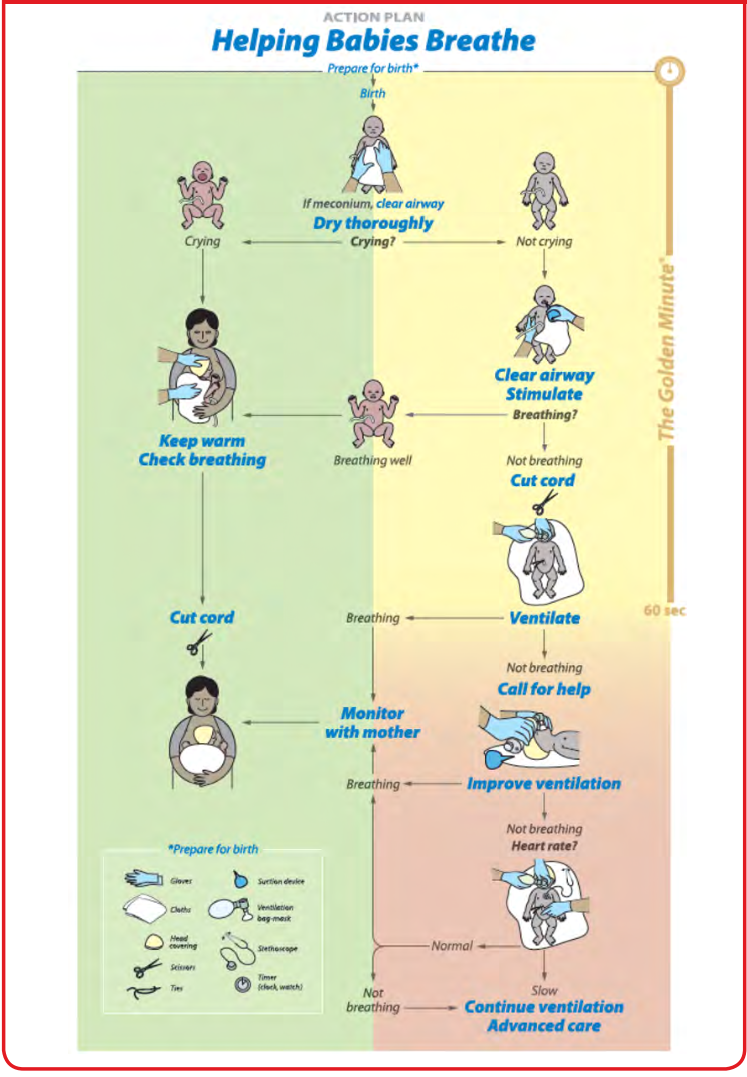
The Action Plan (Figure 3 – 2nd edition HBB Action Plan) summarizes the actions in providing routine care and help to breathe. Routine care of a baby who cries spontaneously at birth includes:
Everyone present at the delivery should perform hand hygiene. Remember to perform adequate identification procedures for the newborn (take the infant’s footprints in a form together with the mother’s fingerprint and provide the newborn with an identification bracelet, if available). This issue takes on added importance in situations of administrative disorder, as is usually the case in acute humanitarian emergencies.
Provide the child with an environment as warm as possible. It is essential to dry the infant immediately. Leaving the baby wet may result in cold stress. Early skin-to-skin contact with the mother has been shown to be effective and desirable. Immediate breastfeeding following delivery is advisable for healthy infants. Even if the newborn requires resuscitation and ongoing care, the parents should have at least brief contact and be fully informed of care.
Three major questions should be asked about every newborn child to define the need for resuscitation:
The evaluation question “is the baby crying?” identifies the baby who needs help to breathe. An infant who is gasping, breathing shallowly, or not breathing at all requires help to breathe. Quick action increases the chance of a good response. The Golden Minute emphasizes that a baby who is not crying after thorough drying should be breathing or
receiving positive-pressure ventilation by one minute after birth.
Term infants with good respiratory effort and muscle tone can be dried and placed over the mother’s body for better thermal protection and suckling under continued observation.
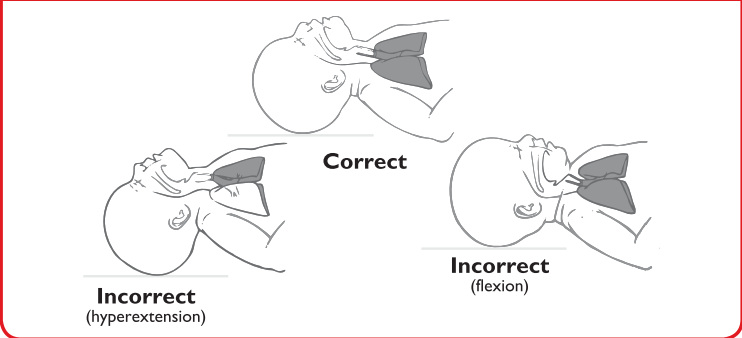
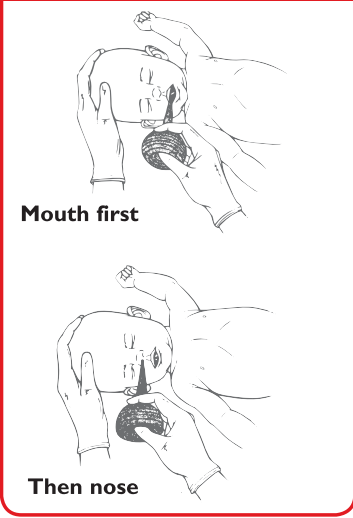
The sequence of neonatal resuscitation for the baby who is not crying begins with thermal protection, proper positioning of the newborn, and brief stimulation.
If supplemental oxygen is available, when is it indicated?
A number of studies have demonstrated that for most neonatal resuscitations requiring positive-pressure ventilation, room air is as effective as 100% oxygen. Data also indicate that in the first several minutes after birth cyanosis is common in babies who have normal outcomes.
Poor respiratory effort, as manifested by apnea or gasping (deep, intermittent, slow, spasmodic inspiratory efforts) is the major indication to initiate neonatal resuscitation.
The 2016 AAP Neonatal Resuscitation Program update includes the following recommendations for oxygen supply during resuscitation:
Room air to initiate positive-pressure ventilation in term infants and blended oxygen concentrations (21–30%) for initiation of PPV in very preterm infants.
Oximetry when
Targets for oxygen saturation correspond to preductal saturations of healthy term babies in the first minutes after vaginal birth at sea level.
| Time after birth | Pre-ductal SpO2 target |
|---|---|
| 1 Min | 60% - 65% |
| 2 Min | 65% - 70% |
| 3 Min | 70% - 75% |
| 4 Min | 75% - 80% |
| 5 Min | 80% - 85% |
| 10 Min | 85% - 95% |
These initial steps and possible subsequent actions are outlined in the flow diagram shown in Figure 3. Further steps in resuscitation are discussed in the following paragraphs.