Text size
Line height
Text spacing
Young children having any of the following danger signs have very severe disease and should be urgently referred to the hospital with a first antibiotic dose and treatment to prevent low blood sugar: 1. not feeding, 2. convulsions, 3. fast breathing ( more than 60 breaths per minute) 4. severe chest indrawing, 5. fever or low temperature, 6. lack of movement. A young infant with signs of umbilical infection (redness and or purulent discharge) is classified as yellow having a local bacterial infection and treated with an appropriate antibiotic).
An infant is assessed for jaundice by asking when the infant first looked yellow and noting what areas of the body appear yellow especially the soles and palms. The infant is classified as severe if the jaundice was noticeable before 24 hours of age or involves the soles and palms at any age. Jaundice is reviewed in module 7.
When the infant presents with diarrhea the infant’s general condition and movements are noted as well as the presence of sunken eyes and skin turgor in order to classify the severity of dehydration. This is reviewed in module 6.
The infant’s classification is based on a feeding history related to breast feeds, additional foods or drinks, weight for age, and the presence of ulcers or white patches in the mouth suggesting thrush. Poor weight gain and breast feeding problems are reviewed in module 8.
In areas of the world with a high prevalence of HIV infection, IMCI checks for a possible HIV infection noting the mother and child’s HIV status ( virology test and serology test). The IMCI approach to HIV infection is reviewed later in this module.
Observe the mother breastfeeding if the infant has not fed in the previous hour and check attachment and suck. Breastfeeding is reviewed in module 8.
It is always necessary to ask about immunization status and assess for other problems such as mother’s health especially possible mastitis or severe postpartum depression.
MCI is family and community centered. This approach is essential for childhood health, because it promotes healthy habits in the family, adequate care of children (feeding, clothing, stimulation, etc.), disease prevention, and prompt seeking of medical care when alarming signs and symptoms are noted.
The IMCI strategy also helps healthcare professionals take advantage of opportunities for prevention, promote childhood development, and encourage the rational use of drugs and medications.
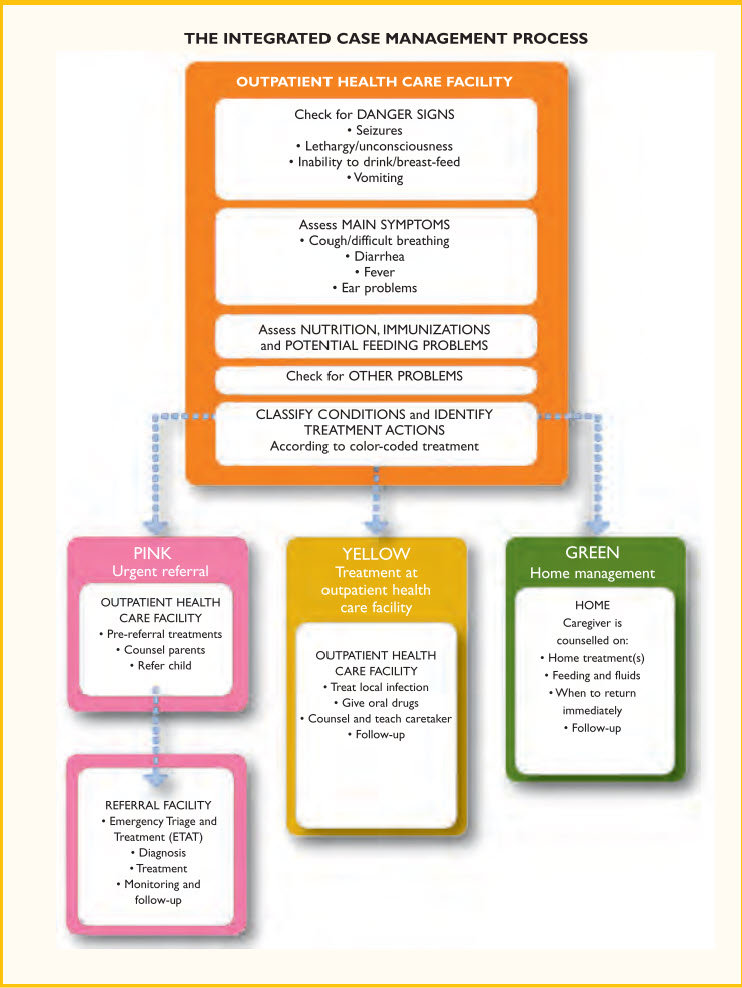
Figure 5. IMCI strategy for case management in the outpatient health care facility, first-level referral service, and at home
