Text size
Line height
Text spacing
Stephen Berman, MD, FAAP | Ribka Amsalu, MD, MSc | Nee-Kofi Mould-Millman, MD | Lisa L. Abuogi, MD, MSc | Chris Nyquist, MD, MSPH | Col. Julia A. Lynch, MD, FAAP | Ángela Gentile, MD | Daniel Martinez Garcia, MD, MPH
Morbidity and mortality resulting from an acute humanitarian emergency in developing countries are related to the excessive childhood mortality that existed prior to the disaster. The main causes of mortality are — neonatal causes, pneumonia, diarrhea — followed by malaria, measles, injury, and meningitis. Malnutrition is an underlying condition that increases the risk of dying from all of the above causes.
During acute humanitarian emergencies, mortality related to those common childhood infections increases due to crowded living conditions; displacement to areas with higher disease prevalence; and compromised personal hygiene resulting from inadequate water supplies, contaminated water, and poor sanitation. The preexisting nutritional status (particularly micronutrient and vitamin A deficiencies) and immunization rates of children, as well as the pre-existing primary care infrastructure and the degree of damage caused by the disaster, also affect childhood morbidity and mortality after a disaster. Figure 1 summarizes the causes of death in two refugee camps and illustrates the significance of various illnesses following a disaster.
Figure 1. Mortality in two refugee camps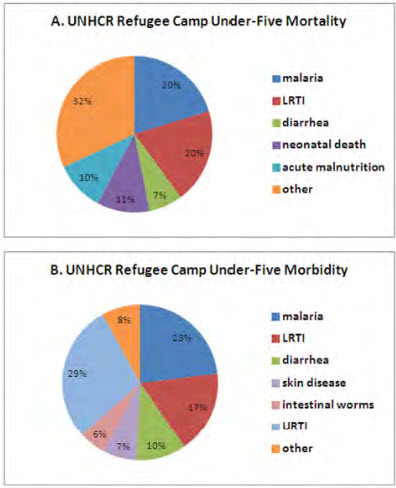
|
Figure 1. Cause-specific morbidity and mortality in children younger than five years of age for refugee camps in the UNHCR HIS database, January 2006 to February 2010. A. Mortality for all recorded causes. Cases of watery and bloody diarrhea were combined. B. Out-patient visits for major causes of morbidity within refugee camps. Suspected and confirmed cases of malaria were combined, as were cases of watery and bloody diarrhea. Only causes accounting for 5% or more of mortality or morbidity are shown, with the remaining causes listed as “Other”. |
These stark statistics emphasize the importance of using strategies based on the Integrated Management of Childhood Illness (IMCI) Program, developed to prevent and treat infections during an acute humanitarian emergency.
