Pediatric Behavioral Health in Disasters
5. Mitigation
5.1. Trauma-Informed Systems of Care: The Role of the Behavioral Health Clinician
Kimberly Burkhart, Ph.D.
Objectives
- Identify three ways behavioral health clinicians can support a trauma-informed system of care in a medical setting.
- Identify six key principles to consider when selecting screening tools, delivering care, and assessing and measuring change.
Introduction
The Substance Abuse and Mental Health Services Administration (SAMHSA) describes trauma-informed care as a strengths-based approach grounded in an understanding of trauma and its effects. The approach emphasizes physical, psychological, and emotional safety for survivors and providers while creating opportunities for survivors to regain control and empowerment.
A trauma-informed ecosystem creates a calm, supportive, and nonjudgmental environment. Trauma-informed care therefore supports the resilience of patients, providers, and staff.
This article identifies key principles of trauma-informed systems of care and describes ways behavioral health clinicians can support medical systems.
Key Content
With appropriate services and support, individuals can recover from traumatic experiences. Without adequate support, trauma may have lasting effects, including impaired neurodevelopment, altered immune-system responses, and chronic physical or behavioral health conditions.
Within medical systems, recalling traumatic events or undergoing invasive medical procedures may lead to retraumatization. Behavioral health clinicians can help organizations implement practices that reduce this risk.
Four Touchstones for Organizational Change
Four touchstones—the Four Cs—can guide and sustain organizational change toward a trauma-informed health care approach.
Calm
Encourage staff to notice their own emotional state when interacting with patients and coworkers. People biologically co-regulate with one another, so providers should observe the emotional regulation of the caregiver, child, and caregiver-child relationship.
Strategies such as diaphragmatic breathing can help create a calm, supportive environment.
Contain
To maintain emotional and physical safety, providers should request only the level of trauma detail needed for the available timeframe and for the appropriate provision of education, resources, and referrals.
Care
Encourage self-care and compassion toward oneself and others. Support healing by shifting from “What is wrong with you?” to “What happened to you?”
Cope
Emphasize adaptive coping skills, supportive relationships and interactions, and evidence-based interventions.
A culture that supports the Four Cs protects patients from revictimization and helps mitigate vicarious trauma among providers. Vicarious trauma, compassion fatigue, and secondary traumatic stress describe negative reactions to exposure to another person’s trauma. These reactions may resemble symptoms of posttraumatic stress.
Compassion satisfaction can protect against harmful effects of trauma exposure. Reflective supervision and strong support systems can help promote compassion satisfaction among staff.
Behavioral health clinicians can also support trauma-informed medical systems by:
- Educating staff about types of trauma, trauma effects, and how trauma may present in medical settings.
- Selecting and implementing trauma-informed screening and assessment tools.
- Connecting patients with social and community resources.
- Making appropriate internal and external referrals.
- Providing reflective supervision and peer support.
- Supporting organizational evaluation and quality improvement.
Six Principles of Trauma-Informed Care
The following principles should guide the selection of screening tools, delivery of care, and assessment and maintenance of organizational change:
- Safety
- Trustworthiness and Transparency
- Peer Support
- Collaboration and Mutuality
- Empowerment, Voice, and Choice
- Cultural, Historical, and Gender Issues
Clinical environments should be physically and psychologically safe. Providers can build trust by explaining what will occur during a medical visit. Results should be communicated compassionately and at an appropriate developmental level using shared decision-making.
Trauma-informed systems also promote self-advocacy and maintain processes responsive to the racial, ethnic, cultural, historical, and gender-related needs of the population served.
Examples of Triage, Screening, and Assessment Tools
Health-Related Social Needs
- Center for Youth Wellness Adverse Childhood Experiences Questionnaire (CYW ACE-Q): A checklist of potentially traumatic events occurring before age 18. It generates a total score without identifying which specific adverse experiences occurred.
- Safe Environment for Every Kid (SEEK): A parent/caregiver checklist for families of children from birth through age 6. It assesses family risk factors associated with child maltreatment, including food insecurity, caregiver depression, parenting stress, substance use, intimate partner violence, and harsh punishment.
Suicide Risk
- Ask Suicide-Screening Questions (ASQ): Four brief questions that can be administered in approximately 20 seconds to identify suicide risk among youth ages 10–24.
- Columbia-Suicide Severity Rating Scale (C-SSRS): A tool used to assess the severity of suicidal ideation and behavior.
- Suicide Assessment Five-Step Evaluation and Triage (SAFE-T): A five-step framework that helps clinicians identify risk and protective factors, conduct a suicide inquiry, determine risk, and select an intervention.
Trauma and Posttraumatic Stress Symptoms
- Child Stress Disorders Checklist Screening Form: A brief screen for acute stress disorder or PTSD symptoms in hospitalized children ages 2–18.
- UCLA Child/Adolescent PTSD Reaction Index for DSM-5: A semi-structured assessment of trauma exposure, current distress, and functional impairment.
- Child PTSD Symptom Scale (CPSS): A measure for children and adolescents ages 8–18.
- Acute Stress Checklist for Children (ASC-Kids): A measure for children and adolescents ages 8–17.
- Adolescent Primary Care Traumatic Stress Screen (APCTSS): A five-question primary care screener for patients ages 13–22.
Professional Quality of Life
The Professional Quality of Life Measure (ProQOL) is a self-scored measure for helping professionals. It can increase awareness of work-related strengths, including compassion satisfaction and perceived support, and risks such as burnout, secondary traumatic stress, and moral distress.
The ProQOL is a widely used, psychometrically tested measure. It is not a diagnostic tool but can guide reflection among professionals who work with populations experiencing traumatic stress.
Disaster and Emergency Department Triage
- PsySTART: A tool for triaging patients based on exposure to a catastrophic event and linking them with mental health services within a disaster system of care.
- Screening Tool for Early Predictors of PTSD (STEPP): An emergency department tool for identifying patients at elevated risk of later PTSD symptoms. It includes questions for the patient and caregiver as well as risk factors obtained from the medical record.
Organizational Assessment
- Attitudes Related to Trauma-Informed Care (ARTIC) Scale: A validated measure of staff attitudes and beliefs about trauma-informed care in organizational and clinical settings.
- NCTSN Trauma-Informed Organization Assessment: An organizational assessment from the National Child Traumatic Stress Network.
- Virginia HEALS Trauma-Informed Agency Assessment: A tool for identifying organizational needs and implementing a trauma-informed framework.
Social Needs and Community Resources
Trauma-informed organizations use screening results to assess current social, emotional, and behavioral functioning. During the initial encounter, determining whether the patient is safe and comfortable takes precedence.
Providers should determine whether basic needs are being met, including access to food, running water, electricity, and safe housing. Discussions about community resources should occur in child-friendly spaces and include a clear explanation of the referral and what will happen next.
Behavioral health clinicians should collaborate with families on an action plan. Possible actions include:
- Connecting with social or patient navigators.
- Accessing community resources.
- Consulting a medical-legal partnership.
- Participating in peer support groups.
- Obtaining a referral for therapy.
Community health workers and patient navigators should follow up with patients and families to help close the loop on referrals.
Evidence-based trauma treatment resources include:
- National Child Traumatic Stress Network
- National Registry of Evidence-Based Programs and Practices
- California Evidence-Based Clearinghouse for Child Welfare
Systems Evaluation
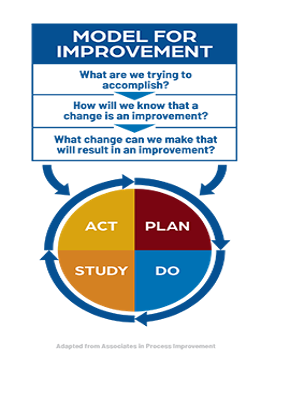
Behavioral health clinicians can support ongoing quality-improvement initiatives related to trauma-informed care. One commonly used approach is the Deming or Shewhart Cycle, also known as the Plan-Do-Study-Act (PDSA) method.
- Plan: Identify the objective, ask questions, make predictions, and plan the change to be tested.
- Do: Carry out the plan, document problems and unexpected observations, and collect data.
- Study: Analyze the data, compare results with predictions, and summarize what was learned.
- Act: Determine what changes should be adopted, adapted, or tested during the next cycle.
For additional guidance, review the Model for Improvement.
Documented benefits of trauma-informed care include improved access to services, higher-quality care, lower overall health care costs, and improved social, emotional, and behavioral functioning.
Takeaway Points
Behavioral health clinicians can support trauma-informed medical systems through staff education, reflective supervision, peer support, screening and assessment, resource navigation, evidence-based referrals, and quality improvement.
- Consider patient and caregiver behavior through the understanding that coping strategies may have developed in response to adversity and a need for self-protection.
- Calm communication, active listening, validation, and collaborative problem-solving can help de-escalate stressful situations.
Action Item
What trauma-informed quality-improvement initiative would you like to implement within your health care system?
Additional Information
Training and Webinars
Books
- Gerber, M. R. Trauma-Informed Healthcare Approaches: A Guide for Primary Care.
Journal Articles
- Trauma-Informed Care: Essential Elements for Pediatric Health Care
- Trauma-Informed Care in Child Health Systems
- Implementing a Trauma-Informed Approach in Pediatric Health Care Networks
- Pediatric Behavioral Health During the COVID-19 Pandemic: Expert Advice for Preparedness, Response, and Recovery