Pediatric Behavioral Health in Disasters
4. Recovery
4.3. Trauma-Focused Cognitive Behavioral Therapy in Response to a Disaster
Kimberly Burkhart, Ph.D., and Patty Davis, LSCSW, LCSW, IMH-E® (III)
Objectives
- Describe the core components of Trauma-Focused Cognitive Behavioral Therapy (TF-CBT), including the PRACTICE model.
- Recognize when TF-CBT is contraindicated.
Trauma-Focused Cognitive Behavioral Therapy (TF-CBT), developed by Drs. Judith Cohen, Anthony Mannarino, and Esther Deblinger, is intended for children and young adults ages 3–21 and their caregivers.
TF-CBT is designed to prevent and treat posttraumatic stress, depression, anxiety, and associated behavioral problems following one or more traumatic events.
TF-CBT has demonstrated effectiveness in treating posttraumatic symptoms associated with many types of trauma, including single and repeated events. It uses cognitive behavioral techniques and emphasizes the development and gradual processing of a trauma narrative.
Caregivers and children first learn skills for regulating emotions, behaviors, and thoughts. They then develop strategies for safely processing trauma memories and enhancing safety, trust, family communication, and parenting support.
Treatment includes individual sessions with the child or adolescent and conjoint sessions with the child and caregiver. TF-CBT is most helpful for children with sufficient verbal skills to discuss their experiences. Randomized controlled trials provide a strong evidence base for using TF-CBT to treat posttraumatic stress disorder. Treatment is typically delivered over 12–16 sessions.
PRACTICE Key Elements
The goal of TF-CBT is to reduce the effects of trauma and teach lifelong coping skills. The acronym PRACTICE represents the intervention’s core components.
| Element | Description |
|---|---|
| P | Psychoeducation about trauma: Provide information about common reactions and symptoms to help children, adolescents, and caregivers understand and normalize their experiences. Facts about traumatic stress, its prevalence, and expectations for recovery can reduce isolation and provide hope. |
| P | Parenting skills: Help caregivers support the child and create a safe environment. Following trauma, caregivers may become overly permissive or protective. Reviewing positive parenting strategies at the beginning of treatment can restore caregiver confidence and competence. |
| R | Relaxation skills: Teach strategies that help the child return to a calm baseline when feeling agitated, distressed, or anxious. |
| A | Affect modulation: Develop skills for identifying, expressing, and regulating emotions. |
| C | Cognitive coping: Explore relationships among thoughts, feelings, and behaviors. Help children recognize how their thoughts influence emotions and actions and develop more adaptive coping. |
| T | Trauma narrative and processing: Help the child gradually create and process a narrative of the traumatic experience through visualization, speaking, writing, or other developmentally appropriate methods. Previously learned coping skills support the child during this process.
Processing the narrative can reduce reactivity to trauma memories and help identify and correct inaccurate or unhelpful thoughts, such as “This was all my fault.” The process proceeds at a pace the child can safely tolerate. |
| I | In vivo mastery of trauma reminders: Address persistent avoidance of safe activities or situations associated with trauma reminders. Examples may include sleeping with the lights off, sleeping independently, riding in a car, traveling on a highway, or walking along a safe route.
Treatment may involve practicing coping skills while first imagining and then gradually engaging in the safe, avoided activity. |
| C | Conjoint child and caregiver sessions: Help caregivers support the child throughout the healing process. Caregivers may review aspects of the trauma narrative and learn the coping skills their child has practiced.
Sharing the trauma narrative can increase caregiver empathy and understanding. Caregivers often use the same cognitive behavioral skills themselves. |
| E | Enhancing safety and future development: Help children, adolescents, and caregivers communicate about confusing or frightening experiences, recognize warning signs, practice safety skills, and increase confidence in their ability to remain safe. |
Who Is Involved in TF-CBT?
TF-CBT uses both individual sessions with the child or adolescent and conjoint sessions with the child and caregiver. When a child is living outside the family home, the participating caregiver may be a foster parent or another safe adult in the child’s life.
Although TF-CBT is often delivered to a child and caregiver in a clinical setting, it has also demonstrated effectiveness with or without direct caregiver participation in settings such as schools, foster homes, and group homes.
When Is TF-CBT Contraindicated?
- Acute risk: Children or adolescents with current suicidal or homicidal ideation need immediate safety assessment, stabilization, and acute care before beginning TF-CBT.
- Unstable eating disorder: A child or adolescent with an eating disorder should return to and maintain a medically stable baseline before beginning trauma-processing work.
- Ongoing safety threats: When environmental stressors or threats are still occurring, treatment should initially focus on safety, stabilization, and reducing the immediate threat before beginning TF-CBT.
Examples of Indications for TF-CBT
- Exposure to natural disasters, such as hurricanes or tsunamis.
- Exposure to human-caused disasters, such as terrorism or war.
- Exposure to other traumatic events, such as child maltreatment, motor vehicle crashes, severe illness, or family disruption.
TF-CBT in Practice
Case Scenario
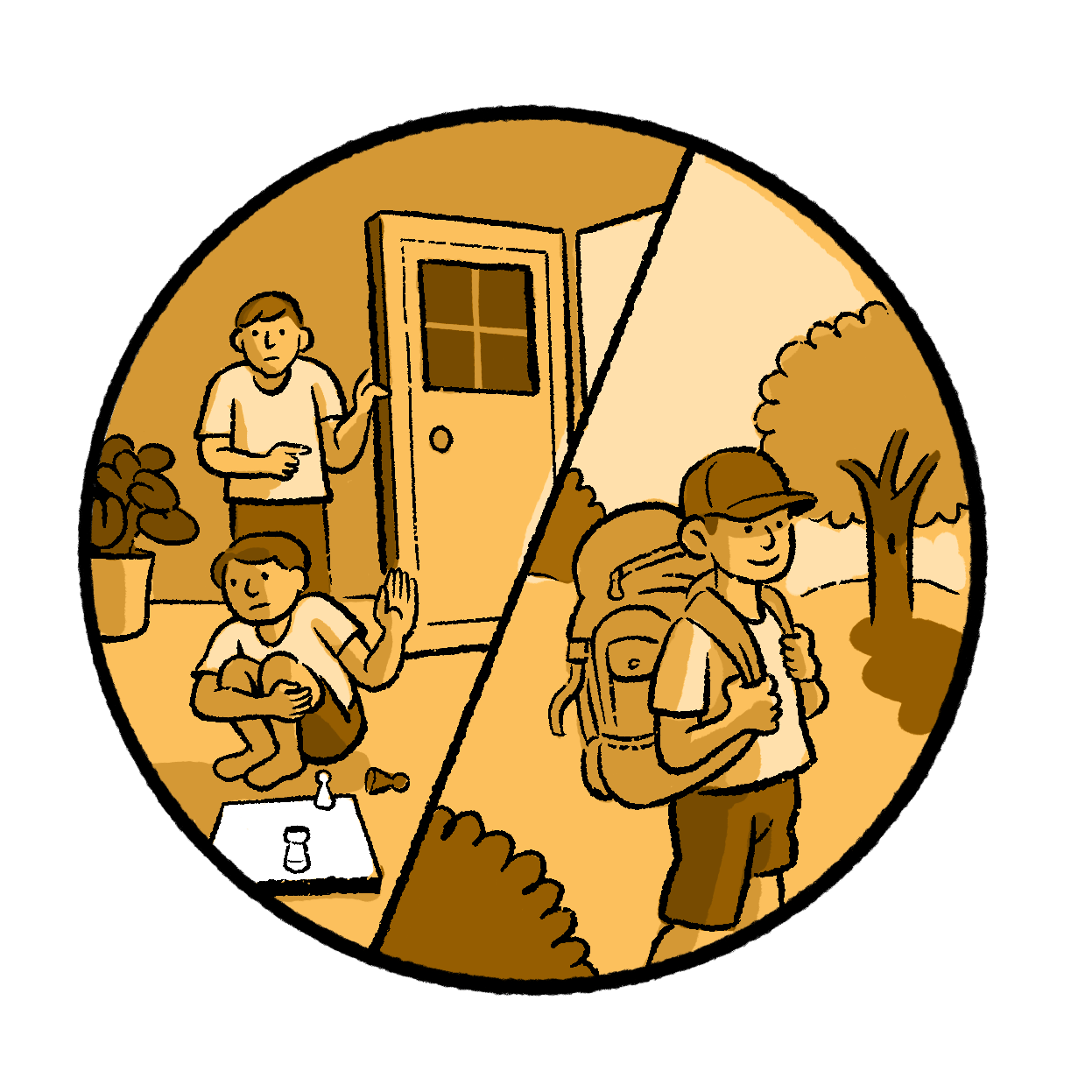
The parents of an 11-year-old boy, “William,” report that he has become unusually clingy during the past several months. He wants to remain in the same room as his parents and frequently follows them around the house. They wonder whether his behavior may reflect posttraumatic stress related to local storms and tornadoes.
William’s parents first became concerned after he missed two consecutive campouts with his scout troop. He previously camped every month and enjoyed sleeping in his own tent, regardless of whether his parents attended.
During the first missed campout, William vomited after lights out, and his father took him home. The following month, William said he did not feel well while traveling to the campout, so the family returned home. Since then, William has said that he no longer enjoys camping.
William has also stopped visiting his grandparents during his parents’ monthly bingo night. During recent storms, he has entered his parents’ bedroom during the night.
Four months earlier, tornado sirens sounded twice in the family’s neighborhood. Both times, the family sheltered and slept together in the basement. After the first storm, they learned that two homes in a nearby town had been destroyed. Large trees were uprooted in their neighborhood and fell onto houses. The second storm caused additional neighborhood damage but no injuries.
William’s parents initially did not recognize that the storms had affected him. In retrospect, they remembered that he asked many questions and spent considerable time viewing tornado damage through news and online sources.
Treatment
William’s parents were introduced to TF-CBT and agreed that the approach could be helpful. After the third session, William asked to visit his grandparents during his parents’ bingo night.
His parents were surprised that he improved after sessions consisting primarily of assessment, psychoeducation, and parenting support. The therapist explained that children often benefit from learning that their thoughts and feelings are understandable reactions to frightening events.
The therapist also provided developmentally appropriate information about tornadoes, storms, and the relatively low risk of harm when safety protocols are followed. William and his family continued through the PRACTICE components, and he eventually asked to attend scout campouts again.
Outcome
William’s parents reported increased confidence in supporting him during frightening situations. The entire family benefited from learning emotional regulation and cognitive coping skills. William later shared his experience at a scouting event while earning a merit badge. His parents observed that telling his story further strengthened his sense of safety.
Training
Professionals interested in learning more about the core components of TF-CBT should begin with web-based training and review the requirements for formal certification.
- TF-CBT Web 2.0 Training , Medical University of South Carolina.
- Childhood Traumatic Grief Web Training
- TF-CBT Consultation Call Series and Certification Information
When TF-CBT is used to treat childhood traumatic grief, components may include grief psychoeducation, processing and coping with grief and ambivalent feelings, preserving positive memories, and redefining the relationship with the person who died.
Additional Information
Clinical Resource
Books and Journal Articles
- Catani, C., Kohiladevy, M., Ruf, M., Schauer, E., Elbert, T., and Neuner, F. (2009). “Treating Children Traumatized by War and Tsunami: A Comparison Between Exposure Therapy and Meditation-Relaxation in North-East Sri Lanka.” BMC Psychiatry, 9, 22. doi:10.1186/1471-244X-9-22.
- Cohen, J. A., Mannarino, A. P., and Deblinger, E. (2017). Treating Trauma and Traumatic Grief in Children and Adolescents, Second Edition. Guilford Press.
- Jaycox, L. H., et al. (2010). “Children’s Mental Health Care Following Hurricane Katrina: A Field Trial of Trauma-Focused Psychotherapies.” Journal of Traumatic Stress, 23(2), 223–231.
- Orengo-Aguayo, R., Dueweke, A. R., Nicasio, A., et al. (2022). “Trauma-Focused Cognitive Behavioral Therapy with Puerto Rican Youth in a Post-Disaster Context: Tailoring, Implementation, and Program Evaluation Outcomes.” Child Abuse & Neglect, 129, 105671. doi:10.1016/j.chiabu.2022.105671.
- Pityaratstian, N., Piyasil, V., Ketumarn, P., Sitdhiraksa, N., Ularntinon, S., and Pariwatcharakul, P. (2015). “Randomized Controlled Trial of Group Cognitive Behavioural Therapy for Post-Traumatic Stress Disorder in Children and Adolescents Exposed to Tsunami in Thailand.” Behavioural and Cognitive Psychotherapy, 43(5), 549–561. doi:10.1017/S1352465813001197.
- Salloum, A., and Overstreet, S. (2012). “Grief and Trauma Intervention for Children After Disaster: Exploring Coping Skills Versus Trauma Narration.” Behaviour Research and Therapy, 50, 169–179.
- Westerman, N. K., Cobham, V. E., and McDermott, B. (2017). “Trauma-Focused Cognitive Behavior Therapy: Narratives of Children and Adolescents.” Qualitative Health Research, 27(2), 226–235. doi:10.1177/1049732315627795.