Pediatric Behavioral Health in Disasters
3. Response
3.2. How to Support Resilience in Infants and Young Children Following a Catastrophic Event
Patty A. Davis, LSCSW, LCSW, IMH-E® (III)
Objectives
- Define the importance of primary caregivers’ role in a child’s resilience.
- Identify opportunities to educate and support parental competence during a child’s recovery process.
Introduction
Infant and Early Childhood Mental Health is a major component of early childhood social and emotional development. Although the term may be unfamiliar to some, the field of infant mental health has existed since the late 1970s.
Infant mental health concerns a child’s social and emotional development from birth through age 3. Understanding this development helps professionals prevent and treat mental health concerns in very young children and their families while supporting healthy social and emotional behavior.
Adapted from Zero to Three
To clarify that this concept includes children through age 3, the term “early childhood” has been added during the past decade. This article uses Infant and Early Childhood Mental Health (I&ECMH) to describe the overall concept.
Dispelling Myths from the Past
Common Myths
- Infants and toddlers do not remember.
- Babies are inherently resilient.
- Babies cry because they are spoiled.
- Babies do not understand anything.
- Babies are a blank slate.
- All problems originate within the child.
It was once assumed that infants were not significantly affected by their surroundings. Today, evidence demonstrates that infants and young children are affected by their environments.
For example, leaving a child in a car seat for an extended period without interaction or opportunities for exploration can negatively affect brain development. Similar changes can occur when children live in environments characterized by high stress and a lack of supportive interaction or protection.
High-stress environments without consistent comfort and nurturing can alter brain development. A young child may adapt by shutting down or minimizing interactive communication.
Traumatic Stress Symptoms and Behaviors
When people experience stress, their bodies and minds move away from baseline functioning and into fight, flight, or freeze responses. From a physiological perspective, the hypothalamic-pituitary-adrenal (HPA) axis becomes activated. This activation produces automatic physical and emotional responses in all people, including infants and young children.
Infants and young children may lack the language needed to communicate their feelings and traumatic memories. Instead, they communicate through behavior. No single behavior confirms exposure to traumatic stress. The child’s history, possible exposures, and patterns of behavior must be considered together.
| Infants and Children Through Age 2 | Children Ages 2–3 |
|---|---|
|
|
A child’s reactions to trauma may be brief, and the child may recover without ongoing problems. When reactions continue, the child or caregiver may need additional support.
Types of Stress
Stressful experiences are a normal part of child development. Events that substantially activate the stress-response system—such as the death of a parent, child maltreatment, or painful medical interventions—can have long-term effects. Whether an experience produces tolerable or toxic stress depends largely on the support surrounding the child.
The Center on the Developing Child at Harvard University describes three types of stress:
Positive Stress
Positive stress occurs during a brief, distressing experience that is commonly expected as part of healthy development. Examples include receiving an immunization, attending preschool for the first time, or being dropped off at childcare.
These experiences may briefly increase heart rate and stress hormone levels, but the child returns to baseline relatively quickly. Positive stress helps children develop the ability to manage distress and calm themselves.
Tolerable Stress
Tolerable stress occurs when a child experiences a serious stressor but has a caregiver who provides protection, support, repair after harm or injury, or a reduction in the time spent under stress.
This support buffers the intensity of the child’s stress response until the child returns to a previous baseline or adjusts to a new baseline.
Toxic Stress
Toxic stress can occur when a child experiences prolonged stress without protective, buffering support. Examples include living with someone who has a severe emotional disturbance or substance use disorder without other reliable supports in place.
In these circumstances, the child’s fight-or-flight system may remain on high alert. The body continues preparing for danger, even when no immediate crisis is occurring. Functions such as digestion may be disrupted as the body redirects energy toward survival.
When the body and mind cannot return to baseline for an extended period, stress overload can eventually damage otherwise healthy brain and body systems.
Safe, Stable, and Nurturing Relationships
Supporting resilience in infants and young children during a catastrophic event begins with the same principles that support healthy responses to everyday stress. Efforts to build resilience should protect and restore the basic developmental systems that adversity may disrupt.
Resilience is not simply an inborn trait. During the first years of life, primary caregivers help children build emotional resilience while also meeting their basic needs. By providing support when it is needed, caregivers teach infants and children how to calm and return to baseline after the stress-response system has been activated.
For example, an infant with an earache may experience pain, dysregulation, and a need for support. The caregiver must provide timely protection, comfort, and care. When a child cries and a caregiver responds quickly and lovingly, the child begins to learn emotional regulation.
Infants and young children initially regulate their emotions and responses through their caregivers. These repeated experiences promote social and emotional development. Secure parent-child attachment also serves as a protective factor for physical and mental health.
Safe, stable, and nurturing relationships (SSNRs) are central to building emotional resilience and supporting healthy brain development.
Children with responsive caregivers can explore their environments more safely. A reliable sense of security supports exploration, learning, and physical development.
What Can We Do?
To prevent toxic stress overload, professionals should maximize the protective buffers that primary caregivers can provide. Following a catastrophic event, infant mental health practice should strengthen the parent-child relationship as a vehicle for restoring and protecting the child’s mental health.
Encourage Attachment Behaviors
- Physical proximity and touch: Encourage safe, comforting physical proximity, including skin-to-skin contact when appropriate. Touch promotes connection and can help calm both the child and caregiver during a crisis.
- Verbal interaction: Encourage caregivers to talk, read, and sing to infants. For verbal children, create a safe opportunity for them to talk about their experience.
- Responding to basic needs: Feeding the child, changing diapers, and keeping the child warm communicate safety and protection while strengthening attachment.
Promote Parental Competence and Resilience
- Offer specific praise: Tell caregivers what they are doing well. Remind them that they are central to their child’s recovery and that their loving, supportive connection can help both caregiver and child heal.
- Support structure and routine: Predictable daily routines increase stability. Knowing what comes next can reduce anxiety and worry for both the caregiver and child.
Model Safe, Stable, and Nurturing Care for Parents
- Support control: Help parents confidently resume their role in guiding the child. Assist them with developing a clear action plan to reduce anxiety and increase competence.
- Respond mindfully: Check your own stress level and pause to regulate yourself when necessary.
- Maintain curiosity: Consider what else may be happening in the family’s life and contributing to distress.
- Help name feelings: Providing language for feelings of overwhelm can normalize the experience and support healing.
- “Speak for Baby”: Voice what the child might say if they had the words. For example: “My parent is taking such good care of me. I feel safe when they hold and comfort me.”
- Give grace: Do not take strong emotional reactions personally. Normalize stress responses while maintaining clear limits around unsafe or violent behavior.
These behaviors provide both hope and practical guidance. Clinicians can model the same regulation, patience, and care they want parents to offer their children.
Infant and Early Childhood Mental Health in Practice
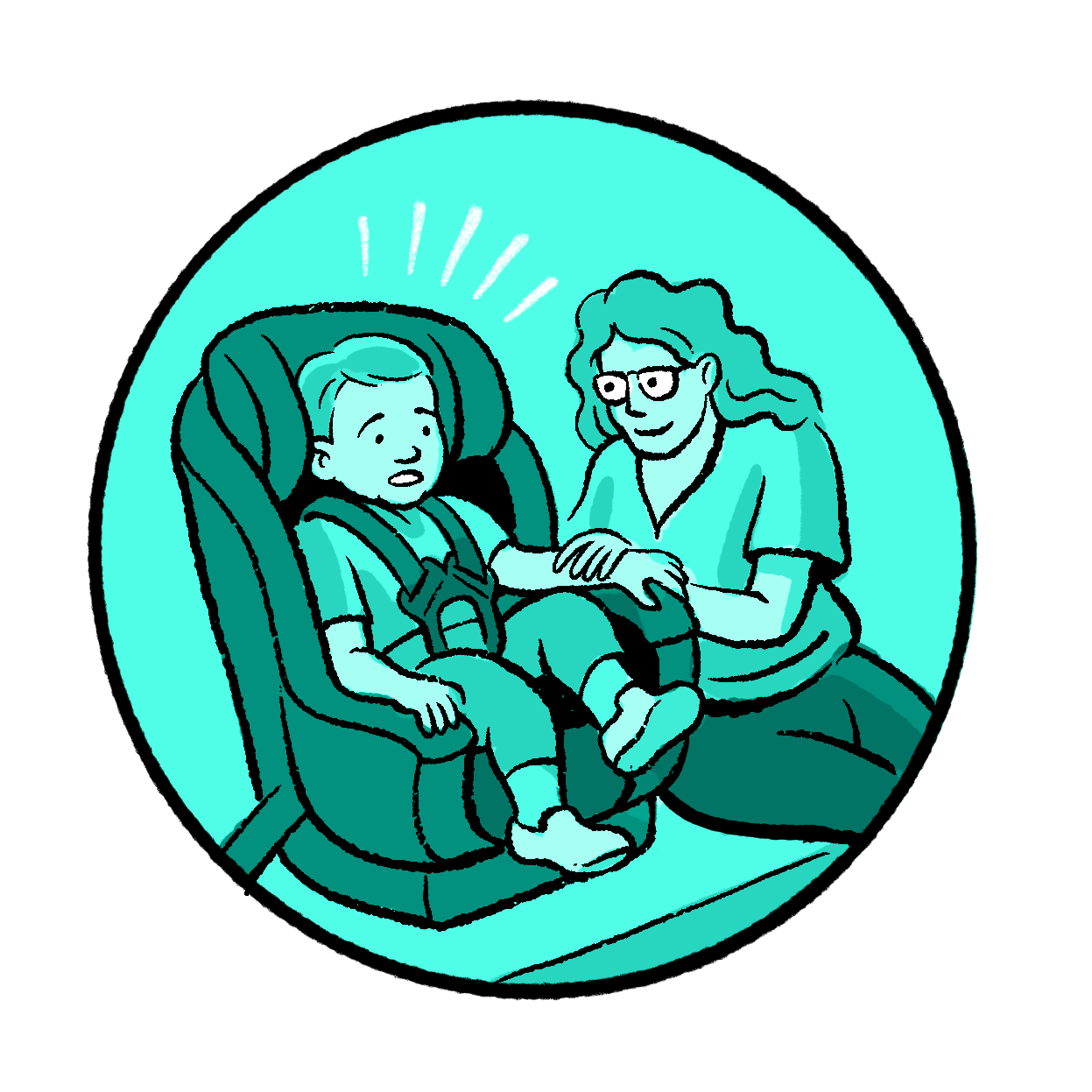
Case Scenario
The parent of a 2-year-old child named Kaleb visits the primary care provider with concerns that he is displaying trauma-related behaviors. Twenty days earlier, Kaleb and his family were together in a car when another vehicle struck them.
On the day of the accident, Kaleb was assessed and treated for seat belt burns, which are now mostly healed. Other family members continue to recover from more severe injuries.
Kaleb experienced several acute trauma reactions, some of which are subsiding. Immediately after the accident, he woke each night screaming “no.” He startled easily in response to loud noises. His strong startle response lasted approximately a week and a half but has decreased during the past week.
At first, getting into his car seat was frightening, but that reaction has resolved. Kaleb still cries or responds fearfully when the car turns a corner or enters a roundabout. He does not want to leave his mother’s side, has remained home from daycare, and has more frequent temper tantrums.
Kaleb’s mother reports that when he wakes screaming, she gently rocks him, makes soothing sounds, and reassures him that he is safe and that the family will be okay. The family talks openly about the accident in front of Kaleb, and his mother wonders whether this is appropriate. She is also worried about sending him back to daycare because he wants to remain close to her.
Although Kaleb’s symptoms have improved during the past week, his mother is seeking additional strategies to support him.
Provider Response
Provide psychoeducation: Explain common stress reactions in children younger than age 6, including how preverbal children may communicate distress through behavior.
Encourage attachment behaviors: Encourage continued physical touch and gentle verbal interaction to help buffer Kaleb’s stress response. Praise his mother for her actions and explain that her safe, loving touch and reassurance may already be supporting his recovery.
Continue daily structure: Encourage a return to normal routines, including daycare when appropriate, to increase predictability and stability.
Respond mindfully: Encourage Kaleb’s mother to monitor her own stress level when responding to questions or conversations about the crash.
Name feelings and reinforce safety: Use consistent language when Kaleb becomes anxious in the car. For example: “It is okay to feel worried. Let’s sing a song while the car goes around the turn and notice that we are safe.”
Openly discussing the event and naming feelings can show Kaleb and his family that the event is not too overwhelming for the family to manage.
Use “Speak for Baby”: Voice what Kaleb might say to strengthen parental attunement. Examples include: “My mom helps me feel safe,” and “My mom is taking such good care of me. I feel better when she holds and comforts me.”
Follow-Up Instructions
Remind Kaleb’s mother that his reactions are understandable and appear to be improving. Ask her to contact the primary care office if the behaviors do not continue to subside or if they increase in severity or frequency.
Additional Information
Training
- Erikson Institute Infant and Early Childhood Mental Health Certificate
- Zero to Three: Infant and Early Childhood Mental Health
Resources and Toolkits
- Infant and Early Childhood Mental Health Resource Toolkit , American Academy of Pediatrics.
- Center on the Social and Emotional Foundations for Early Learning
- Center on the Developing Child at Harvard University
Books and Scholarly Articles
- Masten, A. S. (2014). Ordinary Magic: Resilience in Development. Guilford Press.
- Garner, A., Yogman, M., Committee on Psychosocial Aspects of Child and Family Health, Section on Developmental and Behavioral Pediatrics, and Council on Early Childhood. (2021). “Preventing Childhood Toxic Stress: Partnering With Families and Communities to Promote Relational Health.” Pediatrics, 148(2).