Pediatric Disaster Behavioral Health (PDBH) Toolkit
4. Preparedness
4.3. Behavioral Health in Disasters
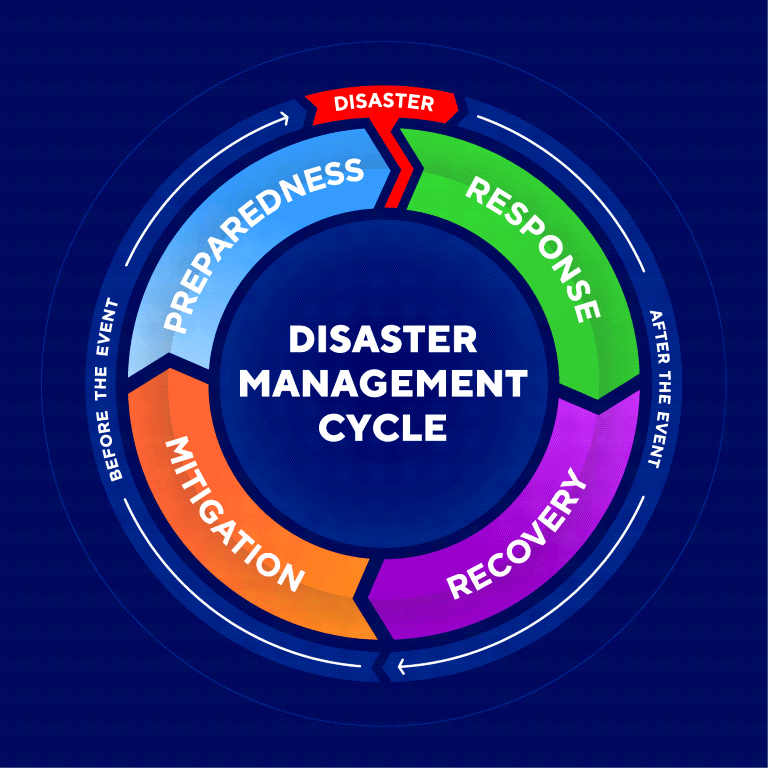
This section outlines how PDBH service delivery differs from routine care and how disasters change the way pediatric behavioral health care is organized, delivered, and scaled.
Common Pitfalls to Avoid
- Assuming conventional care models will scale: Routine clinic workflows rarely meet surge demand, leading to delays and inequities in access.
- Over-reliance on a single intervention or support: One-size behavioral health approaches fail to meet the full continuum of behavioral health needs, and risk both over pathologizing normative distress or relying on resilience which often leads to missing some children who need support.
- Unclear triage and referral pathways: Without defined determinants and destinations for follow-up care or assessment, high-risk children are missed or waitlisted.
- Lack of identification of resources at baseline: No measurement or accounting of community behavioral health resources prior to the event. Planning ahead will create communication channels between systems of care, so all resources can be included in planning, training, and drills.
- Weak linkage to community/crisis systems: Limited integration with crisis call centers including 988, crisis counseling programs, and community services, reducing reach and sustainability.
Thinking Differently: How Care Delivery Differs in Disasters
- Plan for systemic strain and proactive mental health triage.
- Establish surge management to balance needs and available resources; align with the Pediatric Disaster Behavioral Health (PDBH) Care function in the framework overview.
- Define triage workflows for pediatric behavioral health in disasters, engaging as many pediatric systems of care as possible (schools, outpatient clinics, hospitals), and including thresholds for brief interventions, such as psychological first aid vs. referral for further behavioral health evaluation and treatment.
- Assess risk and exposure explicitly. (Do not rely on symptom expression alone in early response).
- Prepare to screen or triage for direct exposures (injury, witnessing death, loss of caregivers, delayed evacuation) and compounding adversities (poverty, substance use, interpersonal violence).
- Highest risk is associated with direct exposures such as being injured, witnessing injuries or death, separation from caregivers, delayed evacuation, or death of loved ones.
- Prioritize high-risk children for early behavioral health follow-up and stepped-care escalation as needed.
- Prepare to screen or triage for direct exposures (injury, witnessing death, loss of caregivers, delayed evacuation) and compounding adversities (poverty, substance use, interpersonal violence).
- Use a layered continuum of care to effectively utilize limited resources.
- Establish a tiered model from universal supports to intensive treatments, such as Stepped Care Model (TSCM) – Mental/Behavioral Health and Psychosocial Support (MHPSS)7 – Triage to Stepped TF-CBT8 - or Multi-Tiered Systems of Support (MTSS)9 ; match service intensity to need and phase. Additionally, consider which supports may be appropriate in initial response (such as at family reunification centers) and those more useful during recovery.
- Prepare to deploy Psychological First Aid (PFA) or similar early psychosocial supports while recognizing it is not sufficient for higher-risk trauma exposures.
- Embed chaplaincy and spiritual care resources into tiered support, to act as extensions and enhancement for psychosocial care.
- The PDBH Care Guidelines outline the considerations and broad approach to advance from initial impact evaluation, to identify potential care needs, and develop a service delivery approach.
- Select interventions by risk and phase using tools such as SAMHSA’s Disaster Behavioral Health Interventions Inventory.
Preparing for Triage and Risk Stratification
- Adopt a pediatric triage tool or similar system to identify needs and prioritize care.
- Implement a rapid pediatric behavioral health triage tool for post-disaster; train, test, and integrate it with intake and referral pathways.
- A variety of tools are available and may be helpful for clinical evaluation. Please reference the Triage vs Screening vs Assessment in Disasters or Mass Casualty Incidents (MCIs) appendix item for a review of these tools.
- For example, the PsySTART system facilitates rapid pediatric behavioral health triage post-disaster and can support both individual case disposition as well as community-level situational awareness of impacts, via use of de-identified and aggregated data.
- Operationalize pathways before the disaster.
- Map “triage → brief behavioral health support→ targeted further evaluation and treatment → specialty care” with time targets and responsible roles.
- Embed escalation criteria (suicidality, complicated grief, severe functional decline) and hard stops for immediate safety evaluation.
- Define handoff protocols from response to recovery phases, including re-screening intervals and criteria to step down or step up care.
Build the Continuum and Partnerships
- Inventory capacity and establish referral pathways.
- Identify evidence-based pediatric behavioral health and trauma providers in advance; maintain a directory with languages, modalities (in-person/tele), insurances accepted, and age ranges served.
- Collate Evidence-Based Practices (EBP), crisis lines (including 988), crisis counseling programs, school-based programs, and community agencies, with contacts and referral criteria; assign an owner for updates.
- Formalize partnerships with crisis call centers (e.g., 988 and the Disaster Distress Helpline), and the state crisis counseling program (e.g., Show Me Hope), and community providers, for surge routing, warm handoffs, and after-hours support.
- Expand surge options by partnering with the community.
- Develop MOUs with community agencies to add brief interventions, school-based supports, and group formats during surge.
- Support training pre-event in behavioral health triage, and modifications in care associated with patient surge.
- Standardize brief interventions for rapid deployment.
- Promote short-term trauma-focused interventions, utilizing psychological triage to identify risk level due to trauma exposure, and symptom scales to guide need for behavioral health treatment.
Planning, Training, and Exercising
- Train the workforce to increase capability and confidence.
- Explore trainings such as the PPN Pediatric Behavioral Health in Disasters Curriculum10 , the PPN Preparedness and Response to Catastrophic Events ECHO Recordings11 , and those outlined in the Curriculum Recommendations for Disaster Health Professionals – Disaster Behavioral Health12 .
- Encourage staff to complete the Texas A&M Engineering Extension Service (TEEX) Pediatric Disaster Response and Emergency Preparedness course (16.00 Hours).
- Prioritize PFA training for hospital and clinic staff; use the National Child Traumatic Stress Network (NCTSN) learning center five-hour course on the eight core actions.
- Use the Checklist of Essential Pediatric Considerations for Every Hospital’s Disaster Policies by EMSC to ensure pediatric considerations (including PFA) are embedded in hospital preparedness.
- Integrate into plans and drills to avoid siloing.
- Embed pediatric behavioral health roles and triggers into emergency operations plans and incident action plans.
- See the Disaster Planning Handbook for Behavioral Health Service Programs from SAMHSA13 for in-depth guidance on planning considerations.
- Exercise referral pathways and triage workflows during drills; include documentation and data capture for after-action review.
- Embed pediatric behavioral health roles and triggers into emergency operations plans and incident action plans.
Preparing Caregiver Support and Public Guidance
- Prepare evergreen caregiver materials.
- Create ready-to-deploy guidance that covers common child reactions, mitigating strategies (e.g., maintaining routines, limiting media exposure), warning signs, and local supports.
- Include accessible formats (plain language, multiple languages, print and digital).
- Prepare to support public communication and dissemination.
- Prepare to align messaging with communications teams to ensure consistent guidance across hospital, schools, and community partners. See the Communications section for further information.
- See the Toolbox for potential resources.
Death Notification and Bereavement Support
Traumatic loss due to a sudden, violent, or unexpected death, such as in the context of a disaster or other large scale crisis event often leads to complicated bereavement and significant mental and emotional impacts on the survivors. Death notification should be perceived as a continuum of care, with informing the loved ones of the deceased as one part of the continuum. It begins with organizational decisions around a) who to inform, b) in what setting will the notification occur, c) actual notification about the death, and d) finally planning for ongoing communication, support, and resources for the family.
Key Things to Know
- Notification for children requires additional attention and skill related to developmental and age-appropriate communication.
- Children benefit from honest answers to their questions, and inclusion in events such as wakes and funerals/viewing of the body (within their cultural and familial context and practices).
- Within that context, it is helpful for children to have an accompanying adult to provide support, calming, and information when there are other adults around who may be having strong emotional responses.
- Children also benefit by staff providing support to the important adults in their lives. This creates a stable environment during an unstable time to allow for open communication about the death and the deceased, which enhances recovery.
Pre-planning for Death Notification in a Hospital or ED should include:
- Identification of staff trained and able to provide this support, and a system of identifying and deploying as needed. A team of two staff members is recommended to allow for additional family support, as well as peer support.
- Space allowing for removal from the busy treatment areas or morgue into a place offering quiet and privacy.
- Choosing and exercising training in best practices in death notification.
- Planning for viewing of the body of the deceased (if possible, cleaned and dressed). It is important to prepare the family by providing information and preparation for visuals such as paleness, wounds, and disfigurement. Decisions to view or not view the body can be culturally informed and are an individual decision. Any decision regarding viewing should be supported.
- Ready access to information on the process that will be followed after the death (e.g., movement of the body to another site).
- Written information for families on frequently asked questions such as when, how, and where the deceased will be released for burial as they may not remember verbal information.
- Written information for families about the mental health impact of sudden traumatic death that includes local resources such as MH providers, grief and loss counselors, and support groups.
- Engagement with chaplain/spiritual care services in planning for mass casualty incidents.
- Engagement with hospital mental health services in planning support for providers engaged in death notification.