Pediatric Disaster Behavioral Health (PDBH) Toolkit
3. The Pediatric Disaster Behavioral Health Framework
3.1. The Pediatric Disaster Behavioral Health (PDBH) Framework
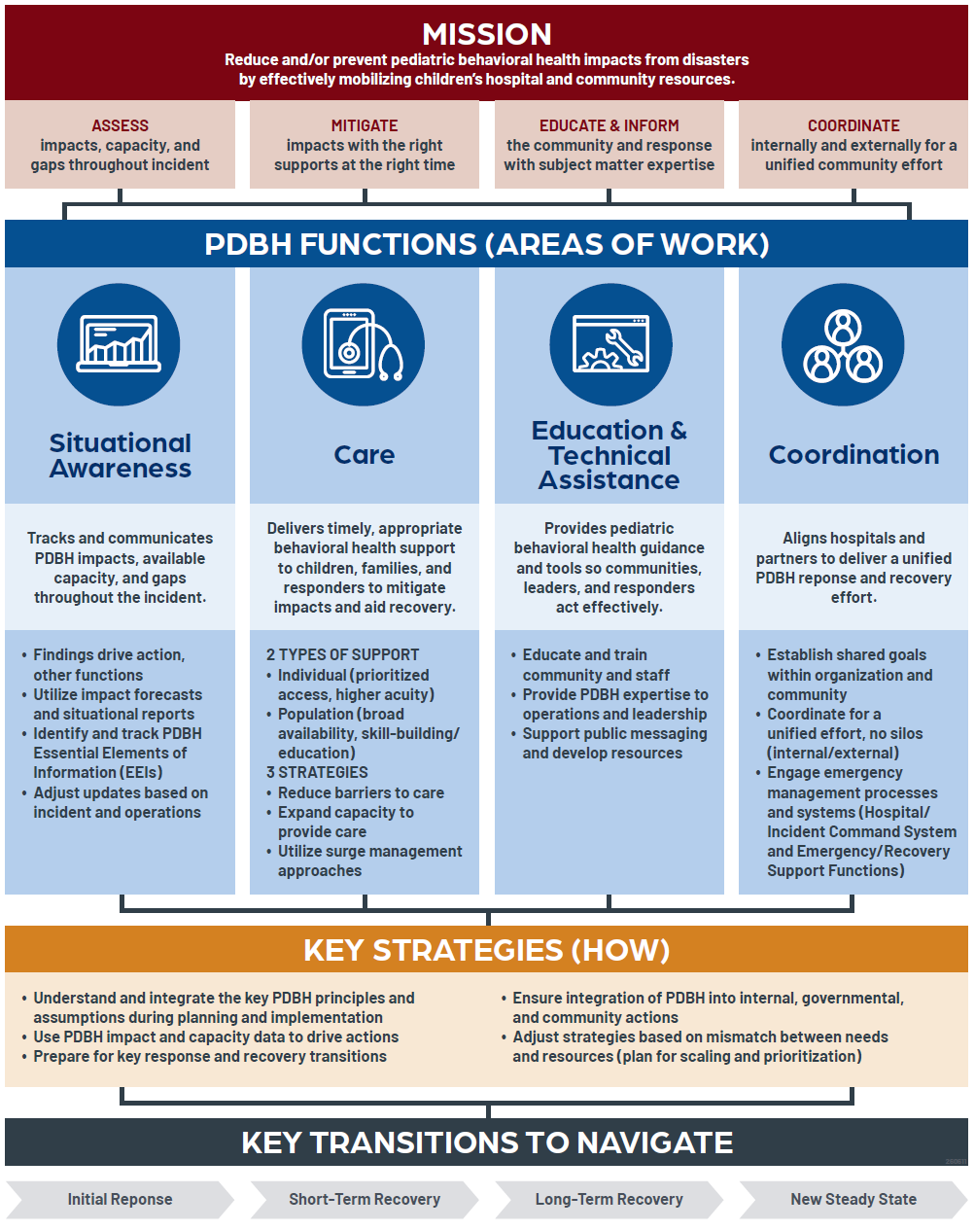
Figure 2. The Pediatric Disaster Behavioral Health Framework
How to Use It
To utilize this framework, review the information below for a broad understanding of this toolkit’s approach to pediatric disaster behavioral health (PDBH). Then, reference the Preparedness Section of this toolkit for recommendations on how to implement the framework before a disaster, or the Just-in-Time Implementation Section for rapid deployment during a disaster. Finally, for an in-depth review of each PDBH goal, function, and related key considerations, reference the PDBH Operational Table Overview Appendix.
PDBH Mission & Goals

Figure 3. PDBH Mission & Goals
The PDBH Mission describes the purpose and scope of this framework. It provides the “north star” and identifies the desired end-state for all related preparedness, response, and recovery activities. How this mission is contextualized within an organization, or interagency group, will differ depending on their existing roles and capabilities.
The PDBH Goals describe what tasks must be achieved to fulfill the mission. During a disaster response and recovery, these goals are often converted into specific objectives to guide action – such as “assess the number of children injured or exposed by the end of the week” or “deploy behavioral health strike team to provide services at the shelter by Monday.”
Organizations should determine which parts of this broad mission they are able and willing to lead during disasters, and coordinate with other organizations to fill any gaps. Partnerships are covered further in this section and guidance on how to integrate this framework into existing children’s hospital operations is described in this section.
PDBH Functions & Key Strategies
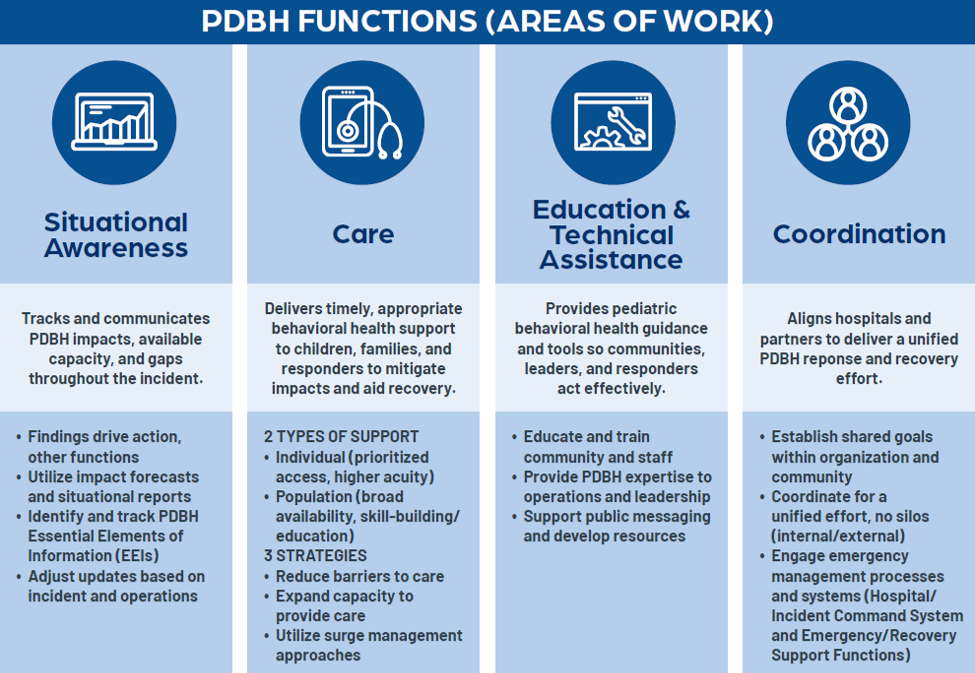
Figure 4. PDBH Functions
Each goal has a function associated with it that includes all the activities, processes, and resources to achieve that goal. Typically, during response and recovery, teams are organized in alignment with these functions to conduct related work (example of this structure). Each function supports its associated goal, the overall PDBH Mission, and other functions. For example, information gathered by the PDBH Situational Awareness function helps inform how care is provided, what education and outreach may be needed, and critical details to provide to partners.

Figure 5. PDBH Key Strategies
PDBH Key Strategies apply across all functions and are critical to achieve the goals and mission of the framework. They provide the overarching “how to” necessary for successfully implementing this framework during disaster response and recovery and are based on best practices and lessons learned from disaster behavioral health response and recovery practices.
While this overview provides broad information on each goal, function, and strategy, it is highly recommended to review the PDBH Operational Overview Table for in-depth information and recommendations prior to implementation. Meanwhile, the Just-in-Time section of this toolkit provides an operational planning process and proposed structures for deployment during disaster response. Lastly, the Toolbox includes a set of resources and tools to support the implementation of this framework.
Key Transitions

Figure 6. PDBH Key Transitions
Often, after a disaster, key transition points are seen during the response and recovery efforts. While significant overlap may be present between disaster response and recovery phases, each involves distinct needs. challenges, and opportunities. For example, aside from initial on-scene support (when appropriate) and triage, the bulk of the activity during the Initial Response phase is evaluating the potential need and preparing to provide services during short-term recovery. Additionally, the importance, appropriateness, and effectiveness of interventions may vary over the course of a disaster. Effective PDBH response and recovery operations anticipate and prepare for these transitions.
For more information on these disaster phases, how they influence pediatric behavioral health, and the key considerations and strategies, review the Phase-based Recommendations section.