Pediatric Disaster Behavioral Health (PDBH) Toolkit
2. How to Use this Toolkit

This toolkit is designed to support children’s hospitals in meeting pediatric disaster behavioral health needs in their community. This toolkit does not address day-to-day pediatric behavioral health care or youth suicide prevention. Readers are encouraged to review other resources for those topics such as the Critical Crossroads Toolkit, Zero Suicide, or ED STOP.
Key things to know: This toolkit is designed to be a modular reference guide and should not be read front-to-back. Not all sections of the toolkit will be useful and relevant for all audiences or intents.
The first section of this toolkit introduces the Pediatric Disaster Behavioral Health (PDBH) Framework and key considerations. Guidance and resources provided in the preparedness portion of this toolkit focus on engagement of day-to-day services and the emergency management program to prepare for disasters, while the response and recovery sections of the toolkit focus on rapid deployment of concepts and tools using systems such as Hospital Incident Command System (HICS). The final portion of the toolkit, the Toolbox, provides in-depth information, references, tools, and resources to support implementation.
Quick Guide – Just-in-Time Deployment (Immediate Use)
- Review the Pediatric Disaster Behavioral Health Framework section of the toolkit to understand the overall model, goals, strategies, and key assumptions.
- Then, review the Just-in-Time Implementation section and follow the response deployment recommendations and operational planning process, reviewing additional tools provided in the Toolbox.
Quick Guide - Preparedness
- Review the Pediatric Disaster Behavioral Health Framework section of the toolkit to understand the overall model, goals, strategies, and key assumptions.
- Then, review the Preparedness Section for guidance and resources on how to start pediatric disaster behavioral health preparedness effort.
- Start with Administrative Preparedness, then review Internal Coordination to identify how to connect existing programs to this framework, then explore partnership connections to integrate with the community.
- Review additional tools provided in the Toolbox and the Goals & Functions table for detailed information on response/recovery application.
Overview
Welcome to this multimedia open access edition of the Pediatric Disaster Behavioral Health (PDBH) Toolkit
This content is available as a digital book in two formats:
1) Website, which you are currently reading. This format offers a mobile friendly multimedia experience with sharable links to chapters. There are three ways to move through the book:
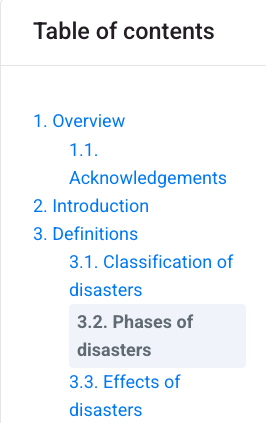
a) Use the table of contents chapter navigation to the left to navigate to different chapters in the book. Scroll through the links to select the chapter that interests you.
b) Use the yellow arrows that appear when scrolling to select previous and next chapters.

c) Use the previous chapter and next chapter buttons at the bottom of very page to navigate through the book.

2) Printable, which you can save as a PDF and open without an Internet connection.