Pediatric Trauma
4. Pediatric Trauma Assessment
4.8. Extremity Trauma
Extremity Trauma
Extremity trauma is very common. Fractures of the radius, ulna, and femur are most common and may be either open or closed. Always assess the neurovascular status.
Initial management of extremity trauma includes recognition, splinting, neurovascular assessment, and pain control
Splinting and Initial Management
If there is an open wound, first clean it and then cover it. Different types of splinting devices can be used. At the scene of the disaster, use whatever is available (wood, magazines, the other leg). Once at the medical facility, fiber-glass splints are ideal as they are stronger and more water-resistant than plaster (Box 8).
BOX 8: Keys to proper splinting
- Cleaning and bandaging skin wounds prior to splinting
- Padding in layers prior to adding the splint, with extra padding at pressure points
- Making sure to splint the joint above and below the fracture
Femur fractures will also benefit from traction because of the larger muscle groups involved. Treat patients for pain and sedate them with narcotics, sedatives, and muscle relaxants.
Open Fractures
Open fractures have the added concern of infection in addition to the medical management. Open fractures also imply that a significant force has been involved. It is therefore important to look for other injuries. In addition to infection, other complications of open fractures include nerve entrapment and compression. Treatment of an open fracture includes cleaning, covering the opening without suturing, intravenous antibiotics, and immobilization. Ideally, these injuries will need surgical debridement (Figure 10).
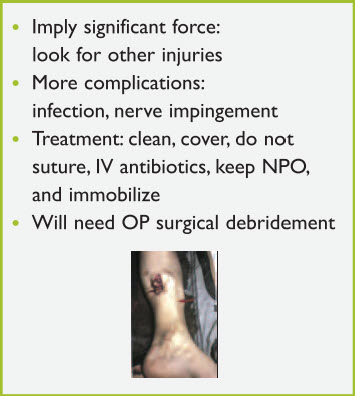
Figure 10. Open fractures
Pelvic Fractures
Pelvic fractures are a concern because they are generally the result of high-impact blunt trauma; blood loss can be significant. The pelvic ring may be fractured in a single place, which would be a stable fracture, or more commonly in multiple places, which could be an unstable fracture. Additional injuries associated with pelvic fractures include genitourinary and abdominal lesions, and vascular abnormalities (i.e. pelvic vein disruption). A sheet tightly wrapped around the pelvis may be the only temporizing measure for the unstable, bleeding pelvic fracture (Figure 11) until operative treatment is arranged.
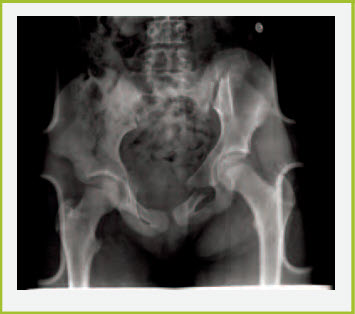
Figure 11. Hip fracture
Fractures that need orthopedic referral include those that affect joints or growth plates, fractures around the elbow or knee with significant soft tissue swelling (compartment syndrome concern), open pelvic fractures (associated with hemorrhage) and fractures associated with an open wound or with signs of vascular or nerve disruption.