Preventive Medicine in Humanitarian Emergencies
5. Post-Disaster Intervention Priorities
5.2. Surveillance Cycle
The Use of the Surveillance Cycle to Guide Use of Resources
OBJECTIVES
- Use the surveillance cycle to help make rational health-care decisions.
- Understand the key role that primary care doctors and pediatricians play in the compilation of quality information, while simultaneously attending individual patients.
- Use this information in an appropriate way for decision making.
Surveillance Cycle: A Powerful Public Health Tool
After the emergency assessment is completed and disaster recovery operations have started, ongoing surveillance will evaluate emerging population needs. Surveillance is defined by the U.S. Centers for Disease Control and Prevention (CDC) as “...the ongoing, systematic collection, analysis and interpretation of public health data essential to the planning, implementation and evaluation of public health practice, closely integrated with the timely dissemination of these data to those who need to know. The final link is the application of these data to prevention and control. A surveillance system includes a functional capacity for data collection, analysis and dissemination linked to public health programs.”
The surveillance cycle essentially consists of gathering data that are critical for monitoring ongoing health needs, analyzing and interpreting that data in a timely fashion, providing feedback to those who need to know, and taking actions based on these data (Box 10). After an action is taken, the cycle is repeated to re-evaluate the effectiveness of this action (Figure 1).
Box 10. Important Data
- Deaths
- Severe morbidity or diseases that are frequent in the community
- Rapid detection of selected conditions or infections, such as cholera cases, malnutrition, malaria, and severe trauma
- Document spread of infections by collecting list of affected person
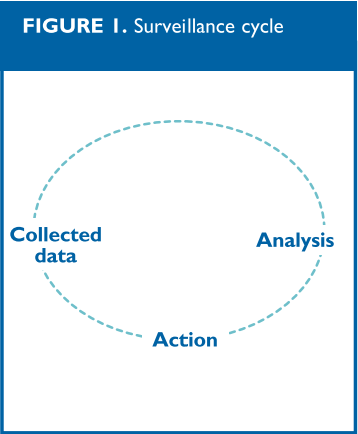
Figure 1
The most important point of the surveillance cycle is making sure that data are used. Unused public health data that sit gathering dust is a waste of resources. For this reason, there needs to be a clear link between data gathered by clinicians doing face-to-face consultation and policy implementation based on that data. If busy clinicians feel that keeping a patient logbook only adds more work to their day and has no impact on patient health, they will quickly stop gathering the data. This is where a breakdown between clinical and public health services frequently prevents optimal use of the surveillance cycle.