Disasters and their Effects on the Population: Key Concepts
4. Mortality
4.2. Causes of mortality
Mortality in Humanitarian Emergencies
The immediate goal of any intervention in humanitarian emergencies is to reduce the number of deaths. While both conflict and natural disasters can result in immediate deaths, many preventable deaths occur during later phases over a longer period.
Five leading medical problems have consistently been identified as the major causes of mortality in post-conflict or post-natural disaster settings among vulnerable populations (Box 5).
BOX 5. The five leading causes of death in humanitarian emergencies in developing countries
- Diarrheal diseases and dehydration
- Measles
- Malaria
- Acute respiratory infections
- Malnutrition
Unique features in each disaster, such as climate, topography, pre-existing social structure, and physical conditions, affect the proportion of deaths associated with each of these causes, as well as other causes. Figure 7 shows mortality in various displaced populations following natural disasters and armed conflicts.
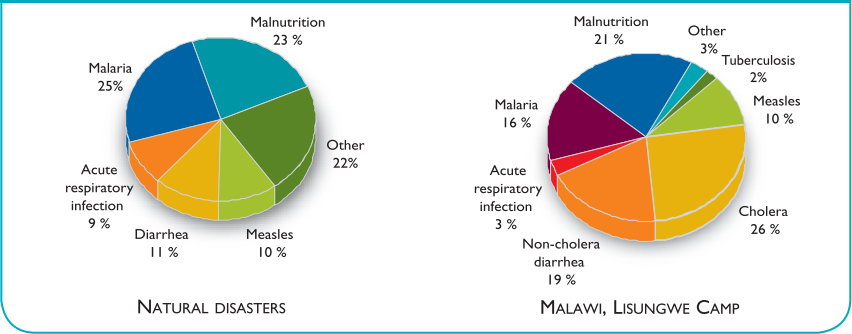
From MMWR, Vol. 41/No. RR-13. Major causes of death in children <5 years old. Source: UNHCR, MSF, IRC monthly report.
Malnutrition, although not identified as a significant immediate cause of death, is the most important factor correlated with high mortality rates due to transmissible diseases. A study including 41 displaced populations (Figure 8) showed a clear correlation between the crude mortality rate (that is, death from all causes) and the prevalence of malnutrition.
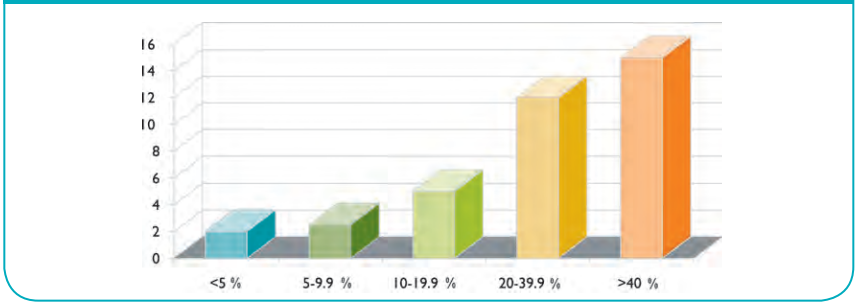
*Malnutrition prevalence in population (%)
(Malnutrition = <80% weight/height WHO reference population)
In the context of a disaster, each of the leading causes of death relates to one or more predisposing environmental conditions that increase the incidence of disease and the mortality rate per case (Box 6). For interventions to be effective, resources should be targeted to prevent and correct these predisposing environmental factors, in addition to treating affected individuals.
BOX 6. Predisposing environmental conditions
- Disruption of food sources/economy
- Disruption of sanitary services
- Income loss
- Discontinuation of healthcare services
- Overcrowding
- Lack of adequate water supply
- Loss of shelter
At a World Health Organization conference, international relief experts identified 10 essential emergency relief measures to consider when planning a disaster response. These interventions should not be implemented in a strict order; the priority of each is correlated with the particular needs of each emergency situation. In addition, these interventions should be adjusted to the specific situation in the affected region.