Text size
Line height
Text spacing
This case-based module equips pediatric healthcare professionals with strategies to identify and address mental health issues in children affected by disasters, aiding in better support for pediatric patients and their families. Understanding how disasters impact children's mental health is crucial for pediatric professionals to provide effective care and intervention, ultimately improving outcomes for young patients and their families. Enroll in this 50-minute module to enhance your skills in supporting pediatric patients through the challenges of disaster-related mental health issues.
Continuing Education (CE) credit is available for this activity for physicians, nurses, and pharmacists.
Joint Accreditation Statement: In support of improving patient care, Children’s National Hospital is jointly accredited by the Accreditation Council for Continuing Medical Education (ACCME), the Accreditation Council for Pharmacy Education (ACPE), and the American Nurses Credentialing Center (ANCC), to provide continuing education for the healthcare team. Children’s National Hospital Accreditation Provider# 4008362
Disclosure of Relevant Financial Relationships: The planning committee and presenters have no relevant financial relationships with ineligible companies.
Financial and In-Kind Commercial Support: No financial nor in-kind commercial support was received for this educational activity.


This work was made possible by Award Number (U3REP190615-10-10) from the Administration for Strategic Preparedness and Response (ASPR). Its contents are solely the responsibility of the authors and do not necessarily represent the official views of ASPR or the Department of Health and Human Services.
and
The Pediatric Pandemic Network is supported in part by the Health Resources and Services Administration (HRSA) of the U.S. Department of Health and Human Services (HHS) as part of cooperative agreements U1IMC43532 and U1IMC45814 with 0 percent financed with nongovernmental sources. The content presented here is that of the authors and does not necessarily represent the official views of, nor an endorsement by HRSA, HHS, or the U.S. Government. For more information, visit HRSA.gov.
Attribution-NonCommercial-NoDerivatives CC BY-NC-ND
You are free to download and share this work for noncommercial purposes, as long as you credit the Pediatric Pandemic Network and Region V for Kids for the original creation.
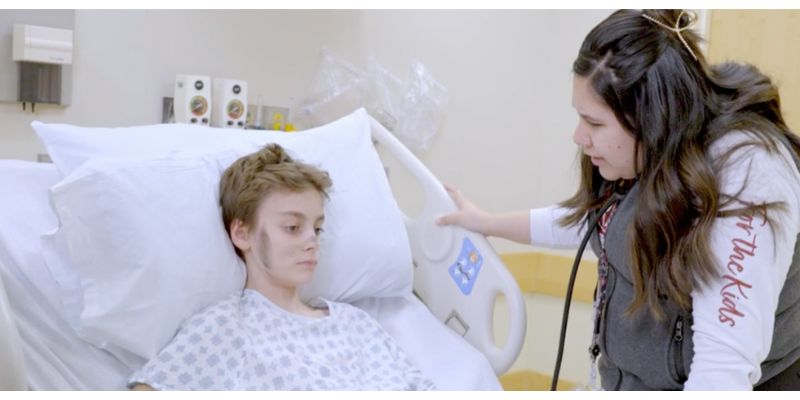
This case-based module equips pediatric healthcare professionals with strategies to identify and address mental health issues in children affected by disasters, aiding in better support for pediatric patients and their families. Understanding how disasters impact children's mental health is crucial for pediatric professionals to provide effective care and intervention, ultimately improving outcomes for young patients and their families. Enroll in this 50-minute module to enhance your skills in supporting pediatric patients through the challenges of disaster-related mental health issues.
Continuing Education (CE) credit is available for this activity for physicians, nurses, and pharmacists.
Joint Accreditation Statement: In support of improving patient care, Children’s National Hospital is jointly accredited by the Accreditation Council for Continuing Medical Education (ACCME), the Accreditation Council for Pharmacy Education (ACPE), and the American Nurses Credentialing Center (ANCC), to provide continuing education for the healthcare team. Children’s National Hospital Accreditation Provider# 4008362
Disclosure of Relevant Financial Relationships: The planning committee and presenters have no relevant financial relationships with ineligible companies.
Financial and In-Kind Commercial Support: No financial nor in-kind commercial support was received for this educational activity.
